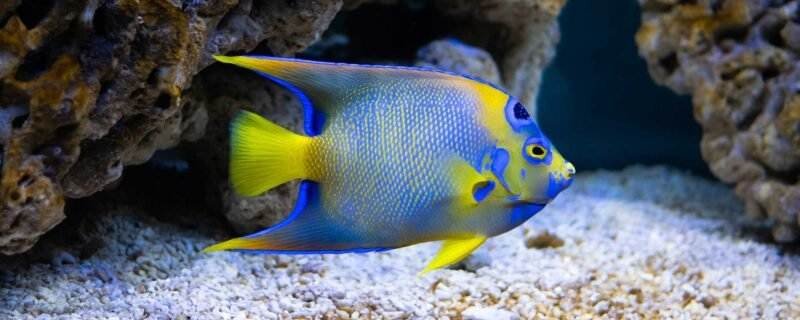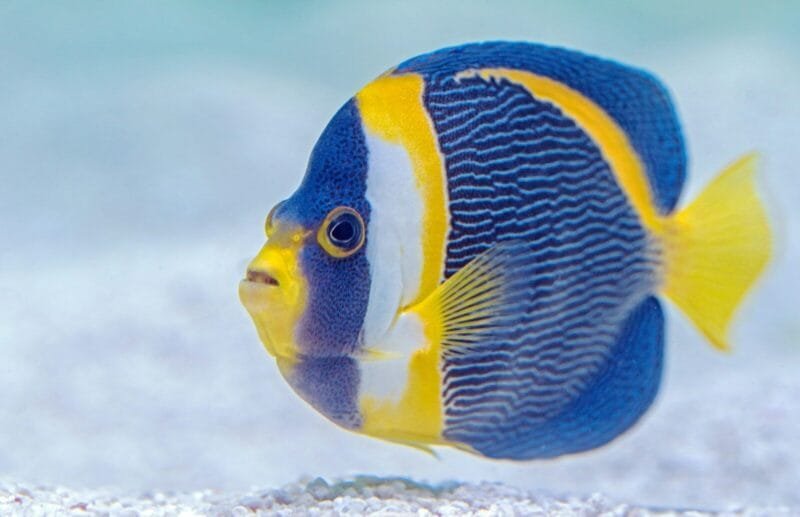
The Regal Angelfish, scientifically known as Pygoplites diacanthus, is one of the most strikingly beautiful members of the angelfish family, Pomacanthidae. Known for its brilliant blue, yellow, and white banded patterning, this marine species captivates aquarists around the world. Native to the Indo-Pacific and Red Sea regions, the Regal Angel embodies elegance and grace, making it a sought-after centerpiece in saltwater aquariums. However, its delicate nature and specific care needs make it a species best suited for experienced aquarists.
Native Habitat
The Regal Angelfish inhabits coral-rich areas of lagoons and outer reef slopes in the Indo-Pacific region, ranging from the Red Sea and Maldives to the Great Barrier Reef and Micronesia. Typically found at depths between 3 and 80 meters, this angelfish prefers crevices and caves among coral formations where it can graze on sponges and tunicates. Its natural environment is characterized by warm, pristine waters and abundant coral cover, conditions that should be mimicked in captivity for optimal health.
Size and Lifespan
In the wild, Regal Angelfish can reach lengths of up to 25 cm (10 inches), though in captivity, they often remain slightly smaller, averaging around 20 cm (8 inches). When kept under ideal conditions with proper diet and tank setup, these angelfish can live for 10 to 15 years, sometimes even longer in well-maintained aquariums.
Diet and Feeding
The Regal Angelfish is an omnivore with a strong preference for sponge-based foods. In the wild, it feeds primarily on sponges, tunicates, and other encrusting organisms found on coral reefs. In captivity, offering a varied diet is key to success. Feed them a mix of:
- Sponge-based frozen foods and angelfish preparations
- Mysis and brine shrimp
- High-quality marine pellets and flakes
- Fresh or dried seaweed (nori) for added fiber
Feeding should occur two to three times a day in small portions. New specimens may initially refuse prepared foods, so patience and variety are crucial in acclimating them to captivity.
Sexing the Regal Angelfish
Sexual dimorphism in Pygoplites diacanthus is subtle and often indistinguishable to the naked eye. Both males and females display similar color patterns. However, males may grow slightly larger and exhibit more intense coloration during breeding seasons. In general, identifying sex accurately requires observing breeding behavior or examination by experts.
Breeding
Breeding the Regal Angelfish in captivity is challenging and rarely successful. These fish are pelagic spawners, releasing eggs and sperm into open water where fertilization occurs. The tiny, buoyant eggs drift with the current until hatching. Due to their complex spawning behavior, precise water parameters, and larval feeding requirements, breeding is best left to professionals with specialized marine breeding setups.
Is the Regal Angelfish Reef Safe?
The Regal Angelfish is considered semi-reef safe. While it typically ignores most corals, individual behavior varies. Some specimens may nip at soft corals, large polyp stony (LPS) corals, and clam mantles. Generally, Red Sea specimens tend to be more reef-safe than those from the Indo-Pacific, making them the preferred choice for mixed reef tanks.
Tank Setup and Water Conditions
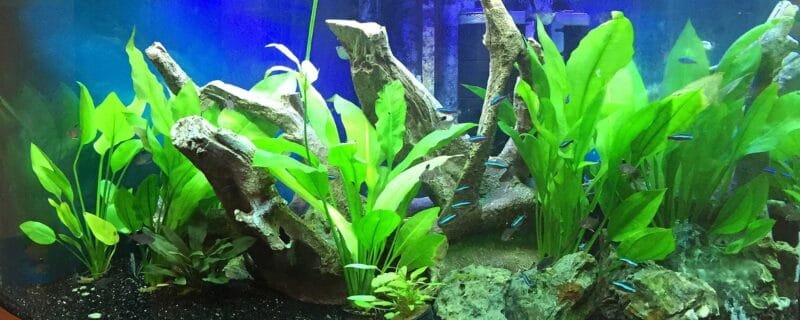
To successfully keep a Regal Angelfish, aquarists must replicate its natural coral reef environment. The tank should have plenty of live rock for grazing and hiding. A mature aquarium is essential, as newly set-up tanks often lack sufficient natural growth for foraging.
Recommended Water Parameters:
- Temperature: 24–28°C (75–82°F)
- pH: 8.1–8.4
- Specific Gravity: 1.020–1.025
- Ammonia/Nitrite: 0 ppm
- Nitrate: <20 ppm
Provide strong biological filtration and stable parameters. A tank volume of at least 100 gallons (380 liters) is recommended to accommodate this active swimmer comfortably.
Ease of Care
The Regal Angelfish is best suited for experienced aquarists due to its sensitivity to stress, water quality, and dietary needs. It often struggles to adapt to captivity, particularly if wild-caught specimens are not properly acclimated. Tank maturity, peaceful tankmates, and a rich natural environment are key factors for success.
Compatibility and Tankmates
Regal Angelfish are relatively peaceful but may become territorial toward other angelfish or similarly shaped species. They thrive in calm community setups with non-aggressive tankmates. Ideal companions include:
- Gobies, blennies, and wrasses
- Reef-safe tangs like the Yellow Tang or Hippo Tang
- Peaceful clownfish such as the Percula Clownfish
- Small schooling fish like chromis or anthias
Avoid keeping them with aggressive species such as triggers, large groupers, or aggressive angelfish like the Queen Angelfish.
Species Variations
There are two main geographic color variations of the Regal Angelfish:
- Red Sea / Indian Ocean Variant: Features a vivid orange-yellow body with blue and white stripes, and a yellow belly. This variant is often hardier and more likely to thrive in captivity.
- Indo-Pacific Variant: Displays a blue-grayish body with more subdued yellow tones and a bluish chest. This variant is typically more delicate and less reef-safe.
The Albino Regal Angelfish
Albino Regal Angelfish are an exceptionally rare sight. In these rare genetic variants, the fish exhibit a pale white or golden hue with faint patterning. Due to their rarity and fragility, Albino Regal Angels are seldom seen in the aquarium trade and command extremely high prices when available. Their care requirements are identical but they are even more sensitive to lighting and environmental changes.
Common Health Concerns
Regal Angelfish are susceptible to marine ich (Cryptocaryon irritans), velvet disease, and bacterial infections if stressed or poorly acclimated. A quarantine period of 3–4 weeks is recommended before introducing them to a display tank. Maintaining pristine water quality and offering a balanced diet are the best defenses against illness.
Conclusion
The Regal Angelfish (Pygoplites diacanthus) is a magnificent addition to a mature marine aquarium. While its care requires patience, stability, and experience, the reward of seeing this regal creature thrive is unmatched. With the right environment, diet, and tankmates, it can become the crown jewel of any saltwater setup.
FAQs about the Regal Angelfish
1. Can Regal Angelfish live in a reef tank?
Yes, but with caution. Red Sea varieties tend to be more reef-safe, while Indo-Pacific types may nip at corals and clams.
2. How can I encourage my Regal Angelfish to eat?
Try offering live foods such as brine or mysis shrimp, or sponge-based frozen diets. Providing natural rockwork helps them feel secure enough to feed.
3. How long does it take for a Regal Angelfish to acclimate?
It can take several weeks for a Regal Angelfish to settle in. Provide hiding spaces, maintain calm tankmates, and offer a varied diet to help it adapt successfully.