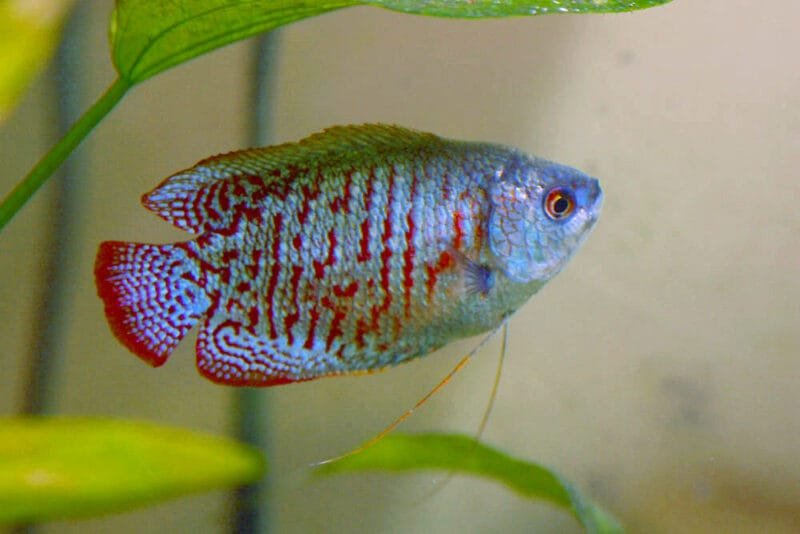
The Opaline Gourami, scientifically known as Trichopodus trichopterus, is a striking freshwater fish prized for its marbled blue, silver, and lavender coloration. Also commonly referred to as the Opaline Three-Spot Gourami, this species is a color morph of the well-known Three-Spot Gourami and has become a staple in the aquarium hobby due to its hardiness, intelligence, and bold personality.
Opaline Gouramis are labyrinth fish, meaning they possess a specialized organ that allows them to breathe atmospheric air. This adaptation makes them particularly resilient in a range of aquarium conditions and suitable for aquarists with varying experience levels.
Natural Habitat and Origin
In the wild, Trichopodus trichopterus is native to Southeast Asia, including Thailand, Cambodia, Laos, Vietnam, and parts of Malaysia and Indonesia. They inhabit slow-moving or stagnant waters such as floodplains, rice paddies, swamps, canals, and shallow ponds.
These environments are typically warm, densely vegetated, and low in dissolved oxygen, which explains the species’ reliance on its labyrinth organ. Replicating these conditions in the home aquarium helps promote natural behavior and long-term health.
Size and Lifespan
Adult Opaline Gouramis typically reach a size of 5 to 6 inches (12–15 cm), making them a medium-sized centerpiece fish. With proper care, they can live between 4 and 6 years, and occasionally longer in well-maintained aquariums.
Tank Requirements and Water Conditions
Aquarium Size
A minimum tank size of 30 gallons is recommended for a single Opaline Gourami, with larger tanks (40–55 gallons) preferred if keeping multiple fish or a community setup. Extra space helps reduce territorial behavior, especially among males.
Water Parameters
Opaline Gouramis are adaptable but thrive best under the following conditions:
Temperature: 24–28°C (75–82°F)
pH: 6.0–7.5
Hardness: 5–15 dGH
Water Flow: Slow to moderate
Gentle filtration and calm surface movement are ideal. Because they breathe air, ensure unobstructed access to the water surface.
Diet and Feeding
Opaline Gouramis are omnivorous and readily accept a wide variety of foods. In the wild, they consume insects, larvae, crustaceans, algae, and plant matter.
Recommended Foods
High-quality tropical flakes or pellets
Frozen or live foods such as bloodworms, brine shrimp, and daphnia
Occasional vegetable matter like blanched spinach or spirulina-based foods
A varied diet enhances coloration, supports immune health, and encourages natural foraging behavior.
Temperament and Community Compatibility
While often described as semi-aggressive, Opaline Gouramis are best understood as territorial rather than outright aggressive. Males, in particular, may display dominance toward similar-looking fish or other gouramis.
They can be excellent community fish when paired with calm, similarly sized tank mates.
Good Tank Mates
Corydoras catfish (see Bronze Corydoras)
Peaceful barbs such as Rosy Barbs
Larger tetras like Congo Tetras
Loaches such as Kuhli Loaches
Avoid fin-nipping species and overly aggressive cichlids.
Sexing Opaline Gouramis
Sexing is relatively straightforward once the fish are mature:
Males: Longer, pointed dorsal fin and more intense coloration
Females: Shorter, rounded dorsal fin and fuller body shape
Breeding Opaline Gouramis
Opaline Gouramis are bubble-nest builders. Breeding is possible in the home aquarium with preparation.
Breeding Setup
Separate breeding tank (20–30 gallons)
Warm water around 28°C (82°F)
Floating plants to anchor the bubble nest
The male constructs a bubble nest and courts the female beneath it. After spawning, the male guards the eggs while the female should be removed to prevent aggression. Fry hatch within 24–36 hours and require infusoria or finely powdered fry food.
Ease of Care
The Opaline Gourami is considered an easy to intermediate species. Its tolerance for varied water conditions and hardy nature make it suitable for beginners, provided tank size and compatible tank mates are carefully selected.
Species Variations and Related Gouramis
Trichopodus trichopterus has several popular color morphs:
Blue Gourami
Gold Gourami
Opaline Gourami
Closely related species include the Dwarf Gourami (Trichogaster lalius) and the Pearl Gourami, each offering different sizes and temperaments.
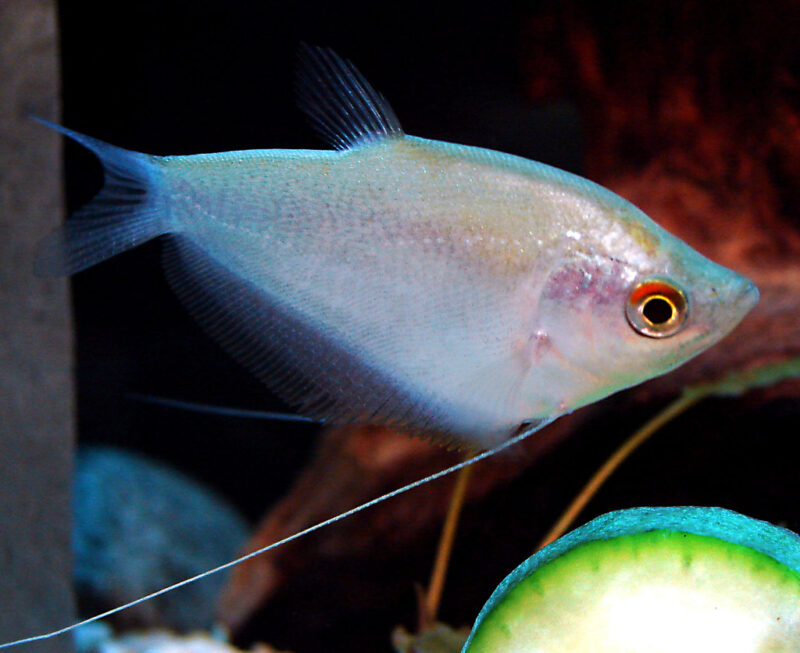
Albino Opaline Gourami
Albino Opaline Gouramis are rare but visually striking, featuring pale pink or white bodies with red eyes. Care requirements are identical to standard Opaline Gouramis, though albino specimens may be more sensitive to bright lighting and benefit from shaded areas and floating plants.
Frequently Asked Questions
Are Opaline Gouramis good for community tanks?
Yes, when housed with peaceful, non-aggressive species and given sufficient space, they can thrive in community aquariums.
Can you keep more than one Opaline Gourami together?
It is possible in larger tanks, but avoid housing multiple males together unless the aquarium is heavily planted and spacious.
Do Opaline Gouramis need a heater?
Yes. They are tropical fish and require stable, warm water temperatures to remain healthy.