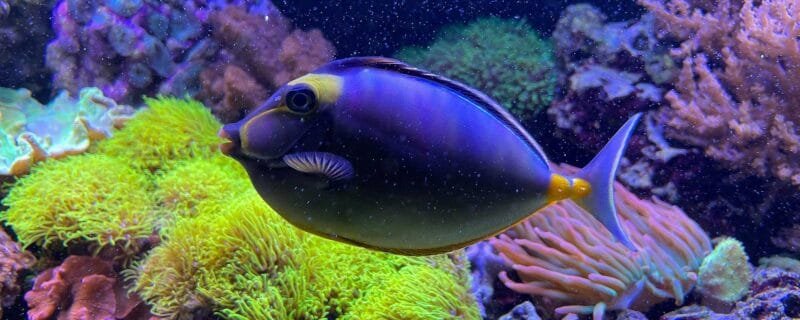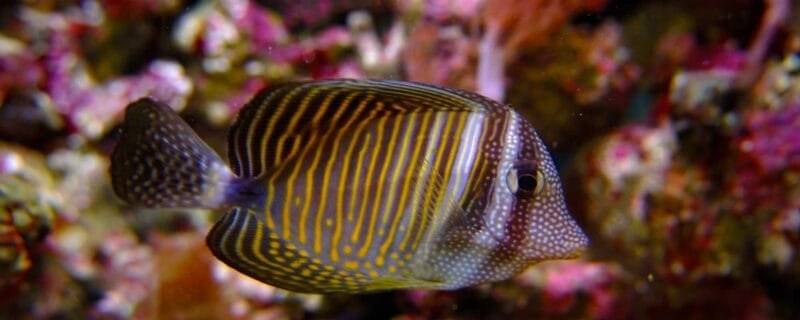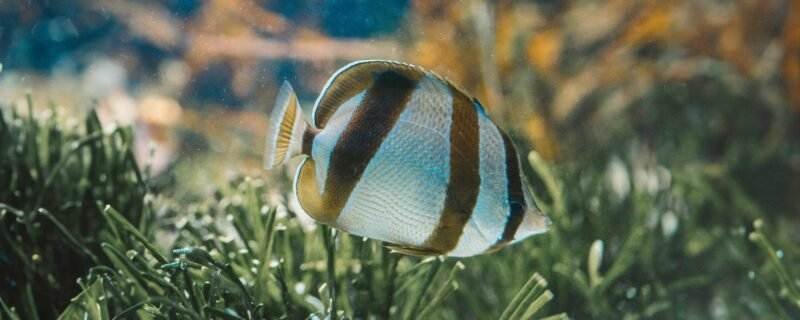
The Clown Tang, scientifically known as Acanthurus lineatus, is one of the most visually striking and recognizable surgeonfish in the marine aquarium hobby. With its bold horizontal blue, yellow, and black striping and energetic swimming behavior, this species commands attention in any saltwater setup. However, despite its beauty, the Clown Tang is widely regarded as a challenging fish best suited to experienced marine aquarists with large, mature systems.
Scientific Classification and Related Species
The Clown Tang belongs to the family Acanthuridae, commonly known as surgeonfish or tangs. This family includes other popular species such as the Yellow Tang, Hippo Tang, and Sailfin Tang. Among these, the Clown Tang is known for having one of the most aggressive temperaments.
Taxonomy
Kingdom: Animalia
Phylum: Chordata
Class: Actinopterygii
Order: Acanthuriformes
Family: Acanthuridae
Genus: Acanthurus
Species: Acanthurus lineatus
Natural Habitat and Native Range
The Clown Tang is native to the Indo-Pacific region, including the Red Sea, East Africa, Indonesia, Japan, and the Great Barrier Reef. In the wild, it inhabits shallow reef flats and surge zones where strong water movement promotes abundant algae growth. These environments shape the species’ constant grazing behavior and high oxygen demands.
Size and Lifespan
Clown Tangs grow to an average adult size of 12–15 inches (30–38 cm). In captivity, with proper care and space, they can live 10–15 years. Their rapid growth and adult size make them unsuitable for small or medium aquariums.
Temperament and Community Compatibility
This species is highly aggressive, especially as it matures. Clown Tangs are territorial and often intolerant of other tangs or similarly shaped fish. They may harass tank mates relentlessly in confined spaces.
Is the Clown Tang Good for a Community Tank?
Generally, no. While it can coexist with large, robust fish such as certain angelfish or triggers, it is not recommended for peaceful community reef tanks. If kept with other tangs, they should be introduced last and only in extremely large systems.
Reef Safety
The Clown Tang is considered reef safe with caution. It does not typically consume corals, but it may nip at large-polyp stony corals or clam mantles if underfed. Its size and activity level can also cause accidental damage to coral structures.
Diet and Feeding
In the wild, Acanthurus lineatus is a strict herbivore, grazing constantly on filamentous algae. In captivity, its diet must be rich in plant-based foods to maintain health and reduce aggression.
Recommended Foods
Dried algae sheets (nori), spirulina flakes, herbivore pellets, blanched greens, and occasional frozen foods such as mysis shrimp. Feeding multiple times daily is strongly advised.
Water Conditions and Tank Requirements
The Clown Tang requires pristine water quality and a large, oxygen-rich environment.
Ideal Water Parameters
Temperature: 24–27°C (75–81°F)
pH: 8.1–8.4
Salinity: 1.023–1.026
Nitrates: <10 ppm
Minimum Tank Size
A minimum of 180–240 gallons is recommended, with significant horizontal swimming space and strong water flow to mimic natural surge zones.
Ease of Care
Care Level: Difficult. This species is sensitive to stress, prone to marine ich, and intolerant of poor water quality. It is not recommended for beginners or lightly stocked systems.
Sexing and Breeding
There are no visible external differences between males and females. Breeding has not been successfully achieved in home aquariums. In the wild, Clown Tangs are pelagic spawners, releasing eggs into the water column.
Compatible Tank Mates
Potential tank mates include large angelfish, rabbitfish, groupers, and some triggerfish. Avoid housing with smaller, peaceful species or other aggressive tangs unless the system is exceptionally large.
Species Variations and Albino Forms
There are no recognized color morphs or albino versions of the Clown Tang. Juveniles may appear slightly less vibrant than adults, but coloration intensifies with maturity and proper nutrition.
Frequently Asked Questions
Is the Clown Tang suitable for beginners?
No. Its aggressive behavior, large size, and demanding care requirements make it suitable only for experienced aquarists.
Can Clown Tangs be kept with other tangs?
Only in very large aquariums and with careful planning. Even then, aggression is common.
How often should I feed a Clown Tang?
Ideally 2–3 times per day with a strong emphasis on algae-based foods.
Conclusion
The Clown Tang (Acanthurus lineatus) is a breathtaking yet demanding marine fish. While its bold coloration makes it highly desirable, its aggressive nature and large adult size mean it is best reserved for large, expertly maintained saltwater systems. When given the proper environment, diet, and space, it can become a long-lived and impressive centerpiece fish.