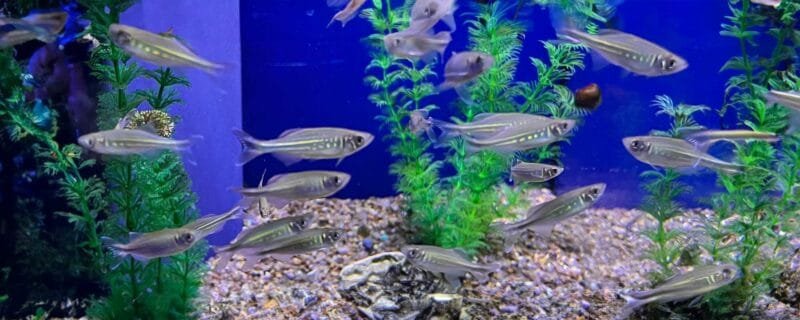
The Blue Danio (Danio kerri), also known as the Kerr’s Danio, is a lively and colorful freshwater species native to Southeast Asia. Known for its shimmering blue body and dynamic schooling behavior, this fish adds constant motion and visual appeal to any aquarium. Blue Danios are part of the Cyprinidae family, which also includes popular aquarium species such as the Zebra Danio and Celestial Pearl Danio. Hardy, adaptable, and peaceful, they are excellent choices for beginner and experienced aquarists alike.
Native Habitat
Blue Danios are native to streams and rivers in Thailand and the Malay Peninsula, where they inhabit clear, fast-flowing waters rich in oxygen. Their natural environments typically feature gravel or sandy substrates with scattered rocks, aquatic vegetation, and shaded areas from overhanging plants. This habitat provides them with the security and conditions necessary for their active swimming behavior.
Appearance and Size
The Blue Danio is a slender, torpedo-shaped fish with a metallic blue sheen that intensifies under aquarium lighting. Males typically display brighter coloration, while females tend to be slightly larger with fuller bellies. Adults usually reach lengths of about 2.5 inches (6 cm), making them suitable for small to medium-sized community aquariums.
Diet and Feeding
In the wild, Danio kerri feed on small insects, worms, crustaceans, and algae. In captivity, they thrive on a balanced diet that includes high-quality flake food, micro pellets, and live or frozen options such as daphnia, brine shrimp, or bloodworms. For optimal health and coloration, a varied diet is essential. You can learn more about proper feeding routines in our guide on complete aquarium fish nutrition.
Sexing Blue Danios
Sexing Blue Danios is relatively straightforward. Males are typically slimmer and exhibit more vivid coloration, especially when courting. Females, on the other hand, have rounder, fuller bodies and slightly duller hues. During spawning periods, males display intensified colors as they chase females around the tank.
Breeding and Fry Care
Breeding Danio kerri in captivity is quite achievable. To encourage spawning, set up a separate breeding tank with fine-leaved plants or a spawning mop for egg deposition. A slightly elevated temperature around 78°F (26°C) and frequent water changes often trigger breeding behavior. Once eggs are laid, remove the adults to prevent them from consuming the eggs. The eggs typically hatch within 48 hours, and fry can be fed infusoria or finely crushed flakes until they are large enough for baby brine shrimp.
Water Conditions
Blue Danios are hardy and can tolerate a range of water parameters, but they thrive best in stable, clean water. Ideal conditions include:
- Temperature: 72–78°F (22–26°C)
- pH: 6.5–7.5
- Hardness: 5–12 dGH
- Tank Size: Minimum 20 gallons for a small group
Maintaining consistent water changes and efficient filtration, as described in our article on choosing the right aquarium filter, is key to their health.
Community Compatibility
Blue Danios are excellent community fish due to their peaceful and social nature. They should always be kept in groups of at least six to reduce stress and display their natural schooling behavior. They get along well with other small, non-aggressive fish such as Harlequin Rasboras, Neon Tetras, and peaceful bottom dwellers like Panda Corydoras.
Ease of Care
Blue Danios are one of the easiest species to care for, making them ideal for beginners. They adapt well to a range of conditions, are disease-resistant, and remain active in various setups. Regular feeding, proper filtration, and stable water parameters ensure their long-term health and vibrant coloration.
Tank Setup and Environment
Provide plenty of swimming space and a secure lid, as Blue Danios are known jumpers. A well-planted tank with open areas, moderate lighting, and gentle water flow best replicates their natural environment. Adding floating plants can help diffuse light and create a sense of security.
Albino Variation
The Albino Blue Danio is a rare and beautiful variant featuring a creamy white body and red or pink eyes. Although less common, its care requirements are identical to the standard Blue Danio. The albino version can add a contrasting visual appeal when kept with the regular form in a single aquarium.
Species Variations and Relatives
Danio kerri belongs to a diverse genus that includes several popular aquarium fish such as the Zebra Danio (Danio rerio), Giant Danio (Devario aequipinnatus), and Celestial Pearl Danio (Danio margaritatus). Each member of this group exhibits similar schooling behaviors but varies in size, coloration, and environmental preferences.
Behavior and Temperament
Blue Danios are energetic and constantly in motion. Their playful nature makes them fun to observe, but it’s best to house them with similarly active or calm species to prevent stress. Avoid pairing them with long-finned or slow-moving fish, as their quick movements might cause fin nipping in confined spaces.
Health and Lifespan
With proper care, Blue Danios can live between 3 to 5 years, sometimes longer. They are generally hardy but can fall victim to common freshwater ailments such as ich or fin rot if water quality deteriorates. Maintaining cleanliness and offering a balanced diet will help prevent disease and keep your fish thriving.
FAQs About Blue Danio (Danio kerri)
1. How many Blue Danios should be kept together?
At least six individuals should be kept together to promote natural schooling behavior and minimize stress.
2. Can Blue Danios live with other species?
Yes, they are peaceful community fish that mix well with tetras, rasboras, corydoras, and small livebearers.
3. Are Blue Danios good for beginners?
Absolutely. They are hardy, adaptable, and forgiving of minor water fluctuations, making them perfect for new aquarists.
Conclusion
The Blue Danio (Danio kerri) is an energetic, colorful, and easy-to-keep species that brings vitality to any freshwater aquarium. Whether you’re a beginner or a seasoned hobbyist, these fish offer a rewarding experience. Their active nature, shimmering coloration, and compatibility with a range of tankmates make them a favorite choice among aquarists worldwide.