Live plants play a vital role in freshwater aquariums, helping to improve water quality, reduce algae, and create a more natural and visually appealing environment for fish and invertebrates. Among the many aquatic plants available to hobbyists, Java Fern (Microsorum pteropus) stands out as one of the most reliable and beginner-friendly choices. Its hardy nature, low maintenance requirements, and adaptability to a wide range of aquarium conditions have made it a staple in freshwater aquascaping for decades.
Whether you are setting up your first planted tank or refining a mature aquascape, Java Fern offers versatility and long-term success with minimal effort. This guide explores everything you need to know about Java Fern in freshwater aquariums, from its natural origins to advanced aquascaping techniques.
Plant Profile
Scientific and Common Names
Common Name: Java Fern
Scientific Name: Microsorum pteropus
Family: Polypodiaceae
Natural Habitat and Geographic Origin
Java Fern is native to Southeast Asia, where it grows in slow-moving rivers, streams, and shaded forest waterways. It is commonly found attached to rocks, driftwood, and submerged tree roots rather than rooted in substrate. This epiphytic growth habit explains much of its resilience and flexibility in aquariums.
Plant Type
Java Fern is a rhizome plant. Instead of drawing nutrients primarily from the substrate, it absorbs nutrients directly from the water column through its leaves and rhizome.
Typical Growth Pattern
The plant produces long, leathery green leaves that emerge from a creeping horizontal rhizome. Growth is slow to moderate, making it easy to manage and ideal for aquarists who prefer low-maintenance setups.
Placement in the Aquarium
Java Fern is best suited for midground to background placement. Smaller varieties can also work well in the foreground of nano tanks or attached to hardscape features as accent plants.
The Species and Related Varieties
Microsorum pteropus is the most widely known species, but several cultivated varieties are popular in the aquarium hobby:
Microsorum pteropus ‘Narrow Leaf’ – Features thinner, elongated leaves and a more delicate appearance.
Microsorum pteropus ‘Windeløv’ – Known for its finely branched, lace-like leaf tips.
Microsorum pteropus ‘Trident’ – Characterized by narrow leaves with forked ends.
Microsorum pteropus ‘Needle Leaf’ – Compact with very thin leaves, ideal for detailed aquascapes.
All varieties share similar care requirements, making it easy to mix and match them within the same aquarium.
Care Guide
Lighting Requirements
Java Fern thrives under low to moderate lighting. Intense lighting is not required and can actually promote algae growth on its slow-growing leaves. A lighting period of 6–8 hours per day is generally sufficient. For beginners, pairing Java Fern with proper lighting guidance such as found in aquarium lighting essentials can ensure stable growth.
Water Parameters
Java Fern is highly adaptable and tolerant of a wide range of water conditions:
Temperature: 20–28°C (68–82°F)
pH: 6.0–7.5
Hardness: Soft to moderately hard water
This flexibility makes Java Fern compatible with most community fish species.
Substrate Preferences
Java Fern should never have its rhizome buried in substrate, as this will cause it to rot. Instead, attach the plant to driftwood, rocks, or décor using fishing line, cotton thread, or aquarium-safe glue. Over time, the plant will naturally anchor itself.
For aquarists planning their layout, resources like selecting the best aquarium substrate can help complement Java Fern with other rooted plants.
Fertilization and CO₂
Java Fern does not require CO₂ injection to thrive. While it benefits from liquid fertilizers containing micronutrients such as potassium and iron, heavy fertilization is unnecessary. Excess nutrients may encourage algae rather than plant growth.
CO₂ can enhance leaf size and color slightly, but it is entirely optional. For more advanced planted tanks, understanding CO₂ in planted aquariums can help determine whether supplementation is worthwhile.
Trimming, Propagation, and Growth Rate
Java Fern grows slowly and requires minimal trimming. Remove older or damaged leaves by cutting them at the base near the rhizome.
Propagation is simple and fascinating. Small plantlets form on the undersides of mature leaves. Once these plantlets develop several leaves and roots, they can be gently removed and attached elsewhere in the aquarium.
Aquascaping Tips
Using Java Fern in Aquascaping Layouts
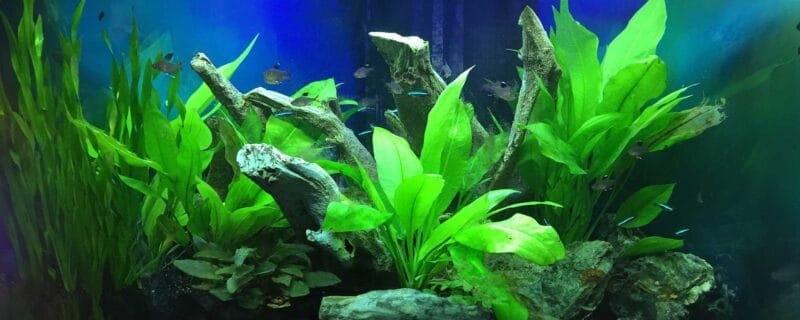
Java Fern excels in natural-style, jungle-style, and low-tech aquascapes. Its flowing leaves create movement and depth without overwhelming the layout.
Attaching Java Fern to driftwood enhances its natural appearance, especially when combined with aquarium-safe woods as discussed in aquascaping with aquarium-safe woods.
Compatibility with Other Plants and Hardscape
Java Fern pairs well with slow-growing plants such as Anubias barteri, Cryptocoryne species, and mosses. These plants share similar lighting and nutrient requirements, making them ideal companions.
Ideal Tank Size and Styles
Java Fern can be used in tanks of nearly any size, from small nano aquariums to large community tanks. It is particularly effective in Nature Aquarium and low-maintenance setups where stability and balance are prioritized.
Tank Mates and Compatibility
Compatible Fish and Invertebrates
Java Fern is compatible with almost all freshwater fish and invertebrates. It is especially useful in tanks with species that may uproot delicate plants, such as cichlids or goldfish, since it is attached to hardscape rather than planted in substrate.
Popular tank mates include tetras, rasboras, gouramis, livebearers, shrimp, and snails.
Species to Avoid
While Java Fern is tough, some plant-eating fish may still damage it. Large herbivorous species and certain cichlids may nibble on the leaves, though this is less common compared to softer plants.
Common Problems and Solutions
Black Spots on Leaves
Dark spots on Java Fern leaves are often normal and indicate plantlet formation. However, excessive blackening may also suggest nutrient deficiencies or aging leaves.
Leaf Melting
Newly introduced Java Fern may experience leaf melt as it adapts to new water conditions. This is normal. Remove affected leaves and allow new growth to emerge.
Algae Growth
Due to its slow growth, Java Fern leaves can attract algae under high lighting or excess nutrients. Reducing light duration and maintaining proper tank maintenance, as outlined in maintaining crystal-clear aquarium water, can help prevent this issue.
Rhizome Rot
Rhizome rot occurs when the rhizome is buried. Always keep the rhizome exposed and attached to hardscape.
FAQs About Java Fern
Can Java Fern grow without substrate?
Yes. Java Fern is an epiphytic plant and should be attached to rocks or driftwood rather than planted in substrate.
Does Java Fern need CO₂ injection?
No. Java Fern grows well in low-tech aquariums without CO₂, making it ideal for beginners.
Why are there small plants growing on my Java Fern leaves?
These are baby plantlets and are a natural method of propagation. Once mature, they can be removed and replanted elsewhere.
Conclusion
Java Fern (Microsorum pteropus) is one of the most dependable and versatile plants available to freshwater aquarists. Its ability to thrive in a wide range of conditions, combined with its unique growth habit and timeless appearance, makes it suitable for nearly any aquarium setup.
By providing moderate lighting, stable water parameters, and proper attachment to hardscape, aquarists can enjoy lush, healthy Java Fern for years. Whether you are new to planted aquariums or refining an advanced aquascape, Java Fern is a plant worth including in your underwater landscape.
For hobbyists looking to build a balanced planted tank, Java Fern is an excellent starting point and a reliable long-term companion in freshwater aquariums.