

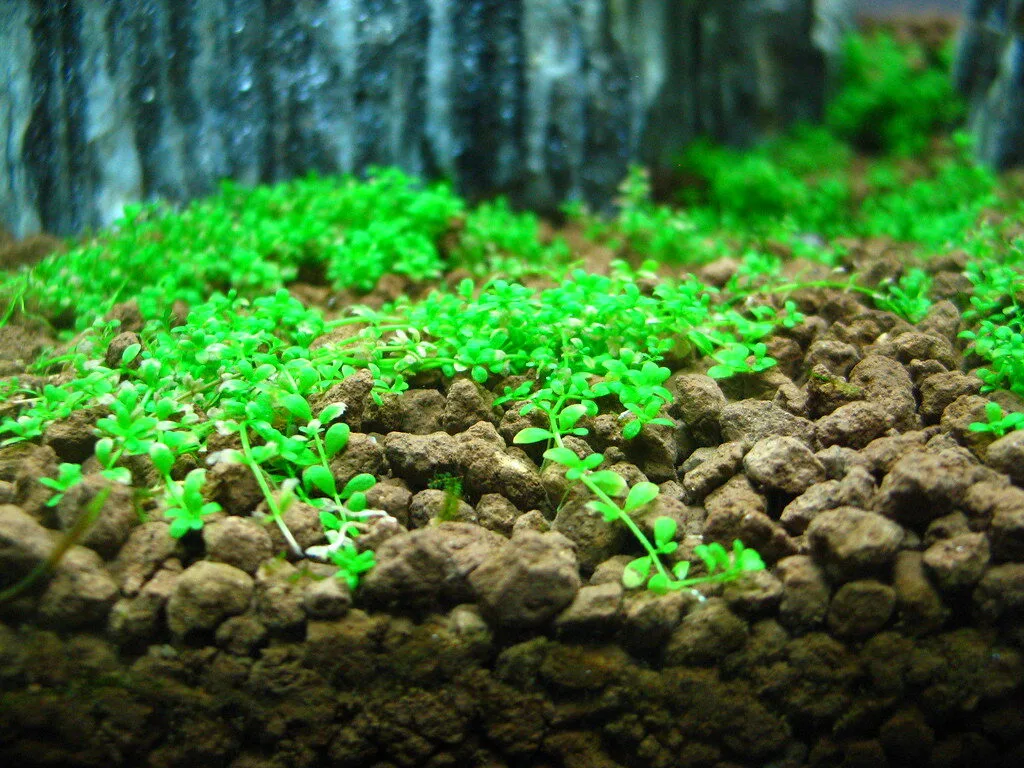
Dwarf Baby Tears (Hemianthus callitrichoides)
Dwarf Baby Tears (Hemianthus callitrichoides), often abbreviated as HC or referred to as “HC Cuba,” is one of the most iconic foreground plants in the freshwater aquascaping world. Famous for its tiny, vibrant green leaves and its ability to form a lush, carpet-like lawn, this plant is a favorite among Nature Aquarium and Iwagumi enthusiasts. While not considered a true beginner plant, Dwarf Baby Tears rewards careful aquarists with one of the most visually striking planted aquarium effects available.
Live plants play a critical role in freshwater aquariums by improving water quality, reducing algae pressure, and creating a more natural environment for fish and invertebrates. Among carpeting plants, few can rival the fine texture and aesthetic impact of Dwarf Baby Tears, which is why it remains a staple in competition-level aquascapes and high-end planted tanks :contentReference[oaicite:1]{index=1}.
Plant Profile
Scientific and Common Names
Scientific name: Hemianthus callitrichoides
Common names: Dwarf Baby Tears, HC Cuba
Natural Habitat and Geographic Origin
Hemianthus callitrichoides originates from Cuba, where it grows along the edges of shallow streams and rivers. In the wild, it often creeps across rocks and submerged surfaces in areas with clean, oxygen-rich water and ample light. These natural conditions explain why the plant thrives best in aquariums with strong lighting, stable water parameters, and good circulation.
Plant Type
Dwarf Baby Tears is a rooted carpeting plant. It spreads horizontally by sending out runners, eventually forming a dense mat across the substrate when conditions are optimal.
Typical Growth Pattern
This plant grows low and compact, typically reaching only 1–3 cm (0.5–1.25 inches) in height. Under high light and CO₂ injection, growth is horizontal rather than vertical, creating a smooth, even carpet.
Placement in the Aquarium
Hemianthus callitrichoides is best suited for foreground placement. It is commonly used to create open grassy areas in front of rocks and driftwood, particularly in Iwagumi and Nature Aquarium layouts.
Care Guide
Lighting Requirements
Dwarf Baby Tears requires high-intensity lighting to thrive. Low light often leads to vertical growth, melting, or detachment from the substrate.
Recommended lighting:
– High-output LED or T5 lighting
– 8–10 hours per day
– Consistent photoperiod to avoid algae issues
For a deeper understanding of lighting strategies, see this planted aquarium lighting guide.
Water Parameters
Stable water conditions are essential for long-term success with HC.
Temperature: 20–26°C (68–79°F)
pH: 5.5–7.0
Hardness: Soft to moderately soft water
Sudden changes in pH or hardness can cause the plant to melt, particularly after planting or trimming.
Substrate Preferences
A nutrient-rich aquasoil is strongly recommended. Fine-grain substrates allow the delicate roots to anchor properly and spread efficiently.
For substrate selection tips, see selecting the best aquarium substrate.
Fertilization and CO₂
Hemianthus callitrichoides is considered a high-demand plant.
– CO₂ injection is highly recommended and often essential
– Regular liquid fertilizers supplying nitrogen, phosphorus, potassium, and micronutrients
– Root tabs are optional but can support initial establishment
A lack of CO₂ often results in slow growth, melting, or algae-covered leaves. For more detail, read the role of CO₂ in planted aquariums.
Trimming, Propagation, and Growth Rate
Once established, Dwarf Baby Tears grows at a moderate to fast rate under ideal conditions. Regular trimming is necessary to prevent the carpet from becoming too thick, which can cause lower layers to rot.
Propagation method:
– Trim healthy sections
– Replant small clumps a few centimeters apart
– New runners will quickly fill in gaps
Aquascaping Tips
Using Dwarf Baby Tears in Layouts
Dwarf Baby Tears is most often used to create negative space and visual contrast against hardscape elements. Its fine leaf structure pairs beautifully with stone-heavy designs, particularly Iwagumi layouts.

It also works well in Nature Aquarium layouts when combined with midground plants such as Cryptocoryne species or stem plants like Rotala.
Compatibility With Other Plants and Hardscape
This plant complements smooth stones and fine-grain aquasoils exceptionally well. Avoid pairing it with overly aggressive or tall foreground plants that may shade it out.
For broader design inspiration, explore aquascaping techniques and ideas.
Ideal Tank Size and Layout Styles
While HC can be grown in smaller tanks, it truly shines in well-planned aquascapes with stable conditions.
– Nano tanks: possible but demanding
– Medium to large tanks: easier stability
– Best styles: Iwagumi, Nature Aquarium, minimalist layouts
Tank Mates and Compatibility
Best Fish and Invertebrates
Dwarf Baby Tears pairs best with small, peaceful species that will not disturb the substrate.
– Small tetras and rasboras
– Otocinclus catfish
– Amano shrimp and dwarf shrimp species
For ideas on peaceful community setups, see best community fish that live peacefully together.
Species to Avoid
– Large digging cichlids
– Goldfish
– Large plecos that uproot plants
These species can easily dislodge HC and destroy an established carpet.
Common Problems and Solutions
Melting After Planting
Melting is common shortly after planting, especially if the plant was grown emersed. Stable parameters, strong light, and CO₂ usually resolve this within a few weeks.
Algae Growth on Leaves
Algae often indicates an imbalance between light, CO₂, and nutrients. Reduce photoperiod slightly and ensure consistent CO₂ delivery.
For algae control strategies, read natural ways to control aquarium algae.
Carpet Lifting or Rotting
This occurs when the carpet becomes too thick. Regular trimming and vacuuming debris from the surface help maintain healthy growth.
Frequently Asked Questions
Is Dwarf Baby Tears suitable for beginners?
While not impossible for beginners, it is better suited to aquarists with experience managing CO₂, lighting, and fertilization.
Can Hemianthus callitrichoides grow without CO₂?
It may survive under very strong light without CO₂, but growth will be slow and inconsistent. CO₂ is strongly recommended.
How long does it take to form a full carpet?
Under ideal conditions, a full carpet can form in 6–10 weeks, depending on planting density and maintenance.
Healthy growth depends on balanced light, nutrients like iron and potassium, and optional CO2 supplementation for demanding aquascaping layouts.
Related Reading
Conclusion
Hemianthus callitrichoides is one of the most rewarding foreground plants available to freshwater aquarists. Its vibrant color, fine texture, and ability to form a dense, natural-looking carpet make it a cornerstone of high-end aquascaping.
Although it demands attention to lighting, CO₂, and water stability, the results are well worth the effort. With patience and proper care, Dwarf Baby Tears can transform an ordinary aquarium into a breathtaking underwater landscape that showcases the true art of aquascaping.
If you are ready to elevate your planted tank and embrace a more advanced challenge, Dwarf Baby Tears is an exceptional plant to explore.


Explore other topics
Dive into more aquarium guides across the site.