

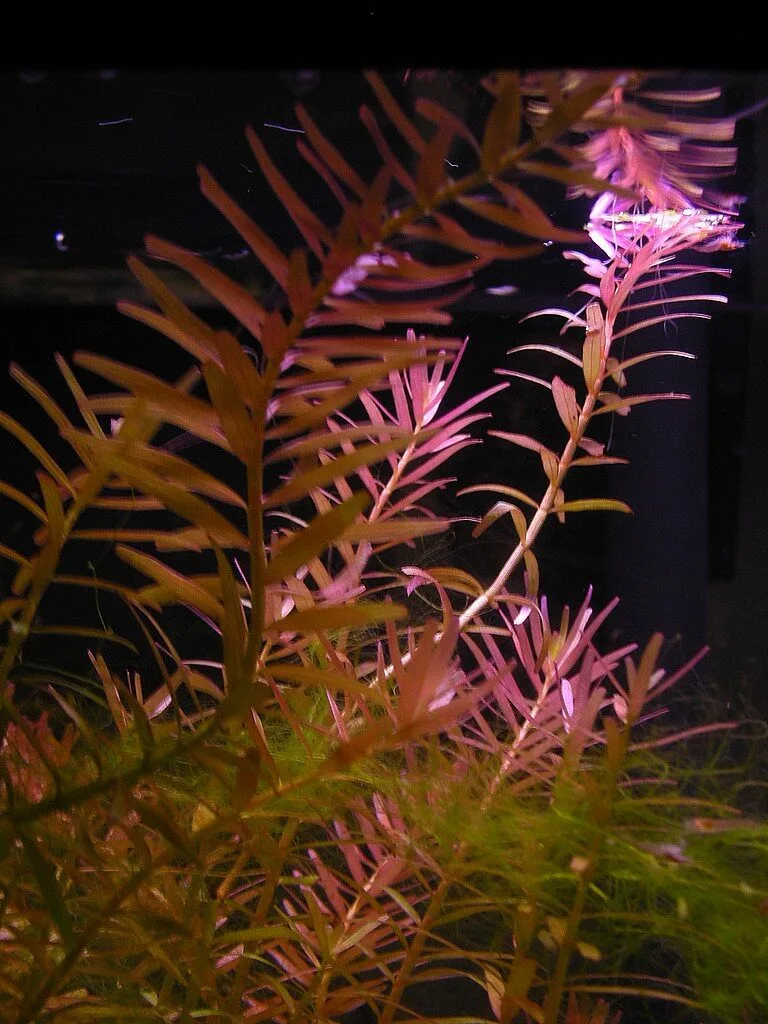
Live plants play a vital role in freshwater aquariums, contributing not only to visual appeal but also to overall tank health. They help stabilize water parameters, reduce algae growth by competing for nutrients, and create natural hiding and spawning spaces for fish and invertebrates. Among the many popular aquarium plants available today, Rotala Indica Red stands out as a favorite for aquascapers who want to add vibrant color and texture to their layouts.
Rotala Indica Red is especially prized for its ability to develop stunning red, pink, and orange hues under the right conditions. While it is often considered slightly more demanding than basic beginner plants, it remains approachable for hobbyists willing to fine-tune lighting and fertilization. Whether used as a midground accent or a colorful background plant, Rotala Indica Red brings movement, contrast, and depth to planted aquariums.
Plant Profile
Scientific and Common Names
Scientific name: Rotala indica
Common names: Rotala Indica Red, Indian Toothcup (in botanical references), Red Rotala
It is worth noting that many plants sold as Rotala indica in the aquarium trade are sometimes misidentified and may actually be Rotala rotundifolia variants. However, true Rotala indica is still widely cultivated and valued for its coloration and growth form.
Natural Habitat and Geographic Origin
Rotala indica originates from South and Southeast Asia, particularly India and surrounding regions. In the wild, it grows along riverbanks, rice paddies, and marshy areas that experience seasonal flooding. These environments expose the plant to intense sunlight, nutrient-rich sediments, and fluctuating water levels, all of which influence its adaptability in aquariums.
Plant Type
Rotala Indica Red is a rooted stem plant. It grows upright from the substrate, producing multiple stems that can branch when trimmed properly.
Typical Growth Pattern
This plant grows vertically with relatively thin stems and small, narrow leaves that grow in pairs along the stem. Under high light, the leaves develop red to reddish-pink tones, while lower light conditions result in greener growth. When regularly trimmed, Rotala Indica Red becomes bushier and denser, creating a lush appearance.
Placement in the Aquarium
Rotala Indica Red is best suited for midground to background placement. In smaller tanks, it often serves as a background plant, while in larger aquascapes it can be used as a colorful midground focal point behind hardscape elements.
Care Guide
Lighting Requirements
Lighting is the single most important factor in achieving the red coloration Rotala Indica Red is known for. Medium to high lighting is required for optimal growth and color development.
Low light will keep the plant alive, but it will remain mostly green and may grow leggy as it stretches toward the light. High-quality LED aquarium lights with strong output in the full spectrum range work best.
Recommended photoperiod is 8 to 10 hours per day. Longer lighting periods can increase algae risk without significantly improving plant coloration.
Water Parameters
Rotala Indica Red prefers stable, clean water conditions.
Ideal temperature range is 22–28°C (72–82°F).
Preferred pH range is 6.0–7.5.
Water hardness should be soft to moderately hard, ideally between 2–12 dGH.
While the plant can tolerate a range of parameters, consistent conditions will lead to healthier growth and stronger coloration.
Substrate Preferences
A nutrient-rich substrate is highly recommended. Aquasoils designed for planted aquariums work extremely well, as they provide essential nutrients directly to the roots.
Rotala Indica Red can grow in sand or gravel if water column fertilization is adequate, but growth will be noticeably stronger and faster in enriched substrates.
Fertilization and CO₂
Regular fertilization is essential for this plant to thrive and display its best colors.
Liquid fertilizers containing nitrogen, phosphorus, potassium, and trace elements should be dosed consistently. Iron supplementation is particularly important for maintaining red pigmentation.
CO₂ injection is not strictly required, but it is strongly recommended. With CO₂, Rotala Indica Red grows faster, stays more compact, and develops deeper red tones. Without CO₂, growth will be slower and coloration less intense, though still acceptable for low-tech setups.
Trimming, Propagation, and Growth Rate
Rotala Indica Red has a moderate to fast growth rate under good conditions.
Trimming is essential to prevent the plant from becoming tall and sparse. Cut stems above a node and replant the healthy tops into the substrate. The original stems will usually branch, creating a fuller, bushier plant.
Propagation is extremely easy through cuttings, making this plant cost-effective and ideal for aquarists who enjoy shaping their aquascape over time.
Aquascaping Tips

Using Rotala Indica Red Effectively
Rotala Indica Red works best when used as a color contrast plant. Its red tones stand out beautifully against green plants such as Anubias, Java Fern, Cryptocoryne, or various mosses.
Plant stems in small groups rather than single stems. This creates a more natural and impactful look. Staggering the heights slightly also adds depth and visual interest.
Compatibility with Other Plants and Hardscape
This plant pairs exceptionally well with driftwood and dark stones, which help highlight its coloration. In nature-style and Dutch-style aquascapes, Rotala Indica Red is often used as a background “color block.”
Avoid shading it with larger plants, as reduced light will quickly cause it to lose its red tones.
Ideal Tank Sizes and Layout Styles
Rotala Indica Red can be used in tanks as small as 10 gallons, though it truly shines in larger aquariums where it has room to grow and be shaped.
It is well-suited for Dutch-style aquascapes, nature aquariums, and high-tech planted tanks. It can also be used in jungle-style layouts if regularly maintained.
Tank Mates and Compatibility
Best Fish and Invertebrates
Rotala Indica Red is compatible with most peaceful community fish. Small schooling species such as tetras, rasboras, and barbs look stunning swimming in front of its red foliage.
Dwarf cichlids, including Apistogramma species, appreciate the cover it provides. Shrimp and snails are also excellent companions and help keep the plant free of algae.
Species to Avoid
Avoid large herbivorous fish and aggressive plant eaters. Silver dollars, some larger cichlids, and goldfish are likely to damage or uproot the plant.
Common Problems and Solutions
Melting After Planting
Some leaf loss after planting is normal, especially if the plant was grown emersed. Trim away melting leaves and focus on maintaining stable conditions. New submerged growth should appear within a few weeks.
Green Growth Instead of Red
This is almost always caused by insufficient lighting or lack of nutrients, particularly iron. Increase light intensity gradually and ensure consistent fertilization.
Algae on Leaves
Algae can develop if lighting is too strong without adequate nutrients or CO₂. Balance is key. Regular water changes and a clean-up crew of shrimp or snails can help.
Leggy or Sparse Growth
Leggy growth is a sign of low light or infrequent trimming. Increase light intensity and trim regularly to encourage bushier growth.
Conclusion
Rotala Indica Red is a stunning and rewarding plant that adds vibrant color and movement to freshwater aquariums. While it does require moderate attention to lighting and nutrients, the payoff is well worth the effort. Its fast growth, easy propagation, and striking appearance make it a favorite among aquascapers of all experience levels.
With proper care, regular trimming, and stable water conditions, Rotala Indica Red can become a long-lasting centerpiece in your planted aquarium. Hobbyists looking to elevate their aquascape and experiment with color should absolutely consider adding this beautiful stem plant to their setup.
FAQs
Is Rotala Indica Red beginner friendly
Rotala Indica Red is suitable for beginners who are willing to provide moderate lighting and basic fertilization. It is easier to maintain in tanks with CO₂ but can still grow in low-tech setups.
Why is my Rotala Indica Red turning green
This usually happens due to insufficient light or nutrient deficiencies, especially iron. Increasing light intensity and improving fertilization often restores red coloration.
Does Rotala Indica Red need CO₂
CO₂ is not mandatory, but it significantly improves growth speed, leaf density, and red coloration. For the best results, CO₂ injection is highly recommended.
Healthy growth depends on balanced light, nutrients like iron and potassium, and optional CO2 supplementation for demanding aquascaping layouts.
Related Reading


Explore other topics
Dive into more aquarium guides across the site.