The Rosy Barb is one of the most recognizable and enduring freshwater aquarium fish in the hobby. Known for its shimmering coloration, active schooling behavior, and hardy nature, this species has been a staple in community aquariums for decades. Suitable for both beginners and experienced aquarists, the Rosy Barb offers visual appeal without demanding overly complex care.
In this comprehensive guide, we explore everything you need to know about the Rosy Barb, from its natural habitat and water requirements to feeding, breeding, and compatibility with other fish. We will also take a closer look at albino and selectively bred variations that are popular in the aquarium trade.
Scientific Classification and Related Species
Latin Name: Puntius conchonius
The Rosy Barb belongs to the family Cyprinidae, which includes carps, minnows, and other barbs. This family is one of the largest groups of freshwater fish and is well represented in the aquarium hobby.
Closely related species include the Cherry Barb (Puntius titteya), Tiger Barb (Puntigrus tetrazona), and Gold Barb (Puntius semifasciolatus). While each species has its own temperament and appearance, they share similar body shapes and schooling tendencies.
Natural Habitat and Origin
The Rosy Barb is native to South Asia, with populations found in India, Nepal, Bangladesh, and parts of Pakistan. In the wild, these fish inhabit slow-moving rivers, streams, lakes, and ponds, often in areas with moderate vegetation and sandy or muddy substrates.
Seasonal flooding plays an important role in their natural life cycle, especially when it comes to breeding. During monsoon seasons, Rosy Barbs migrate into shallow, plant-rich waters where spawning occurs.
Physical Appearance and Size
Adult Size
Rosy Barbs typically grow to an adult size of 4 to 6 inches, with males generally being slightly slimmer than females. In spacious aquariums with good water quality, they often reach their maximum size and display their best coloration.
Coloration
Males are known for their vibrant pink to reddish-orange hues, especially during breeding periods. Females tend to be paler, often with a more silvery or golden body tone. Both sexes may display darker markings along the dorsal area.
Albino and Color Variations
One of the most popular variations is the Albino Rosy Barb. This variety lacks dark pigmentation, resulting in a pale pink or creamy white body with red or pink eyes. Albino Rosy Barbs retain the same behavior and care requirements as standard Rosy Barbs, making them an easy alternative for aquarists seeking visual contrast.
Other selectively bred variations may exhibit enhanced red tones, golden highlights, or extended finnage, though these are less common than albino specimens.
Tank Size and Aquarium Setup
Minimum Tank Size
A minimum tank size of 30 gallons is recommended for a small group of Rosy Barbs. Because they are active swimmers, larger tanks of 40 gallons or more are ideal, especially when housing a proper school.
Aquascaping Considerations
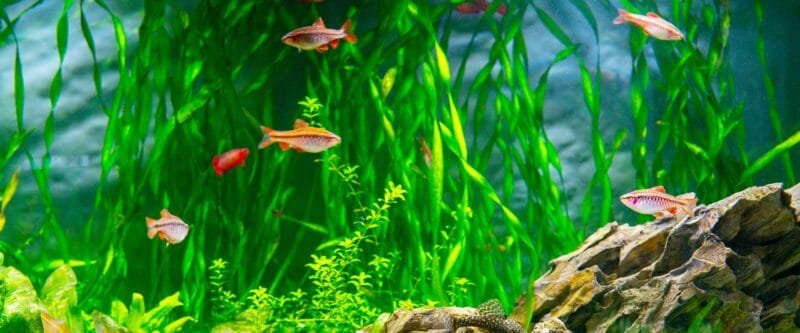
Rosy Barbs thrive in aquariums that offer open swimming areas combined with planted sections. Hardy plants such as Java fern, Vallisneria, and Anubias work well, as Rosy Barbs may nibble on softer plant species.
Using natural décor such as driftwood and smooth rocks helps replicate their native environment. For guidance on tank setup, see Setting Up Your First Freshwater Aquarium.
Water Parameters and Conditions
Ideal Water Conditions
Rosy Barbs are adaptable and tolerant, but stable conditions are essential for long-term health.
Temperature: 64–75°F (18–24°C)
pH: 6.0–8.0
Water Hardness: 5–15 dGH
They prefer slightly cooler water compared to many tropical species, which makes them suitable for temperate community tanks.
Diet and Feeding
Omnivorous Feeding Habits
Rosy Barbs are omnivores and enthusiastic eaters. In the wild, they consume algae, plant matter, insects, and small crustaceans.
In captivity, they should be offered a varied diet including high-quality flakes or pellets, supplemented with frozen or live foods such as bloodworms, daphnia, and brine shrimp. For more on feeding practices, visit Aquarium Fish Feeding: Complete Nutrition Guide.
Temperament and Community Compatibility
Behavior
Rosy Barbs are generally peaceful but energetic. They are schooling fish and should be kept in groups of at least five or six to minimize fin-nipping behavior.
Compatible Tank Mates
Good tank mates include larger tetras, danios, rainbowfish, peaceful gouramis, and bottom dwellers like Corydoras catfish. Avoid housing them with long-finned, slow-moving fish such as fancy angelfish or bettas.
For more compatible species ideas, see Best Community Fish That Live Peacefully Together.
Sexing Rosy Barbs
Sexing Rosy Barbs is relatively straightforward in mature specimens. Males are more brightly colored and slimmer, especially during breeding periods. Females are rounder, particularly when carrying eggs, and display more subdued coloration.
Breeding Rosy Barbs
Breeding Setup
Rosy Barbs are egg scatterers and relatively easy to breed. A separate breeding tank with fine-leaved plants or spawning mops is recommended. Slightly warmer water and increased feeding can help trigger spawning behavior.
Spawning and Fry Care
After spawning, adults should be removed as they may eat the eggs. Eggs typically hatch within 24 to 48 hours. Fry can be fed infusoria initially, followed by baby brine shrimp as they grow.
Ease of Care
Rosy Barbs are considered easy to care for and are well suited for beginner aquarists. Their tolerance to a wide range of water conditions and robust appetite make them forgiving of minor mistakes, though regular maintenance is still essential.
Common Health Issues
With good water quality and a balanced diet, Rosy Barbs are generally healthy. Common issues include ich and fin damage caused by stress or poor tank conditions. Regular water changes and proper filtration help prevent most problems. Learn more at How to Spot an Unhealthy Fish and Provide the Right Care.
Frequently Asked Questions
Are Rosy Barbs suitable for beginners?
Yes, Rosy Barbs are hardy, adaptable, and easy to care for, making them an excellent choice for beginner aquarists.
How many Rosy Barbs should be kept together?
They should be kept in groups of at least five or six to reduce aggression and encourage natural schooling behavior.
Do Rosy Barbs need a heater?
In most indoor environments, a heater is recommended to maintain stable temperatures, though they tolerate cooler water better than many tropical fish.
Conclusion
The Rosy Barb (Puntius conchonius) remains a classic freshwater aquarium fish for good reason. Its striking appearance, active nature, and straightforward care requirements make it a rewarding addition to community tanks. Whether you choose a standard or albino variety, this species offers long-term enjoyment and dynamic movement in the aquarium.