

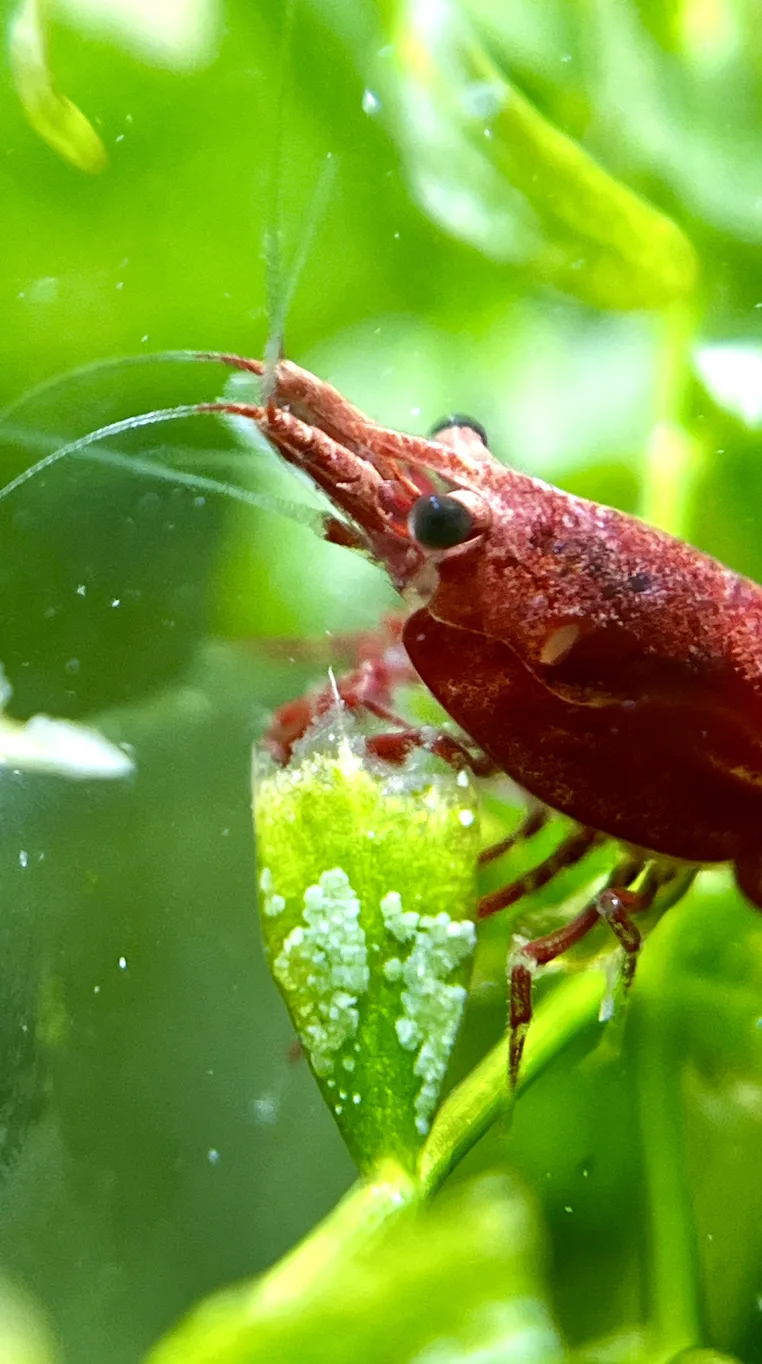
Shrimp Feeding Guide: Biofilm vs Pellets
Aquarium shrimp are grazers first. Biofilm, aufwuchs, and soft algae are the real buffet; pellets and wafers are timed supplements. Get that balance wrong and you either starve a new colony or choke the tank with leftovers.
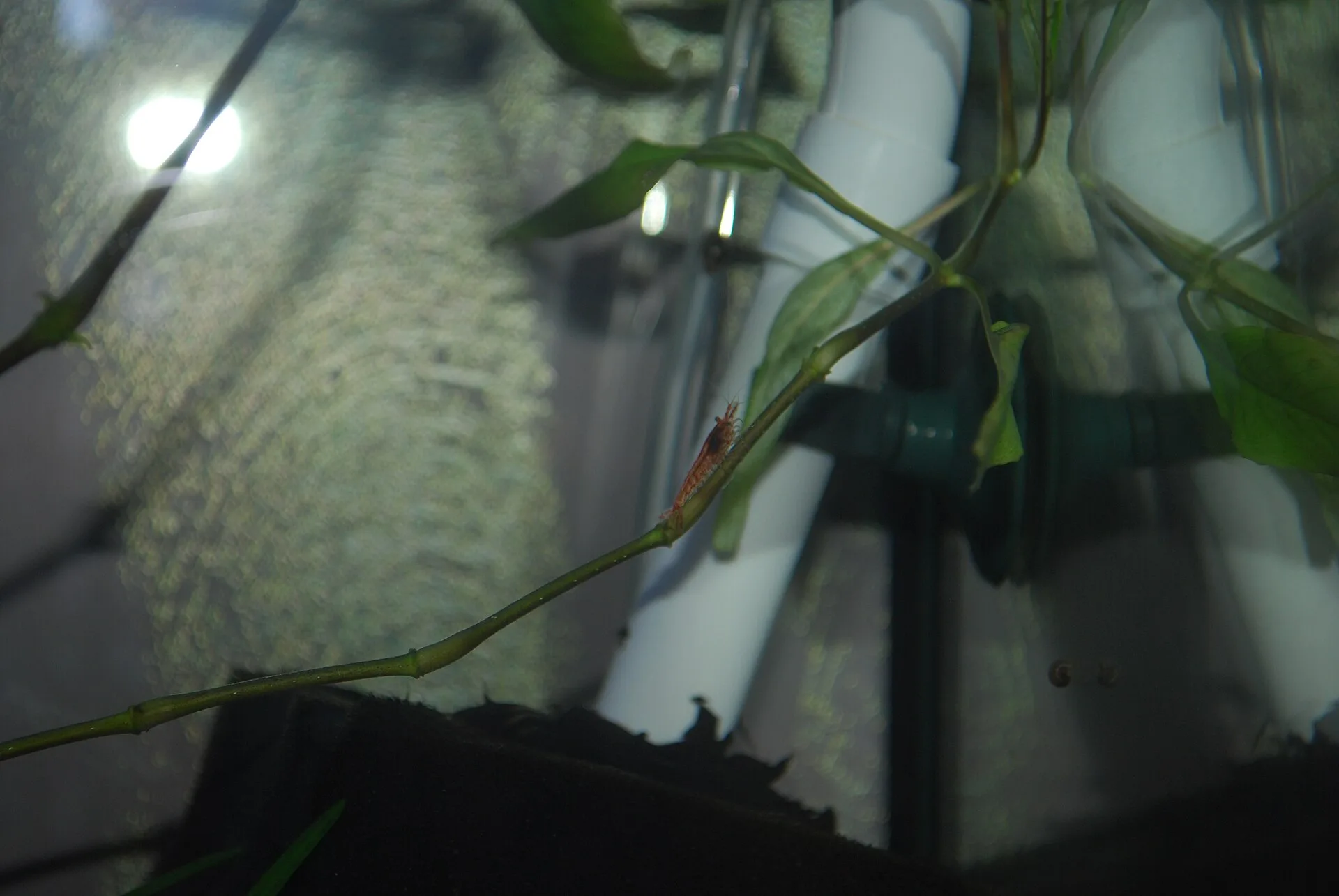 Healthy shrimp colonies spend hours grazing biofilm. Photo: Michael Skiba / Wikimedia Commons (CC BY-SA 3.0)
Biofilm Comes First
Mature sponges, driftwood, plant leaves, and filter surfaces grow the film shrimp scrape all day. New tanks often need mineral/biofilm boosters and lighter stocking until that film establishes.
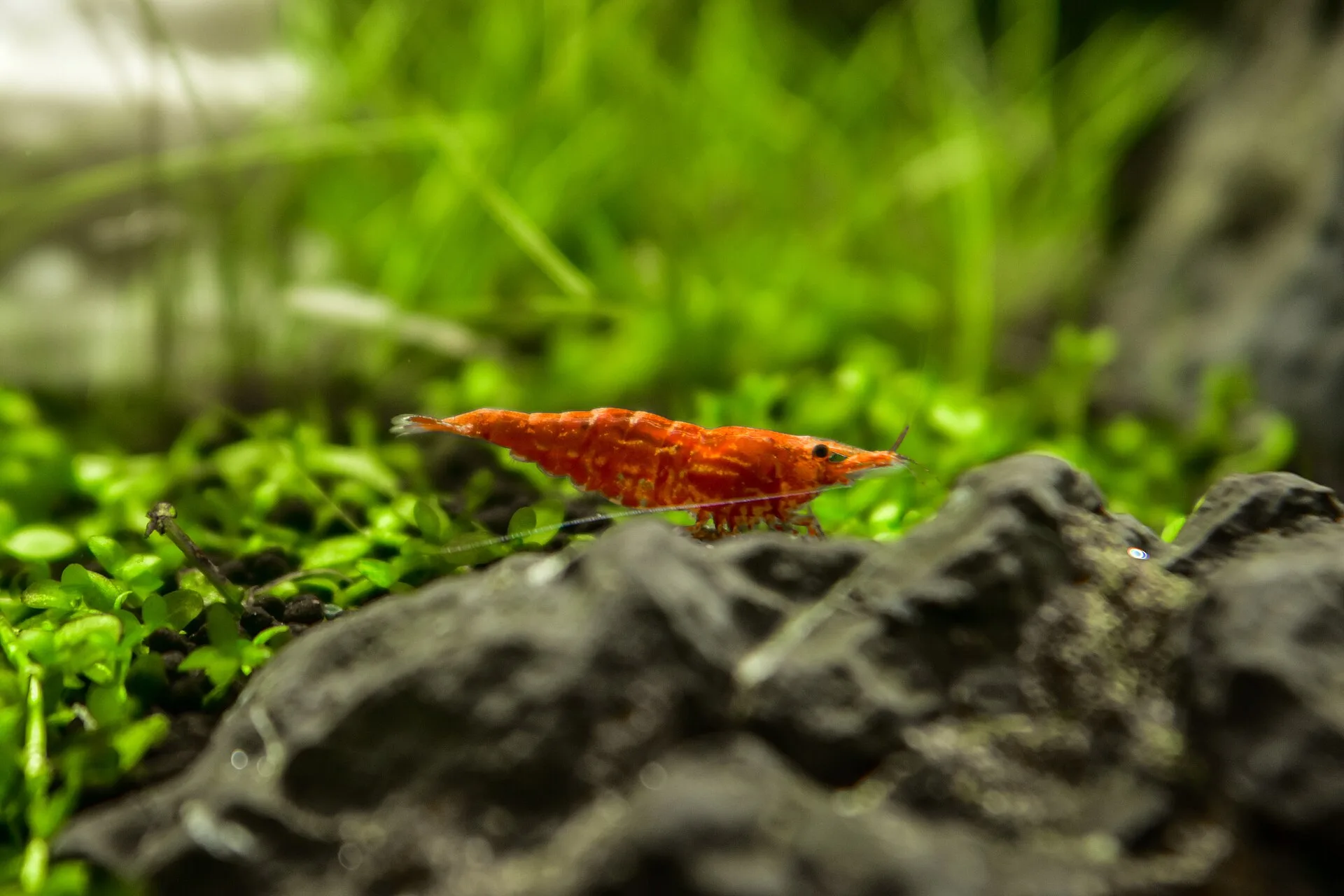 Specialty shrimp foods supplement — they do not replace — a mature tank. Photo: Atulbhats / Wikimedia Commons (CC BY-SA 4.0)
When to Add Pellets
Offer quality shrimp pellets, leaf litter (Indian almond), or blanched veggies a few times weekly. Remove uneaten food within 2–3 hours.
Neocaridina vs Caridina
Cherry shrimp are forgiving omnivore-grazers. Many Caridina prefer softer water and still lean heavily on biofilm — overfeeding protein pellets can foul their more delicate setups.

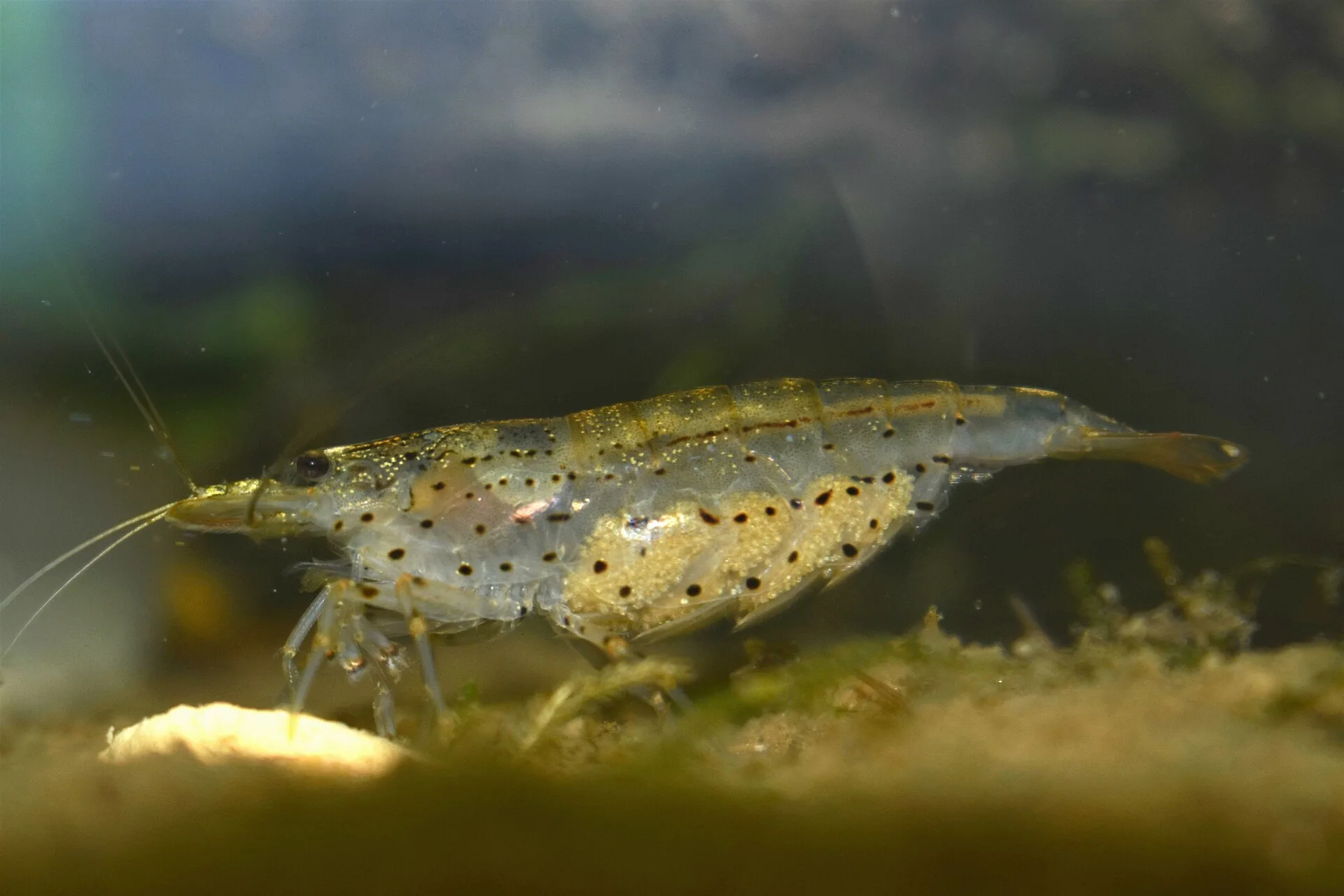 Watch portions; shrimp food leftovers trash water parameters. Photo: John Stockla / Wikimedia Commons (CC BY-SA 4.0)
Fish Tank Co-Habbing
Shrimp with fish need leftover film plus targeted feeding after lights dim so fast fish do not steal every wafer.
Signs of Trouble
- Constantly bald molts + empty bellies → more nutrition/minerals
- Cloudy water after every shrimp feast → cut prepared foods
Related Reading
Conclusion
Build biofilm, then supplement lightly. Shrimp feeding success looks like busy grazing — not a daily pellet snowstorm.
In practice, Biofilm vs Pellets decisions get easier when you watch appetite, water clarity, and filtration together rather than chasing one number. Keep notes for a week and adjust slowly — most Biofilm vs Pellets problems improve when ammonia, nitrite, and schedule stay consistent. Browse more Feeding and Nutrition ideas in our Feeding and Nutrition library, or start from the full guides index if you want a broader path. Stable husbandry beats fancy gear: test before you dose, quarantine new arrivals, and match feeding to what the livestock actually eats.


Explore other topics
Dive into more aquarium guides across the site.