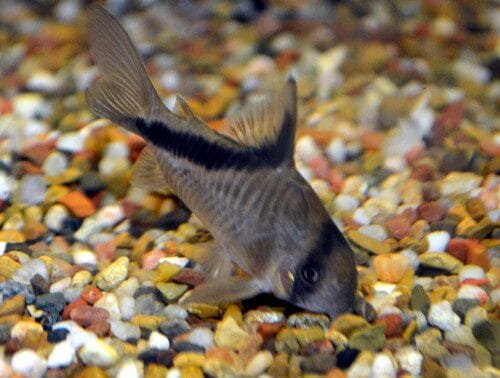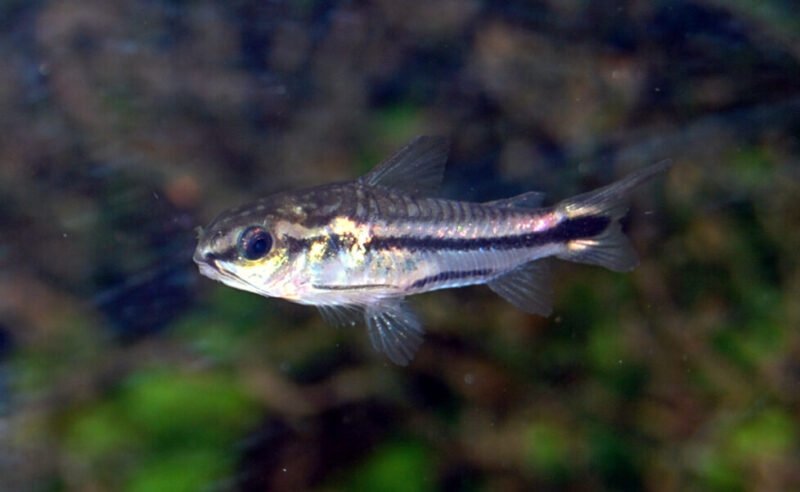
Corydoras griseus, commonly referred to as the Griseus Corydoras, is a lesser-known but highly appealing species of freshwater catfish within the Callichthyidae family. Like other Corydoras species, it is prized for its peaceful temperament, constant activity, and usefulness as a bottom-dwelling scavenger. Although not as widespread in the aquarium trade as some of its relatives, Corydoras griseus is an excellent choice for aquarists seeking a unique and understated Cory species.
This species is particularly well suited to planted community aquariums, where its subtle coloration and social behavior add life and balance to the lower regions of the tank.
Scientific Classification and Relatives
Latin Name and Taxonomy
The scientific name of this species is Corydoras griseus, described by Armbruster. It belongs to the family Callichthyidae, commonly known as armored catfishes due to the bony plates that cover their bodies.
Related Corydoras Species
Corydoras griseus shares many traits with its close relatives, including popular aquarium species such as Corydoras sterbai, Corydoras panda, and Corydoras paleatus. All Corydoras species are social, bottom-oriented fish that thrive in groups and require soft substrates to protect their sensitive barbels.
Natural Habitat and Origin
Corydoras griseus is native to South America, where it inhabits slow-moving tributaries, floodplains, and shallow river systems. These environments are typically characterized by soft, sandy substrates, leaf litter, submerged roots, and relatively subdued lighting due to overhanging vegetation.
The water in these regions is often slightly acidic to neutral, with warm temperatures and low to moderate flow. Replicating these conditions in the aquarium is key to maintaining long-term health and natural behavior.
Physical Appearance and Size
Coloration and Markings
As its name suggests, Corydoras griseus displays a predominantly grey to silver-grey body coloration. This muted appearance is complemented by subtle patterning that provides natural camouflage in its native habitat. The understated coloration makes it an excellent contrast fish in planted aquariums.
Adult Size
Adult Corydoras griseus typically reach a size of approximately 5 to 6 cm (around 2 to 2.5 inches). This compact size makes them suitable for small to medium-sized community tanks.
Water Conditions and Tank Setup
Ideal Water Parameters
To keep Corydoras griseus healthy, the following water conditions are recommended:
Temperature: 22–26°C (72–79°F)
pH: 6.0–7.5
Water hardness: Soft to moderately hard
Stable water quality is critical, as Corydoras species are sensitive to poor conditions and elevated nitrate levels.
Tank Size and Layout
A minimum tank size of 75 liters (20 gallons) is recommended for a small group. Corydoras griseus should always be kept in groups of at least six individuals to promote natural schooling behavior and reduce stress.
Use fine sand or smooth substrate to protect their barbels. Decor should include driftwood, smooth stones, and dense planting. Leaf litter can also be added to mimic natural conditions and encourage foraging behavior.
Diet and Feeding
Corydoras griseus is an omnivorous bottom feeder that requires a varied diet. While they will consume leftover food, they should never be relied upon solely as a cleanup crew.
Recommended Foods
High-quality sinking pellets or wafers formulated for bottom-dwelling fish should form the staple diet. Supplement this with frozen or live foods such as bloodworms, daphnia, and brine shrimp. Occasional vegetable-based foods can also be offered.
Feeding should occur once or twice daily, ensuring food reaches the substrate where these fish can access it.
Temperament and Community Compatibility
Corydoras griseus is extremely peaceful and well suited to community aquariums. It poses no threat to tank mates and spends most of its time sifting through the substrate or resting in groups.
Suitable Tank Mates
Ideal companions include small tetras, rasboras, peaceful barbs, dwarf cichlids, and other Corydoras species. Avoid aggressive or overly large fish that may outcompete or harass them.
For community planning, see best community fish that live peacefully together.
Sexing Corydoras griseus
Sexing Corydoras griseus can be difficult until maturity. Females are generally larger and broader-bodied, especially when viewed from above. Males tend to be slimmer and slightly smaller.
Breeding Corydoras griseus
Breeding Corydoras griseus is achievable in the home aquarium with proper conditioning. Like most Corydoras, they are egg scatterers and display the characteristic “T-position” during spawning.
Breeding Conditions
Trigger spawning by performing a partial water change with slightly cooler water, mimicking seasonal rainfall. Eggs are typically deposited on glass, plant leaves, or decor.
Once eggs are laid, adults should be removed to prevent predation. Eggs usually hatch within 3 to 5 days, and fry can be fed infusoria followed by newly hatched brine shrimp.
Albino Corydoras griseus
An albino form of Corydoras griseus may occasionally appear in captivity, though it is rare compared to albino varieties of more common Cory species. Albino individuals lack dark pigmentation and display pinkish-white bodies with red or pink eyes.
Care requirements for albino Corydoras griseus are identical to the standard form, though subdued lighting is recommended to reduce stress.
Species Variations
Unlike some Corydoras species, Corydoras griseus does not have widely recognized color morphs beyond rare albino specimens. Minor variations in pattern intensity may occur depending on locality and environmental conditions.
Ease of Care
Corydoras griseus is considered easy to moderate in terms of care. While hardy once established, it requires clean, well-oxygenated water and should never be kept on sharp substrates. It is best suited for aquarists with some basic experience in maintaining stable water parameters.
Frequently Asked Questions
How many Corydoras griseus should be kept together?
They should be kept in groups of at least six individuals to ensure natural behavior and reduce stress.
Can Corydoras griseus live with shrimp?
Yes, they are generally shrimp-safe and coexist peacefully with adult dwarf shrimp, though very small shrimp fry may occasionally be eaten.
Do Corydoras griseus clean the tank?
They help consume leftover food but do not replace regular tank maintenance or cleaning routines.
Conclusion
Corydoras griseus Armbruster is a calm, attractive, and rewarding freshwater catfish that fits beautifully into peaceful community aquariums. With proper care, social grouping, and a thoughtfully designed tank, this species will thrive and display its charming natural behaviors for many years.