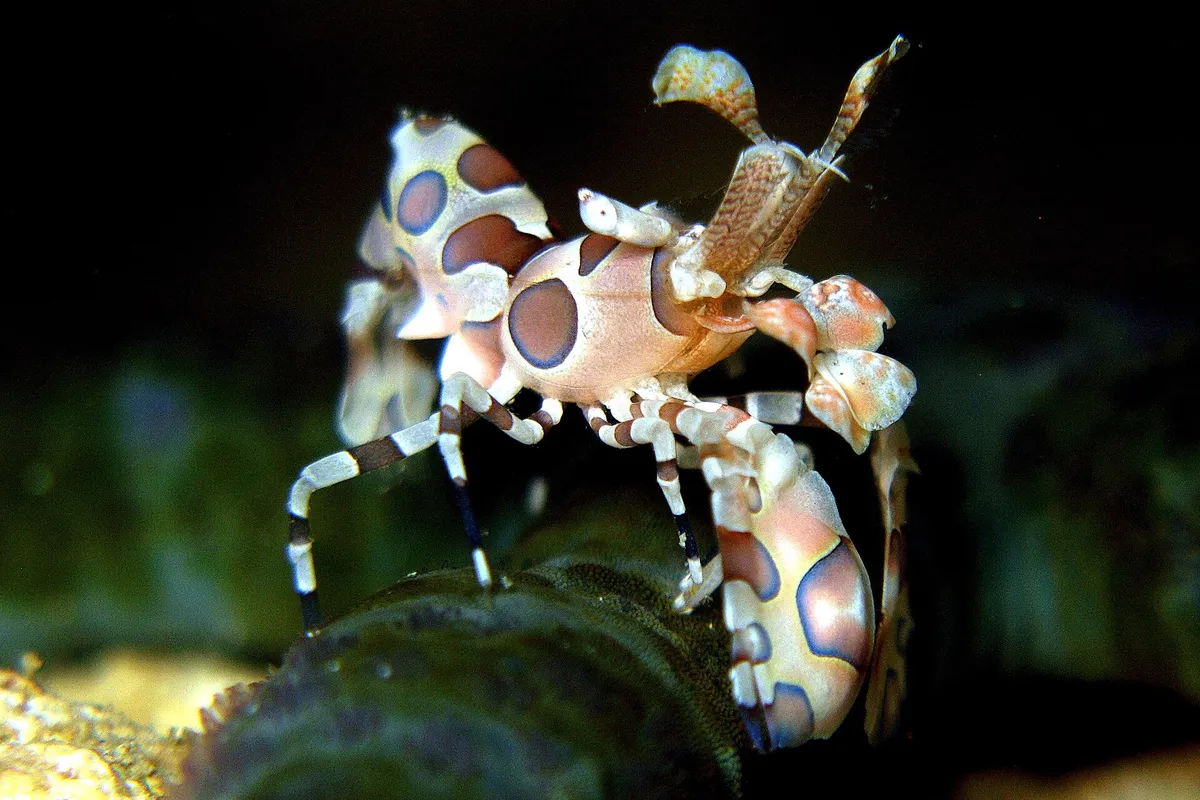
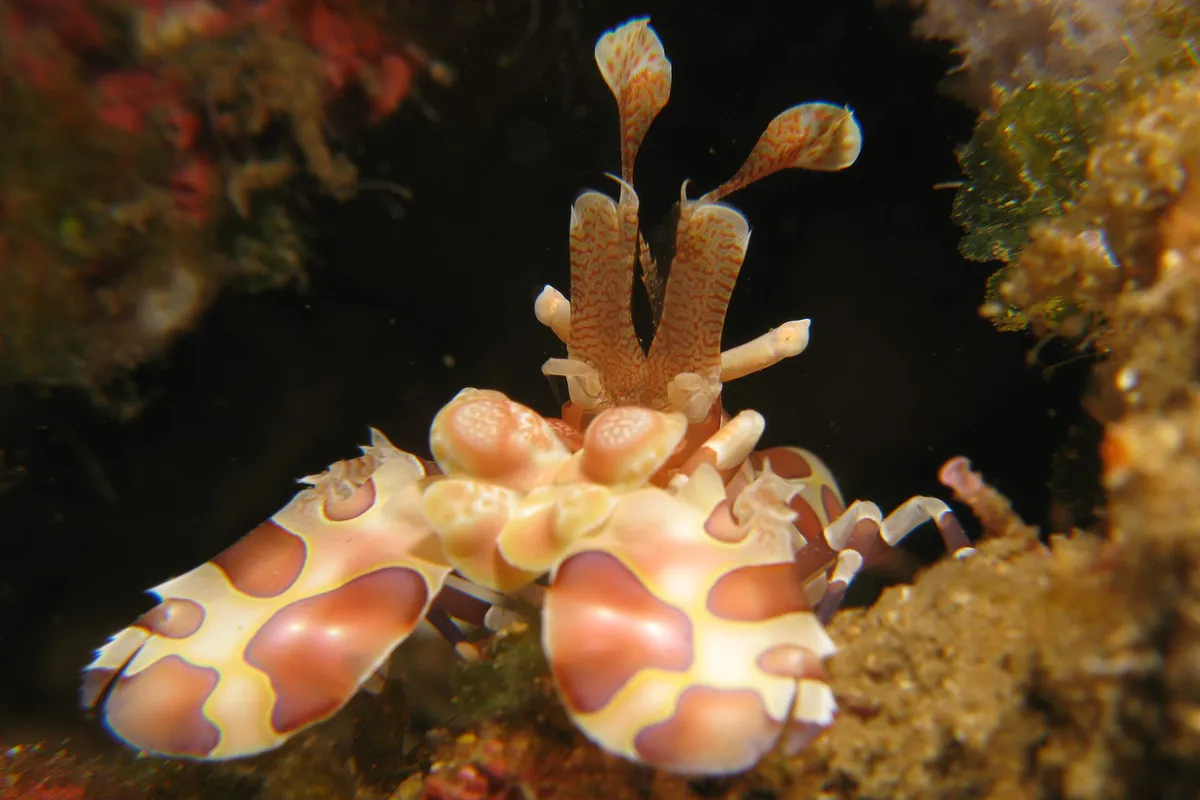
The harlequin shrimp looks like it was painted rather than grown. Cream to white with large pink or purple spots edged in blue, it has huge, flattened claws shaped like petals and antennae like little leaves. Hymenocera picta is one of the most beautiful invertebrates in the hobby.
It also has one of the strangest diets: it eats only starfish. That makes it a specialist animal, but it is also why many reef keepers buy one, because it clears out plagues of small asterina starfish.
Where harlequin shrimp come from
Harlequin shrimp live across the Indo-Pacific, from the Red Sea and East Africa to Hawaii and the eastern Pacific. They are found in pairs on reefs, hiding in crevices by day and hunting starfish at night. The Indian Ocean form has pink spots, while Pacific shrimp tend to have purple to blue spots.
Appearance and behaviour
Adults reach about 5 cm. Females are usually larger, with blue and purple spots on the underside of the tail. Pairs stay together for life and hunt as a team, flipping a starfish over and carrying it back to their cave, where they feed on it for days.
Harlequins are peaceful with fish and corals, and ignore other shrimp and snails. Keep one or a mated pair.
Tank setup
A pair needs at least 40 litres. Small reef tanks work well because the shrimp are easy to watch and feed. Provide live rock with caves, moderate flow and stable water. Acclimate slowly; our guide to acclimating shrimp explains how.
Water parameters

Keep the temperature at 24–27°C, salinity at 1.024–1.026 and pH 8.1–8.4. Like all shrimp, harlequins cannot tolerate copper or sudden swings in salinity. Stable magnesium and calcium support healthy moults.
Feeding
Harlequin shrimp eat only starfish, mainly tube feet and soft tissue. In a tank with an asterina plague they will clear them out, then need another food source. Most keepers buy small chocolate chip starfish or culture asterina in a separate tank. One small chocolate chip star typically feeds a pair for one to two weeks.
Do not keep them in a tank with starfish you want to keep, including sand-sifting and linckia stars. They will not accept frozen food, so plan your starfish supply before buying.
Tank mates
They are reef safe and do well with small, peaceful fish such as gobies, clownfish and firefish. Avoid hawkfish, wrasses, dottybacks, puffers and triggers, which hunt shrimp. Corals, snails and other shrimp are safe.
Breeding
Mated pairs spawn regularly, with the female carrying eggs under the tail for about two to three weeks. The larvae are tiny and hard to raise, though commercial breeders have succeeded.
Common problems and lifespan
Starvation is by far the biggest cause of loss. Failed moults and copper are the others. With a steady starfish supply harlequin shrimp live 5–7 years.
Explore other topics
Dive into more aquarium guides across the site.