

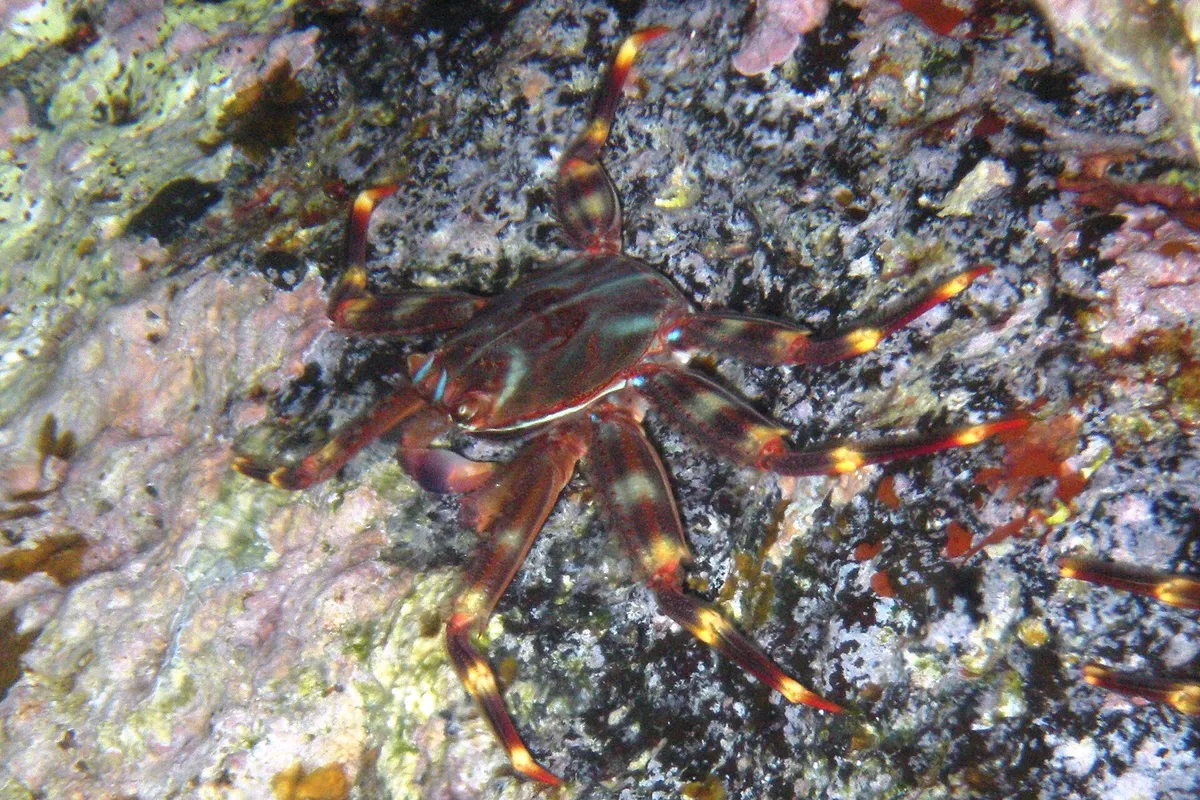
The Sally Lightfoot crab is one of the most useful clean-up crabs for a marine tank. Percnon gibbesi, also called the nimble spray crab, is flat, fast and constantly grazing. It eats hair algae and bubble algae that many other clean-up animals ignore.
The common name causes some confusion. The large red crab of the Galápagos, Grapsus grapsus, is also called Sally Lightfoot, but it lives out of the water and is not kept in reef tanks. The aquarium Sally Lightfoot is Percnon gibbesi.
Where Sally Lightfoot crabs come from
The species is native to the eastern Pacific and the Atlantic, from Florida and the Caribbean to Brazil and West Africa. It lives in shallow, rocky areas, under boulders and in crevices. Since the late 1990s, it has also spread into the Mediterranean Sea, where it is now common.
Appearance and behaviour
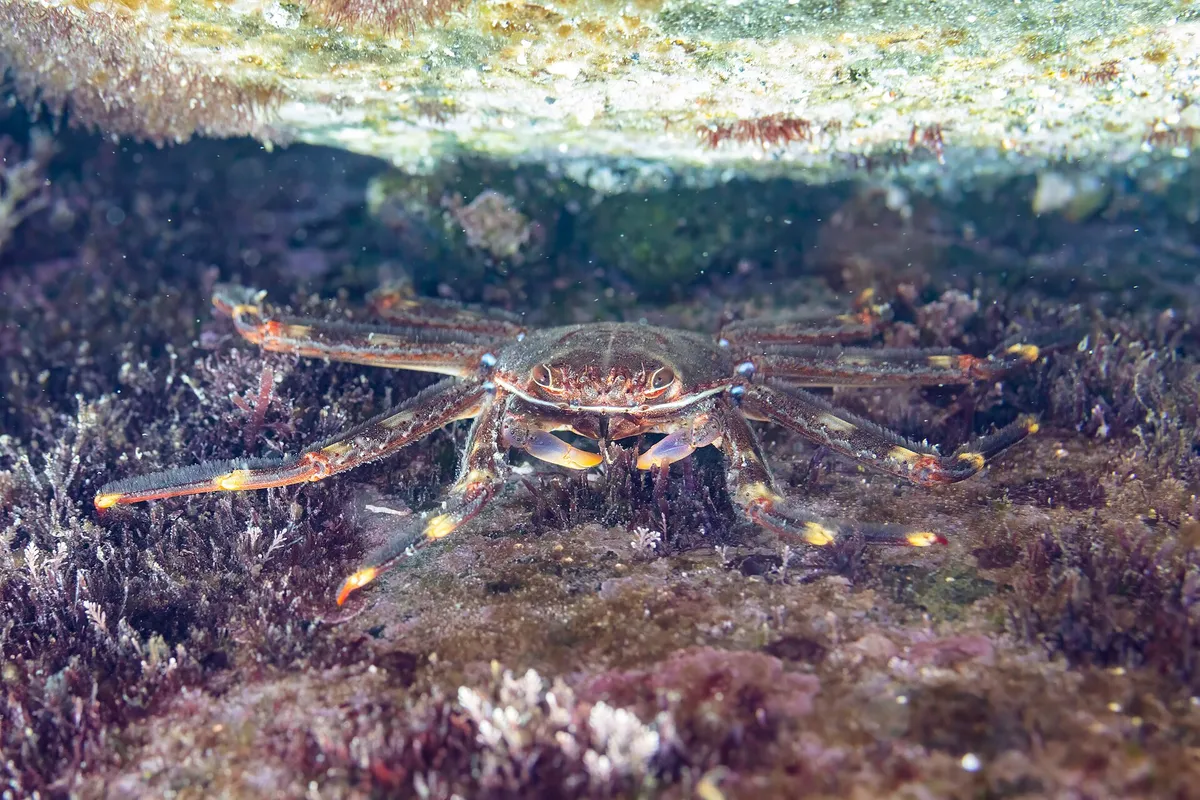
Adults have a very flat, disc-shaped body up to 3–4 cm across, and long legs that give a total span of around 10 cm. The body is dark brown to green, and the legs have yellow-orange bands. The flat shape lets them squeeze into very narrow gaps.
Sally Lightfoots are shy at first and spend much of the day hiding, but they become bolder over time. They are fast and nimble, darting away at the slightest movement.
Tank setup
One crab needs at least 110 litres. Use plenty of live rock with crevices and overhangs. One Sally Lightfoot per tank is usually best, as they can fight with each other. A lid helps, as they occasionally climb out.
Water parameters

Keep the temperature at 22–27°C, specific gravity at 1.023–1.026 and pH at 8.1–8.4. Keep calcium, alkalinity and magnesium at reef levels to support moulting. Read our guide to magnesium in reef tanks.
Feeding
Sally Lightfoots mainly eat algae, including hair algae and bubble algae. Once the algae is gone, they need supplementing: offer nori, algae wafers and sinking herbivore pellets, plus occasional frozen mysis. A well-fed crab is far less likely to go after corals or tank mates.
Reef safety and tank mates
Small Sally Lightfoots are generally reef safe. Larger, hungry crabs may pick at soft corals and zoanthids, and occasionally catch sleeping small fish, shrimp or snails. Good tank mates are medium-sized peaceful fish, other clean-up crew members such as turbo snails, and corals that are firmly attached. Avoid triggerfish, puffers and large wrasses, which eat crabs.
Breeding
Females carry eggs under the tail flap, and the larvae drift in the plankton. They are not raised in home aquariums.
Common problems and lifespan
Starvation in tanks with no algae left, and aggression when underfed, are the main issues. Moulting failures point to low calcium or poor water. After a moult, the old shell looks like a dead crab, so check before removing it.
Sally Lightfoot crabs typically live two to four years in the aquarium.
Explore other topics
Dive into more aquarium guides across the site.