

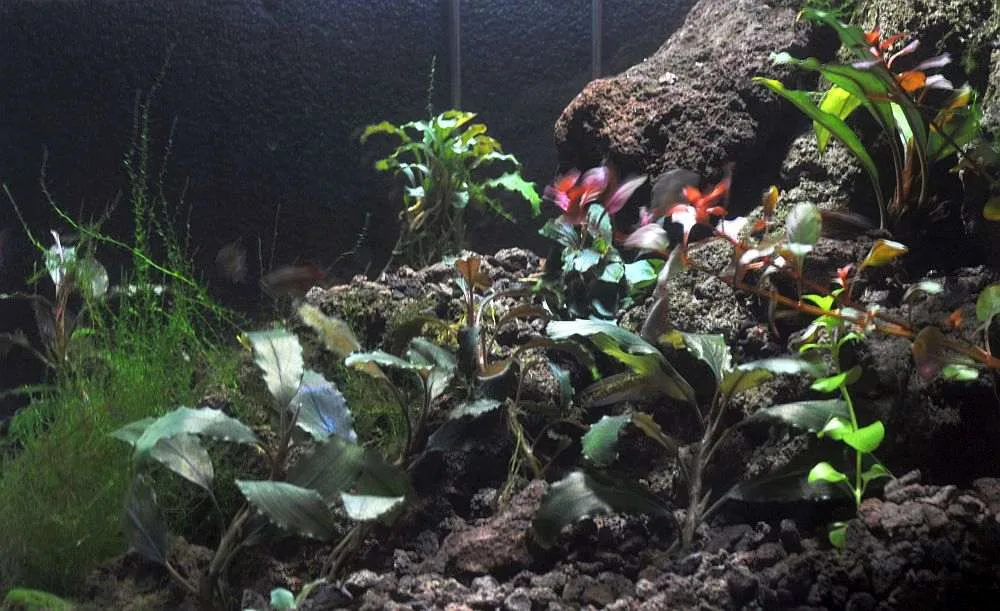
Bucephalandra 'Wavy Green' is a compact aquarium plant valued for its dark green, gently rippled leaves and slow, controlled growth. It is particularly useful in aquascapes because it can be attached to wood or rock rather than planted deeply into the substrate. Once established, a healthy clump can remain attractive for years with relatively little trimming.
What Is Bucephalandra 'Wavy Green'?
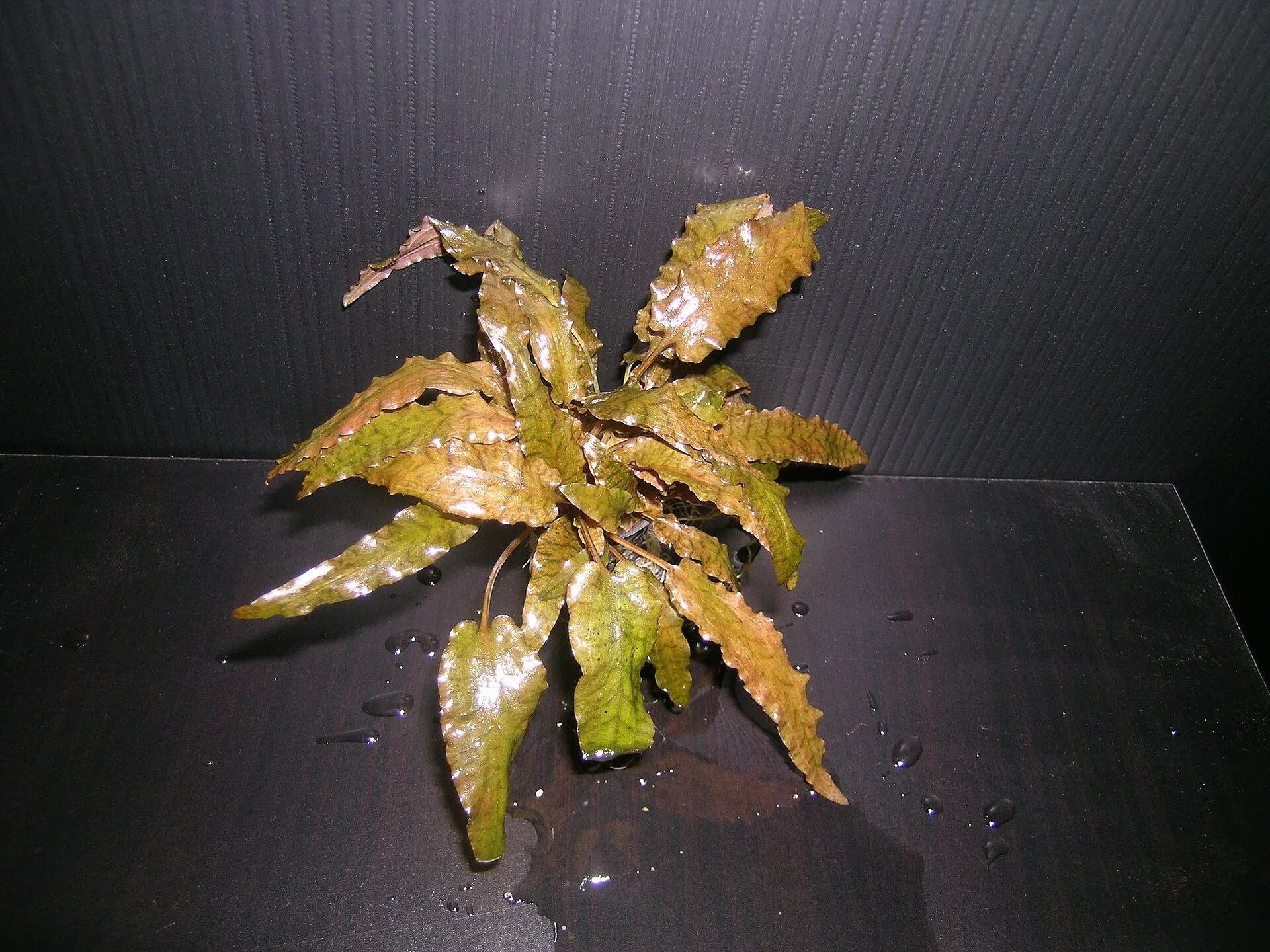
Bucephalandra are rheophytic plants from Borneo, where related forms naturally grow attached to rocks and wood in and around streams. 'Wavy Green' is an aquarium selection commonly sold for its narrow green leaves with noticeably wavy margins. Tropica describes it as a slow-growing, easy plant that is suitable for lower light conditions.
Size and Placement
'Wavy Green' stays compact, making it useful in the foreground or midground depending on aquarium size. Individual leaves can reach several centimetres long while the plant gradually spreads through branching rhizomes. It works especially well attached to small rocks, roots and pieces of aquarium wood.
If you are deciding where epiphytes fit into a layout, our guide to aquarium-safe woods offers useful hardscape ideas.
How to Plant Bucephalandra Correctly
The most important rule is not to bury the rhizome. The rhizome is the thicker horizontal stem from which roots and leaves grow. Covering it completely with substrate can lead to rot. Instead, attach the plant to stone or wood using aquarium-safe gel glue, thread or fishing line until the roots grip the surface naturally.
Lighting Requirements
Low to moderate lighting is usually sufficient. Strong light is not required and can encourage algae to grow on the slow-growing leaves if nutrient balance and carbon dioxide are not well controlled. Start with moderate intensity and adjust according to plant growth and algae levels.
For a broader explanation of intensity and duration, see our aquarium lighting essentials guide.
Water Conditions
Bucephalandra is adaptable to a useful range of freshwater conditions. Stable water is more important than an exact pH value. Tropical temperatures commonly used for community aquariums work well, provided the plant is not exposed to repeated temperature swings or deteriorating water quality.
CO2 and Fertilization
Injected carbon dioxide is optional rather than mandatory, but it can improve growth rate and overall form. Because the plant grows slowly, its nutrient demand is not extreme. Regular water-column fertilization supplying nitrogen, phosphorus, potassium and trace elements is normally enough in a planted aquarium.
Do not interpret slow growth as an automatic sign of deficiency. Bucephalandra naturally grows at a measured pace. Making large fertilizer changes every few days can create instability and algae without helping the plant.

Algae on Bucephalandra Leaves
Slow-growing leaves can collect green spot algae, hair algae or other growth when light is excessive or maintenance is inconsistent. Remove badly affected old leaves, improve circulation around the plant and keep lighting appropriate. Regular water changes and stable fertilization are more useful than repeatedly moving the plant.
Propagation
Propagation is straightforward. Once a healthy rhizome has several growing points, cut it into sections with a clean blade or scissors. Make sure each new piece retains healthy leaves and roots. Attach the divisions to new hardscape positions and allow them to establish.
Can Bucephalandra Be Grown With Fish and Shrimp?
Yes. It is an excellent plant for peaceful community aquariums and shrimp tanks. Its firm leaves provide grazing surfaces for shrimp and microscopic life, while its compact shape creates cover without consuming large amounts of swimming space.
Ease of Care
'Wavy Green' is a good beginner-to-intermediate plant because it tolerates lower light and does not require CO2 injection. The main challenges are avoiding a buried rhizome and keeping algae from overwhelming the slow-growing leaves.
Frequently Asked Questions
Can Bucephalandra 'Wavy Green' grow in gravel?
The roots can reach gravel, but the rhizome should remain above the substrate. Attaching it to rock or wood is usually safer.
Does Bucephalandra need CO2?
No. It can grow without injected CO2, although supplemental CO2 may produce faster and denser growth.
Why is my Bucephalandra growing slowly?
Slow growth is normal for Bucephalandra. Check that the rhizome is exposed, lighting is adequate and nutrients are available before assuming the plant has a problem.

Explore other topics
Dive into more aquarium guides across the site.