

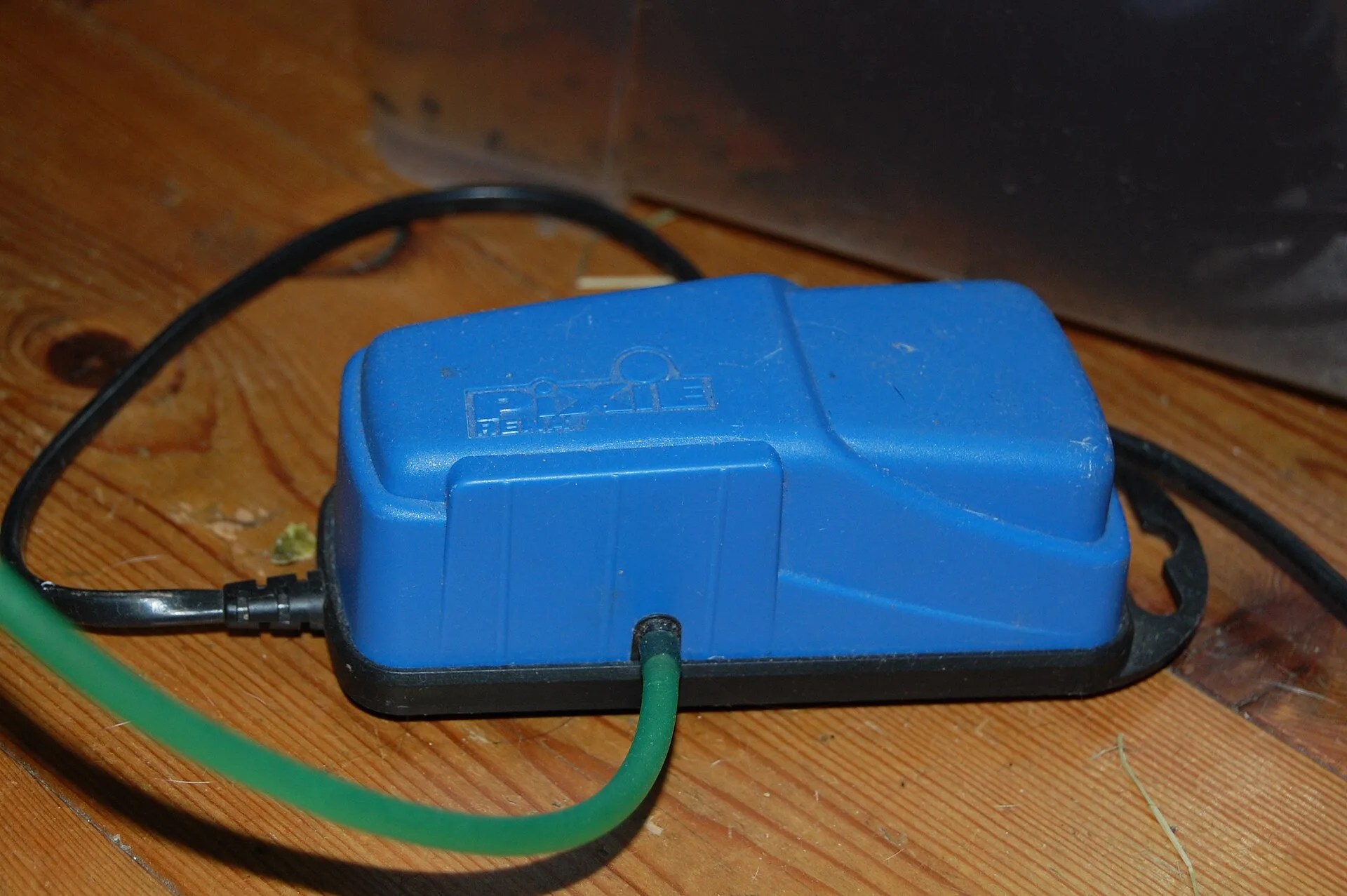
Air Pumps and Airline Gear
This guide covers aquarium air pump with practical steps for home aquariums. Air pumps drive sponge filters, uplift tubes, and emergency backup aeration — simple gear that prevents silent disasters during outages.
For related reading, see filtration systems for aquariums, drip acclimation for new fish and setting up your first freshwater aquarium.
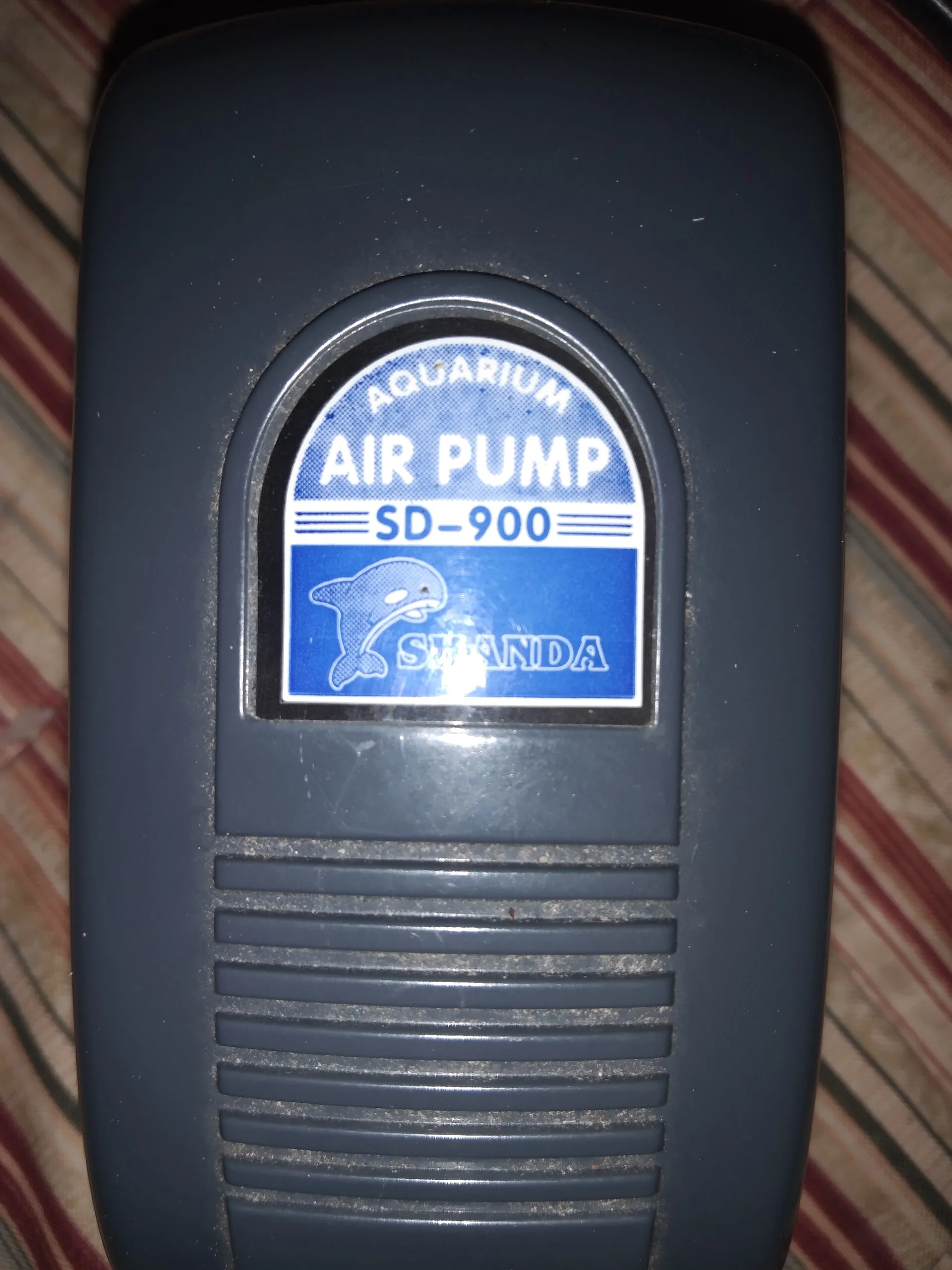 Air Pumps and Airline Gear. Photo: Kobakovivo / Wikimedia Commons (CC BY 4.0)
Choosing an Air Pump
Rate pumps by total air outlets and depth — deeper tanks need stronger models. Dual-outlet pumps with individual valves let one air stone run softly while a sponge filter gets more volume.
Diaphragm pumps are standard; piston pumps suit high depth or multiple large sponges. Place pumps above water level or use check valves on every line below the tank.
Essential Accessories
Standard airline, check valves, gang valves, and quality air stones or sponge filters complete the system. Rigid airline helps corner bends without kinks.

Replace brittle airline every few years. Kinks silently starve filters of flow and biofiltration.
Noise Control
Mount pumps on foam pads and keep them lower than air outlets so water cannot siphon backward during outages. Some keepers route pumps into cabinets with ventilation.
Humming often means vibration against hard surfaces — a folded towel or purpose pad fixes it faster than buying a 'silent' label that still rattles.
Sponge and Box Filter Use
Air-driven filters excel in breeding, quarantine, and shrimp tanks. Adjust airflow until bubbles are steady but the surface is not blasted — fry exhaust easily in torrents.
Running two sponges on one large pump via a gang valve gives redundancy if one clog.
Outage Backup
Battery air pumps or UPS-backed pumps buy hours during blackouts. Pre-install battery units with fresh batteries before storm season.
In extended outages, manual cup stirring of surface water helps — but automated air is safer when you cannot monitor constantly.


Explore other topics
Dive into more aquarium guides across the site.