

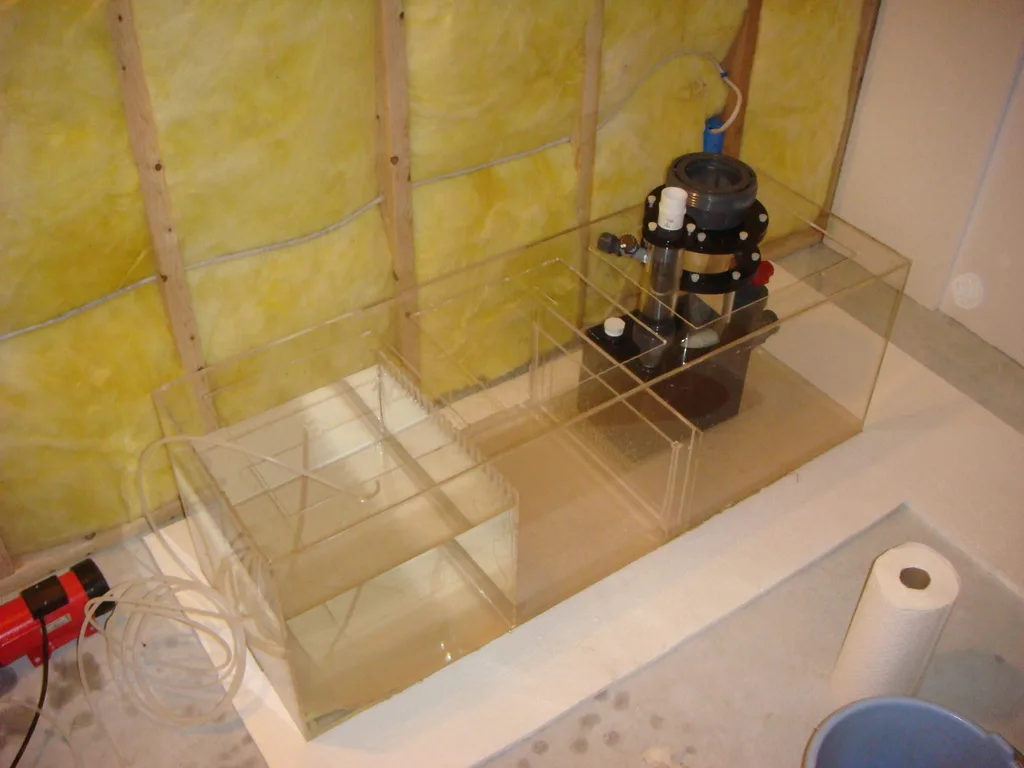
Reef Sumps and Refugiums
This guide covers reef aquarium sump with practical steps for home aquariums. Sumps expand filtration capacity, hide gear, and enable refugiums that export nutrients — the backbone of most serious reef systems.
For related reading, see quarantine tank setup, setting up your first freshwater aquarium and drip acclimation for new fish.
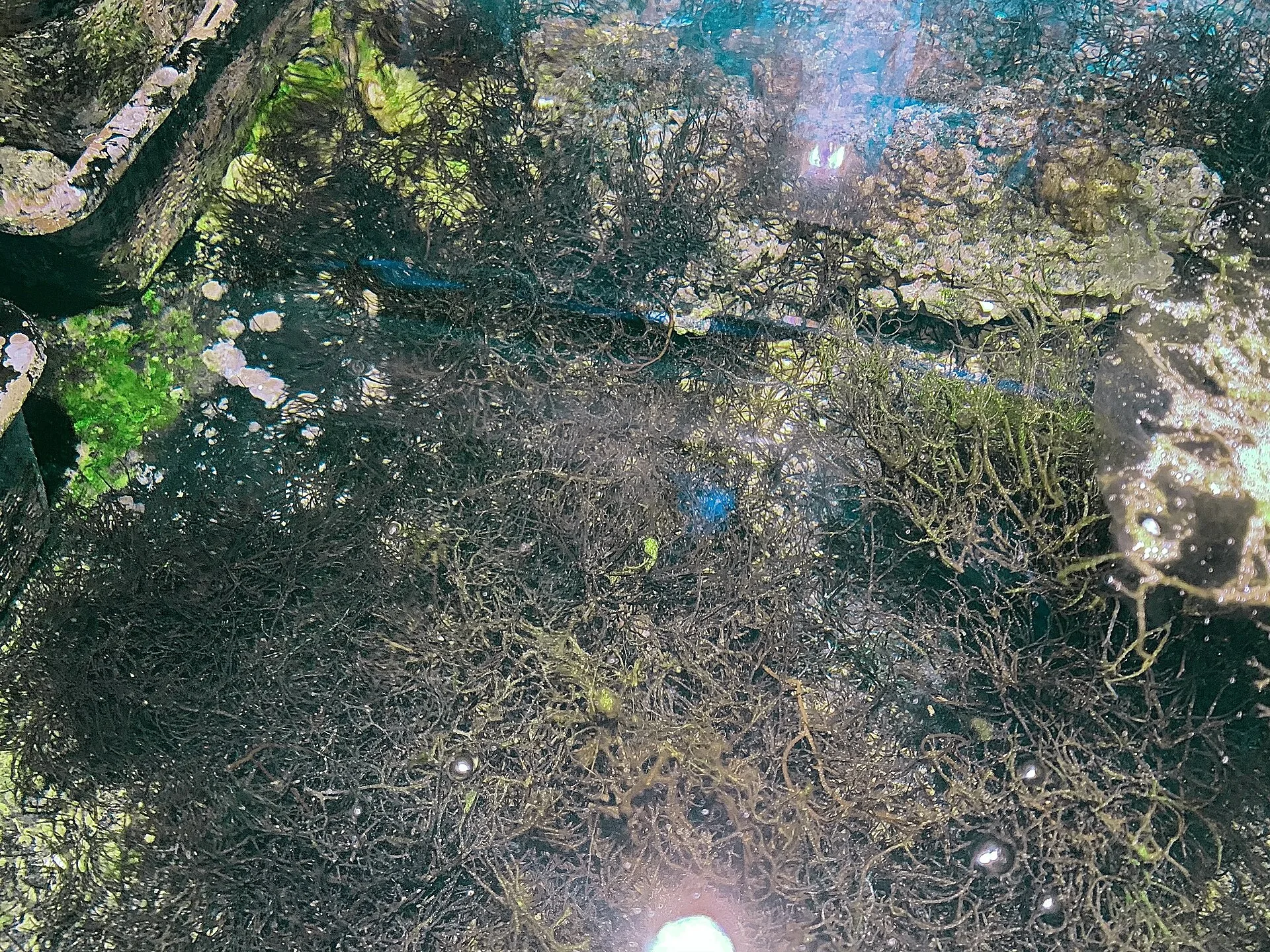 Reef Sumps and Refugiums. Photo: Coughdrop12 / Wikimedia Commons (CC BY-SA 4.0)
Why Use a Sump
Sumps increase water volume, house skimmers and reactors, and keep heaters and probes out of the display. Overflow boxes or drilled tanks feed a constant stream to baffled chambers below.
Extra volume buffers temperature and salinity swings — valuable in reef systems where stability equals coral growth.
Baffle Layout
Typical layouts move water through skimmer section, refugium or media, return pump chamber. Baffles tune bubble trap and microbubble removal before water returns to the tank.

Leave service clearance for skimmer cup removal and pump maintenance — cramped cabinets cause neglected hardware.
Refugium Benefits
Chaetomorpha or other macroalgae under a reverse daylight schedule consumes nitrate and phosphate while producing oxygen at night. Harvest algae periodically to export nutrients permanently.
Refugiums also culture copepods and amphipods that supplement fish and corals — living food factories when lit and maintained.
Return Pump and Plumbing
Size return for desired turnover plus head loss from elbows and height. Use union valves for teardowns. Install check valves only where siphon risk exists — they fail and need testing.
Match overflow capacity to pump output with margin. Silent overflows still need occasional cleaning of teeth and U-tubes.
Evaporation and ATO
Open sumps evaporate faster than sealed displays. Auto top-off units replace freshwater only — never salt mix — to keep salinity stable.
Mark sump levels and verify ATO sensors weekly. Stuck floats have flooded floors in many hobby rooms.


Explore other topics
Dive into more aquarium guides across the site.