

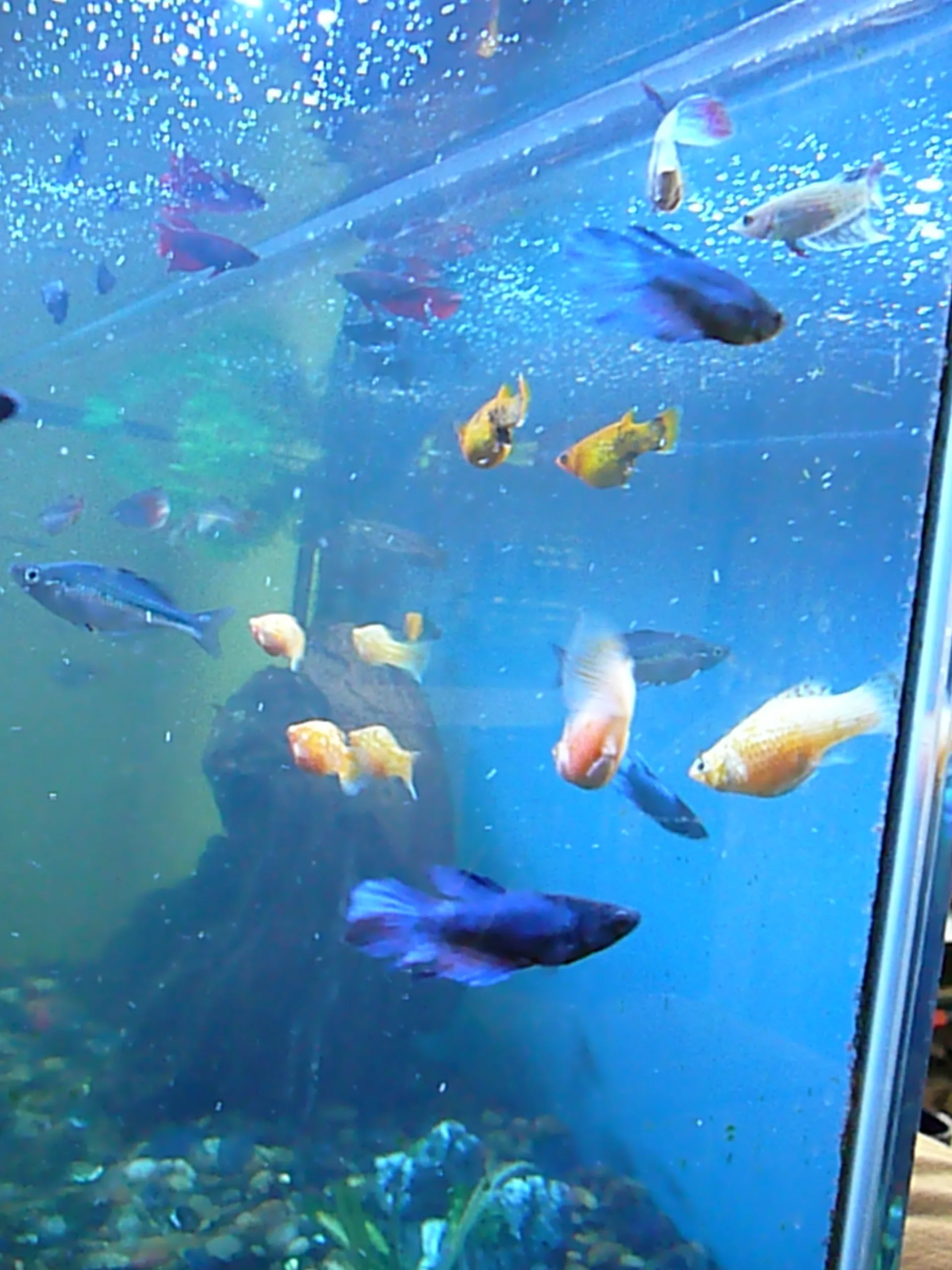
Flake vs Pellet Fish Food: Which Should You Use?
Flakes and pellets are the two staples of prepared aquarium diets. Neither is universally better. The right pick depends on mouth size, swimming level, and how messy your tank can afford to be.
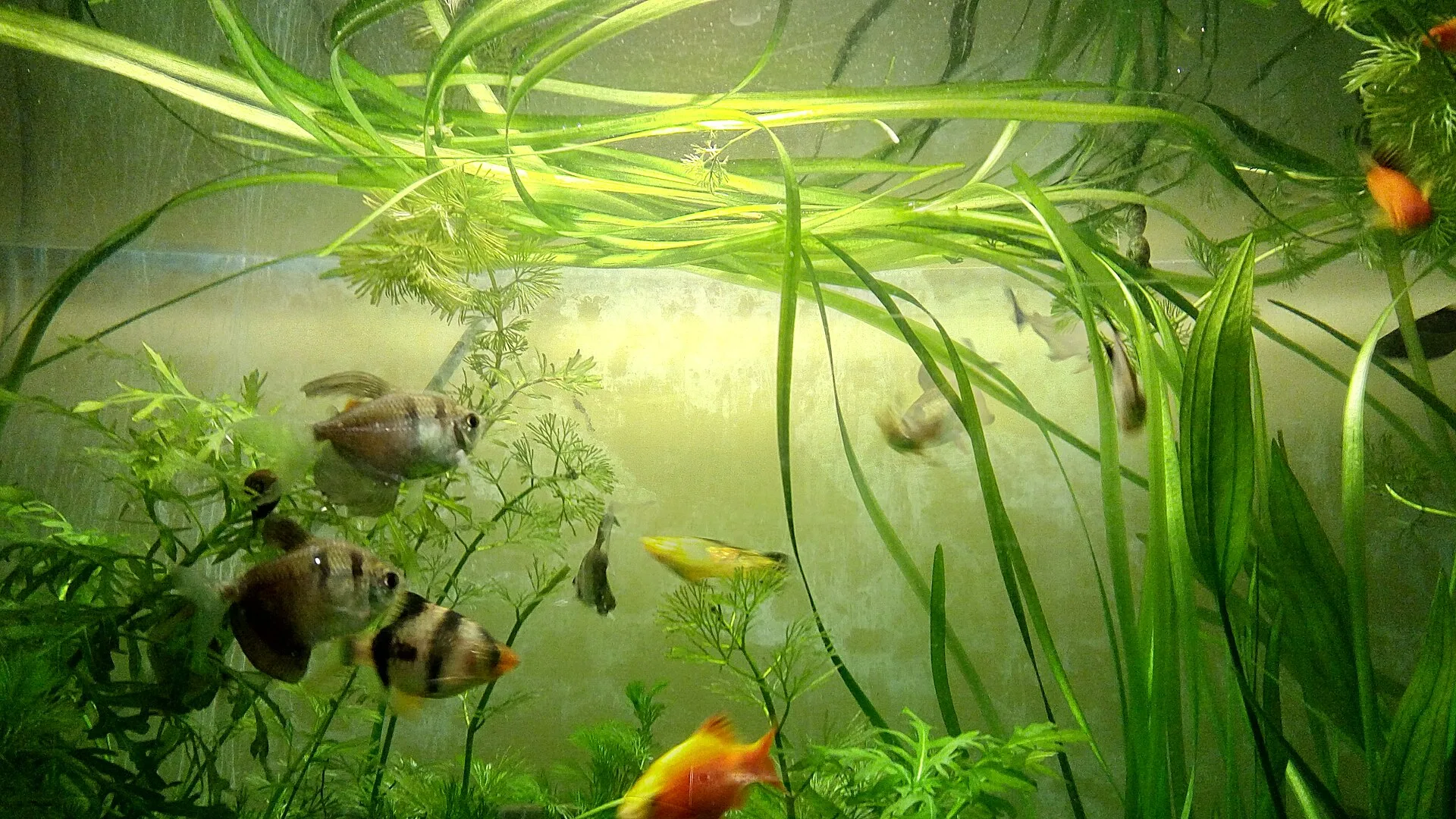 Flakes spread widely for shoals of small tetras and rasboras. Photo: Damitr / Wikimedia Commons (CC BY-SA 4.0)
When Flakes Win
- Small-mouthed midwater fish (tetras, rasboras, danios)
- You want food that disperses so shy fish get a share
- You prefer crushing flakes for nano or fry tanks
Trade-off: flakes foul water faster if overdosed and lose vitamins once the tub is open.
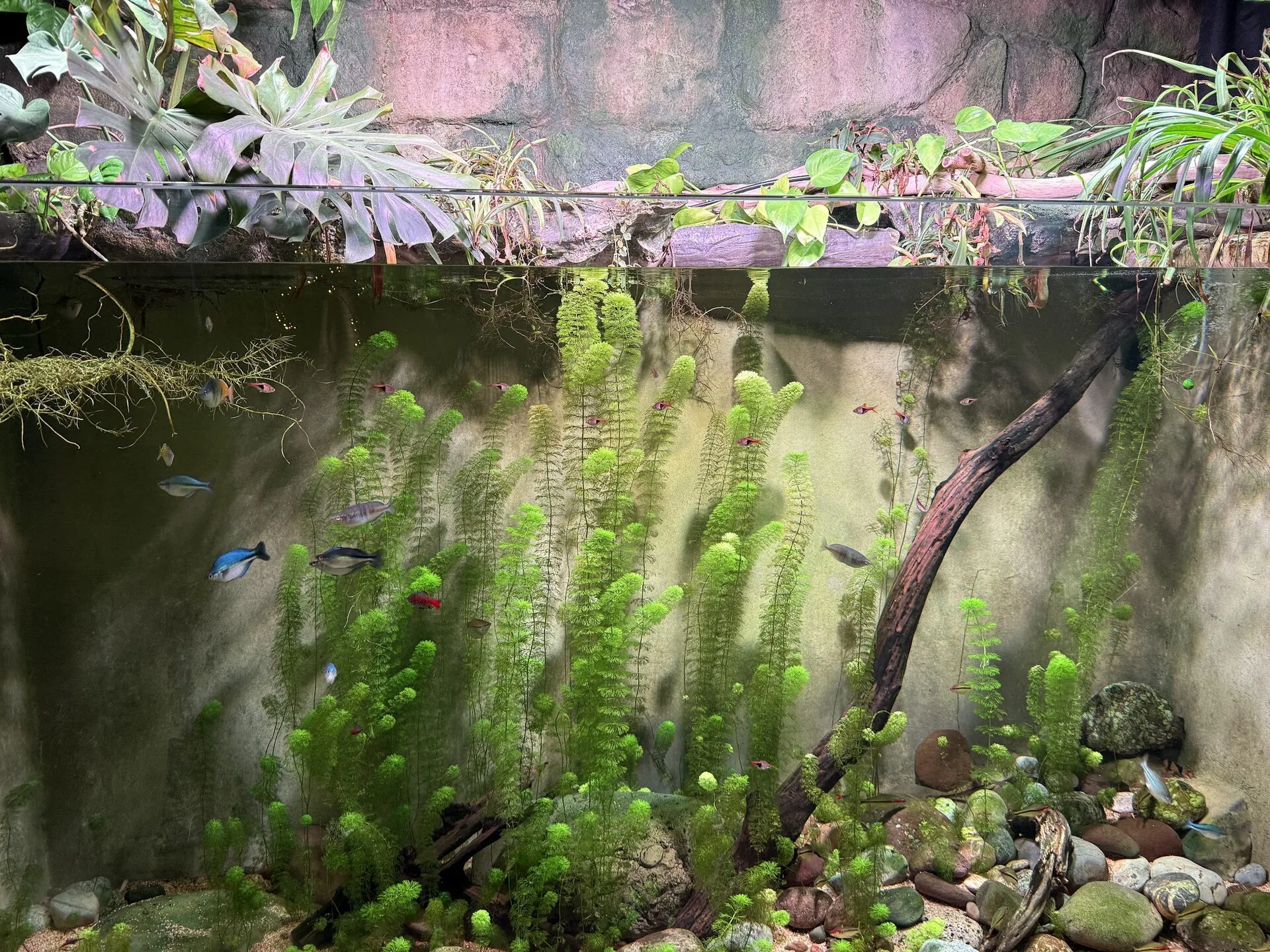 Pellets deliver denser nutrition with clearer portion control. Photo: Netha Hussain / Wikimedia Commons (CC0)
When Pellets Win
- Bettas, cichlids, goldfish, and larger omnivores
- You need floating, slow-sinking, or sinking designs
- You want tighter portion control
Trade-off: oversized pellets get spat out or choke small mouths.

Nutrition and Freshness
Buy sizes you will finish in a few months. Sour or paint-like smells mean rancid fats. Store cool and sealed. Match crude protein to carnivore vs herbivore needs.
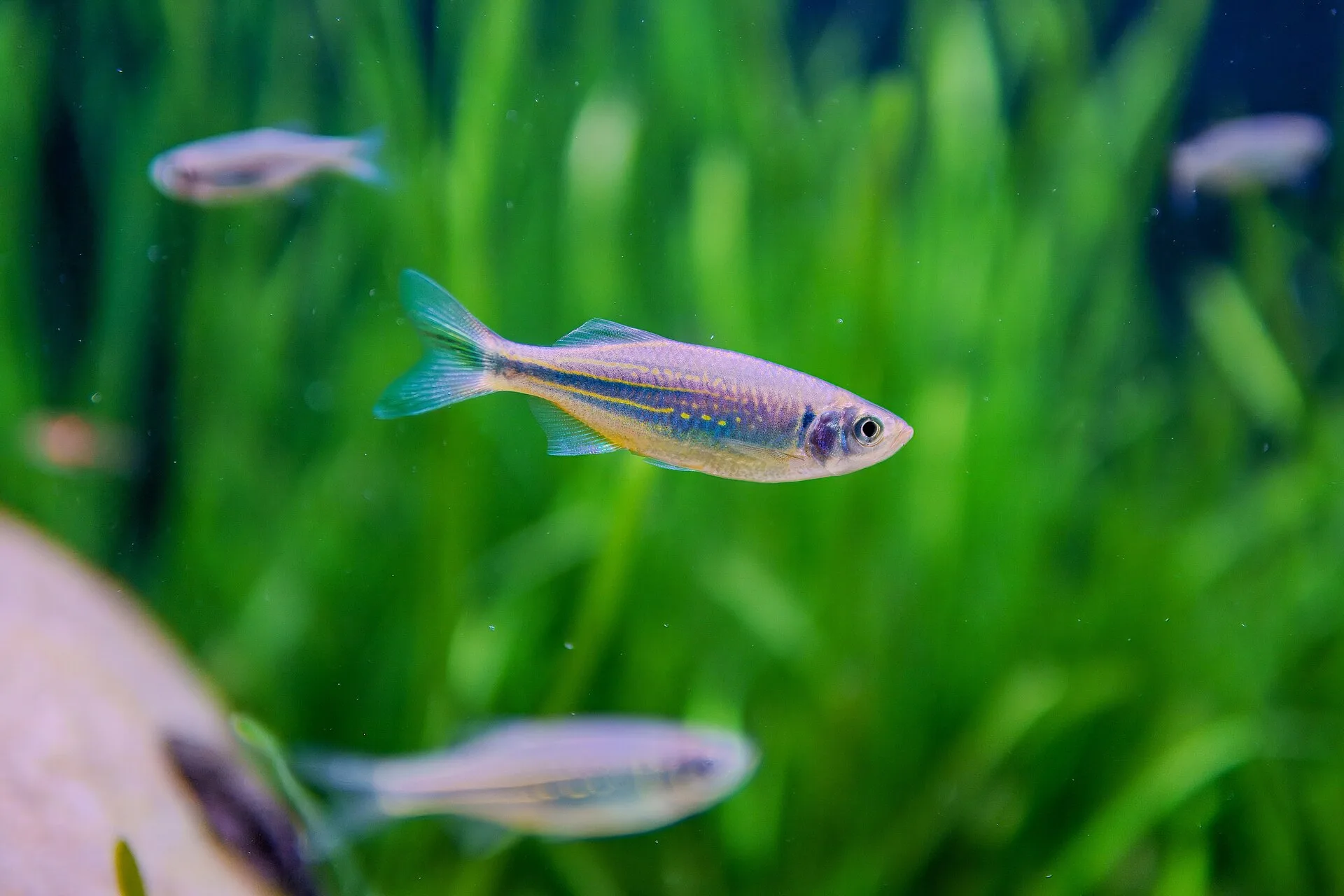 Many tanks thrive on a flake staple plus pellet or frozen extras. Photo: Shifu Tanks / Wikimedia Commons (CC BY-SA 4.0)
Best Practice Mix
Use flakes or micro-pellets daily and add frozen or specialty foods 2–3 times weekly. Bottom dwellers still need sinking wafers even if surface fish vacuum flakes instantly.
Switching Foods Safely
Blend old and new foods for a week. A one-day fast then offering the new staple often speeds acceptance better than stacking rejected brands on leftovers.
Related Reading
Conclusion
Choose flakes for small shoaling surface feeders, pellets for precise nutrition and larger mouths, and mix formats so every niche eats well without leftover clouds.


Explore other topics
Dive into more aquarium guides across the site.