

Overfeeding Aquarium Fish: Signs and How to Stop
Overfeeding does more damage than underfeeding in home aquariums. Extra food becomes ammonia, algae fuel, and swollen, constipated fish. This guide shows how to spot it, clean up fast, and rebuild a sustainable habit.
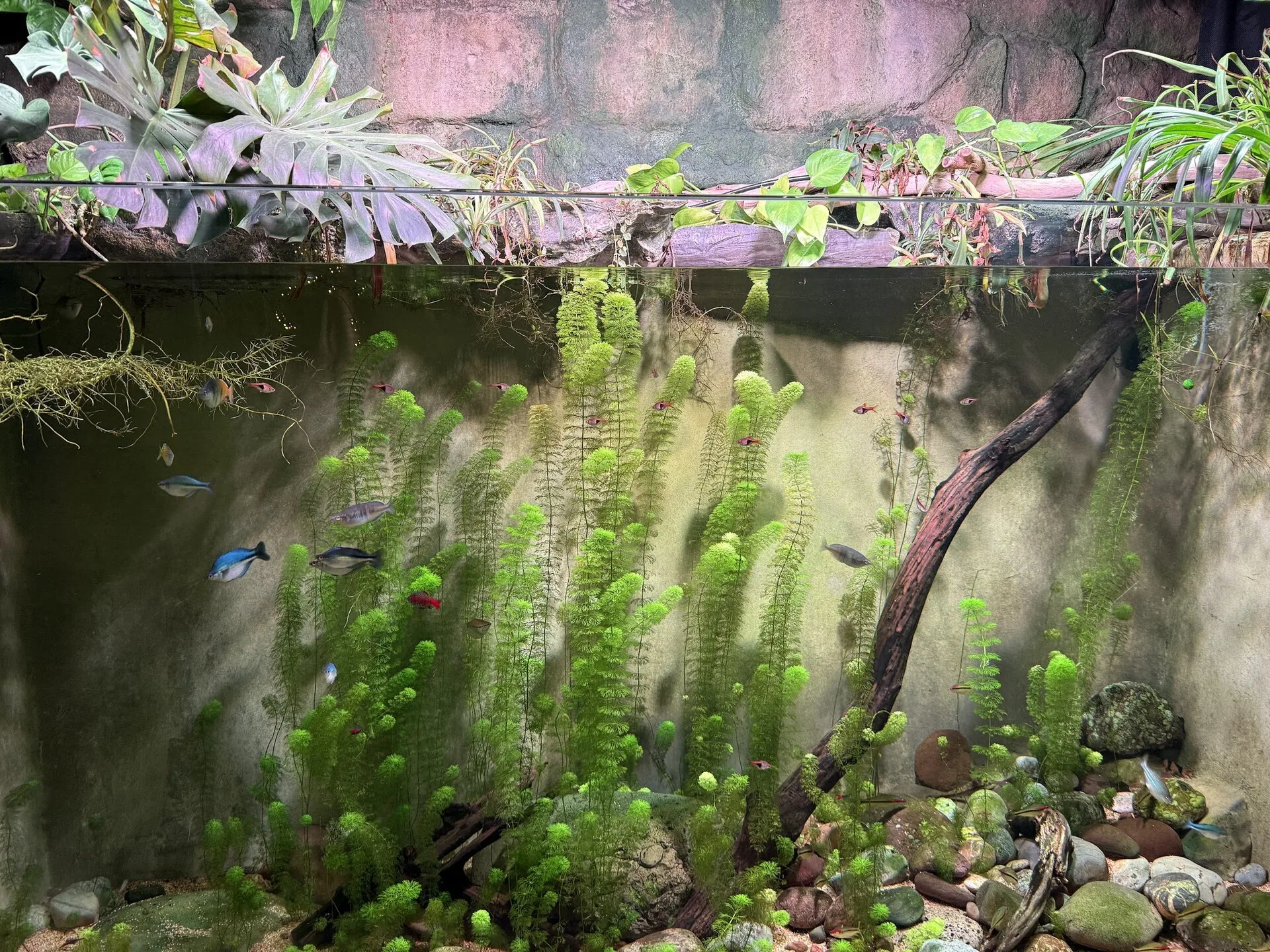 Bacterial blooms often follow days of leftover food. Photo: Netha Hussain / Wikimedia Commons (CC0)
Warning Signs
- Food still on glass or gravel after five minutes
- Cloudy or yellow “bacterial soup” water
- Sudden algae after you increased feeding
- Bloated bellies or stringy stuck feces
- Rising ammonia/nitrite in an otherwise stable tank
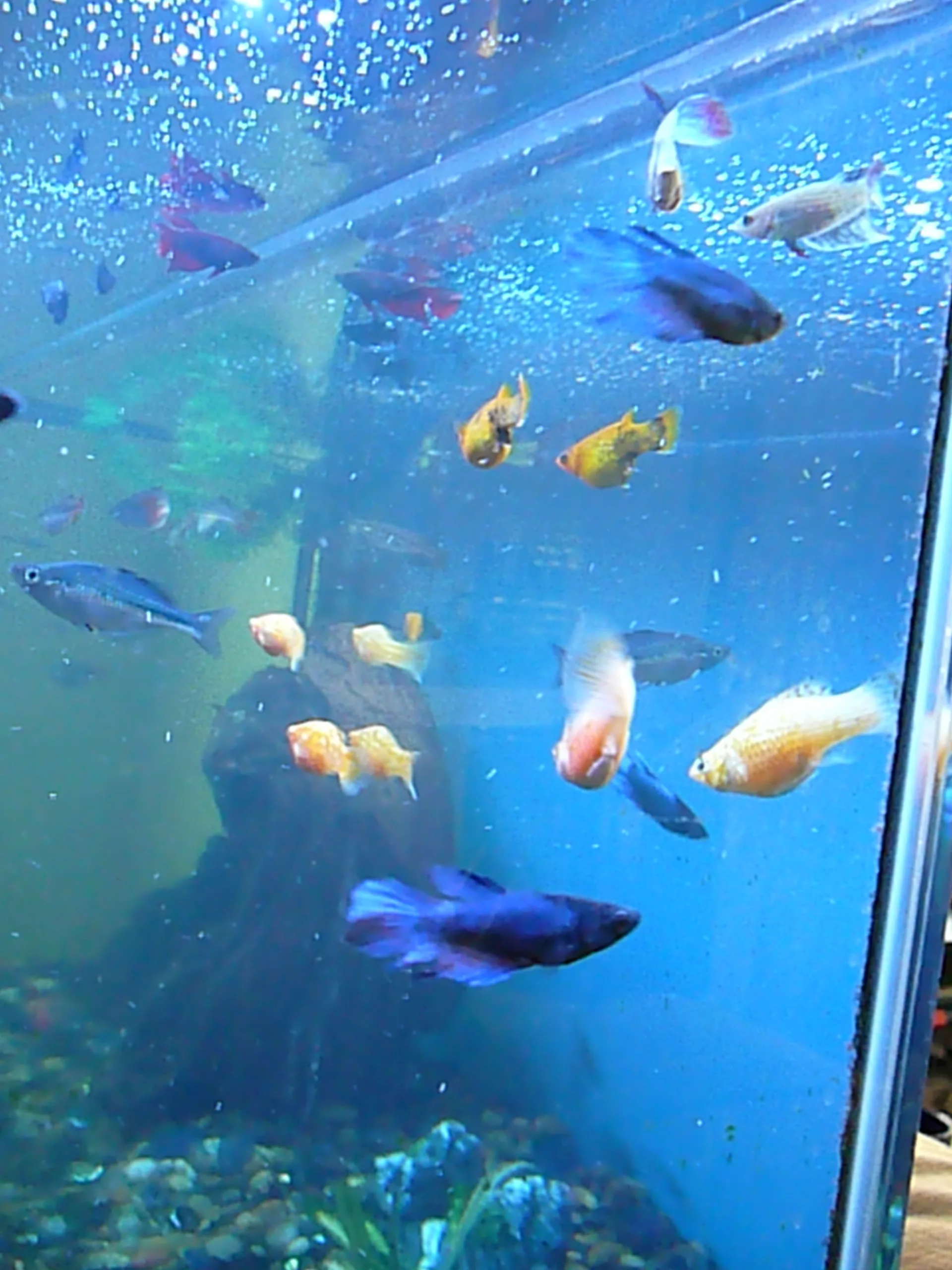 Bloating and lethargy can signal chronic overfeeding. Photo: No machine-readable author provided. Epastore assumed (based on copyright claims). / Wikimedia Commons (CC BY-SA 3.0)
Emergency Reset
- Stop feeding 24–48 hours (healthy adults are fine).
- Siphon mulm and leftover food.
- Do a partial water change with conditioned water.
- Retest ammonia and nitrite; increase aeration.
- Resume at half your previous pinch and watch the two-minute rule.
Why Fish Always Act Starved

Fish are opportunistic. Begging is instinct, not proof of hunger. A plump midsection and energetic swimming matter more than how long they hang at the glass.
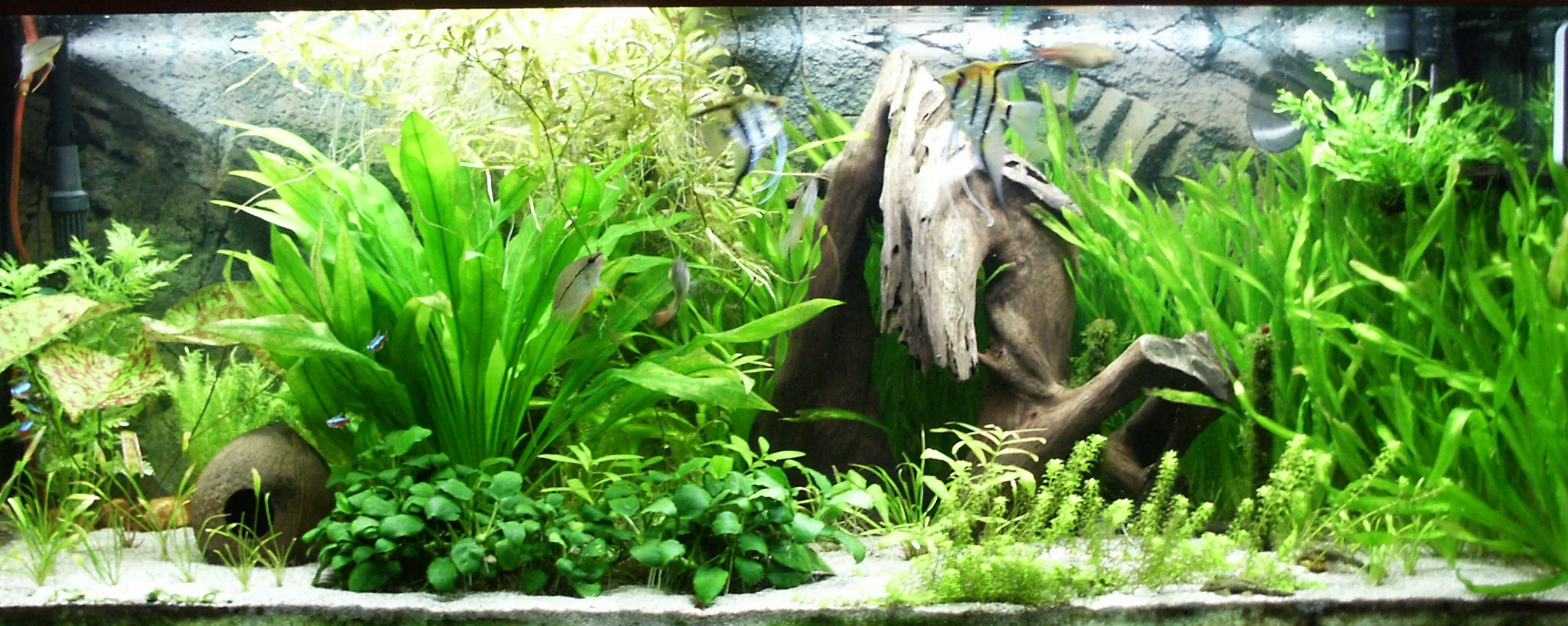 Uneaten flakes in gravel become tomorrow’s ammonia. Photo: Matthias Kloszczyk / Wikimedia Commons (CC BY-SA 2.5)
Portion Habits That Stick
- Use a finger pinch or tiny spoon — never pour from the jar
- Feed each level: flakes for surface fish, sinking wafers for bottoms
- Skip one day weekly for adult community tanks
- Test vacation feeder settings before you leave
When Thin Fish Need More
Underweight fish, recovering livestock, and breeding pairs may need extra calories — as more frequent micro meals, not bigger avalanches of flakes.
Related Reading
- How often to feed aquarium fish
- Ammonia spike & new tank syndrome
- Crystal clear aquarium water
- Complete nutrition guide
Conclusion
If the tank looks dirty after feeding week, you are feeding the filter more than the fish. Cut portions, siphon leftovers, and let appetite — not begging — set the schedule.


Explore other topics
Dive into more aquarium guides across the site.