

How Often Should You Feed Aquarium Fish?
How often should you feed aquarium fish? For most healthy adults, the answer is one or two small meals per day — never “whenever they beg.” Portions should disappear in a couple of minutes. This guide covers schedules by species, age, temperature, and smart fasting habits.
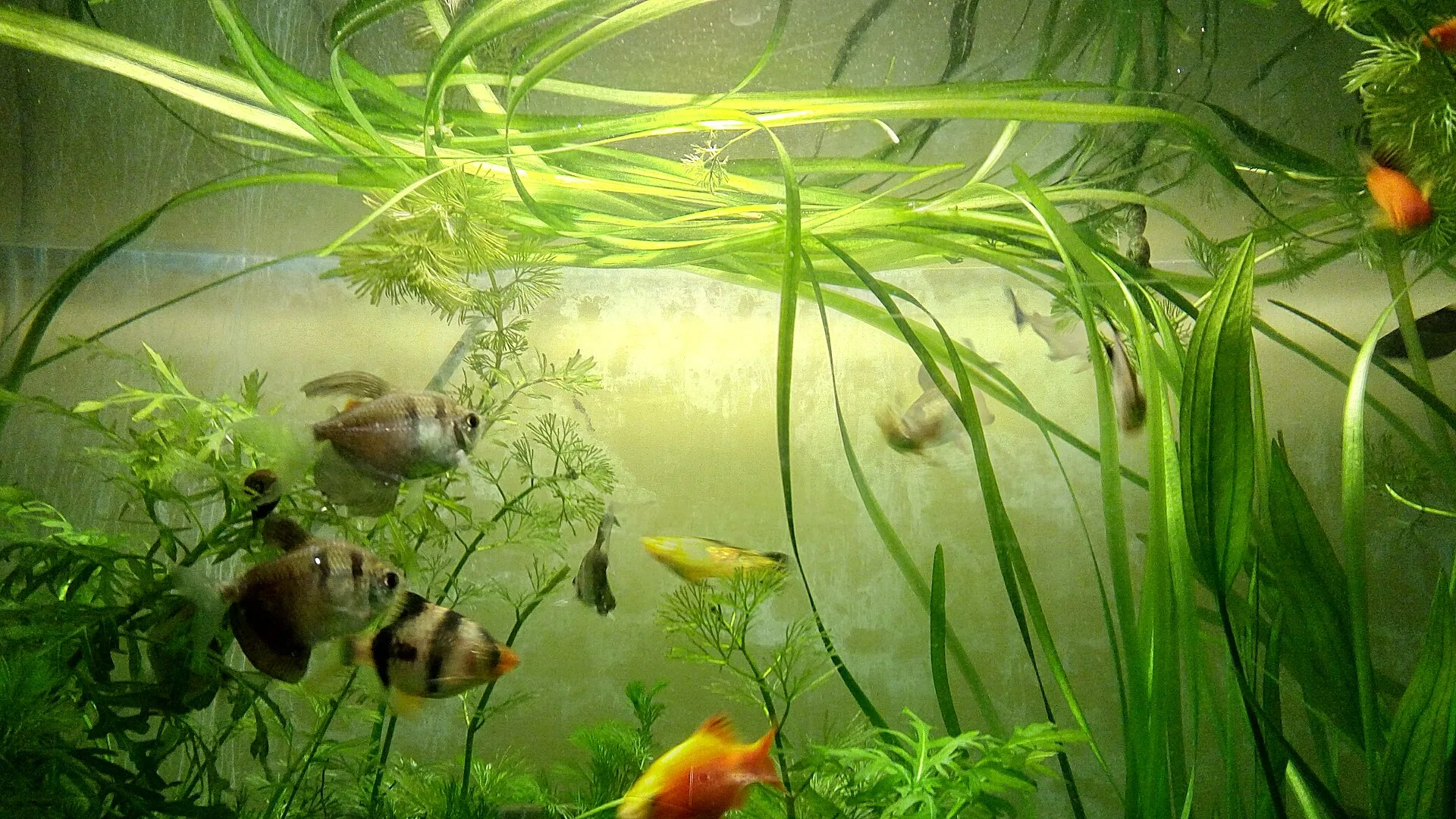 Active feeders should finish a portion in about two minutes. Photo: Damitr / Wikimedia Commons (CC BY-SA 4.0)
The Two-Minute Rule
Offer only what fish clear in roughly 1–2 minutes. Leftovers become ammonia. If flakes sit on the substrate, you fed too much — remove them before they rot.
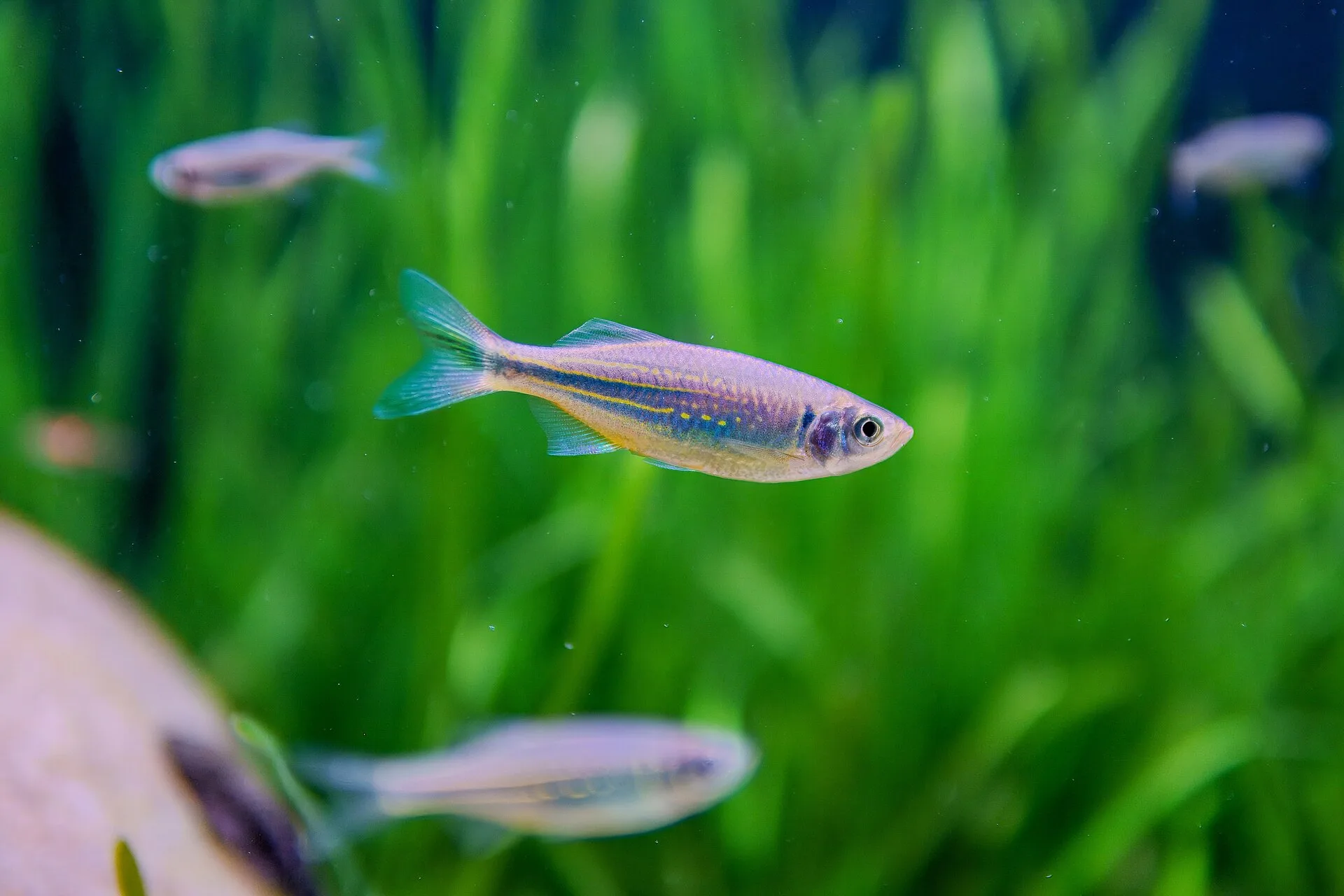 Community tanks need food that reaches surface, midwater, and bottom fish. Photo: Shifu Tanks / Wikimedia Commons (CC BY-SA 4.0)
Schedules by Fish Type
- Adult community tropicals: 1–2 meals daily
- Bettas: 1–2 tiny pellet portions; optional weekly fast
- Goldfish: 2–3 small feeds (they digest slowly)
- Growing juveniles / fry: 3–5 micro feeds
- Nocturnal catfish: sinking food after lights dim
Temperature and Metabolism

Warmer water speeds metabolism; cooler water slows it. Coldwater and unheated tanks need less food. Sick or medicated fish often need lighter meals — never force-feed stressed livestock.
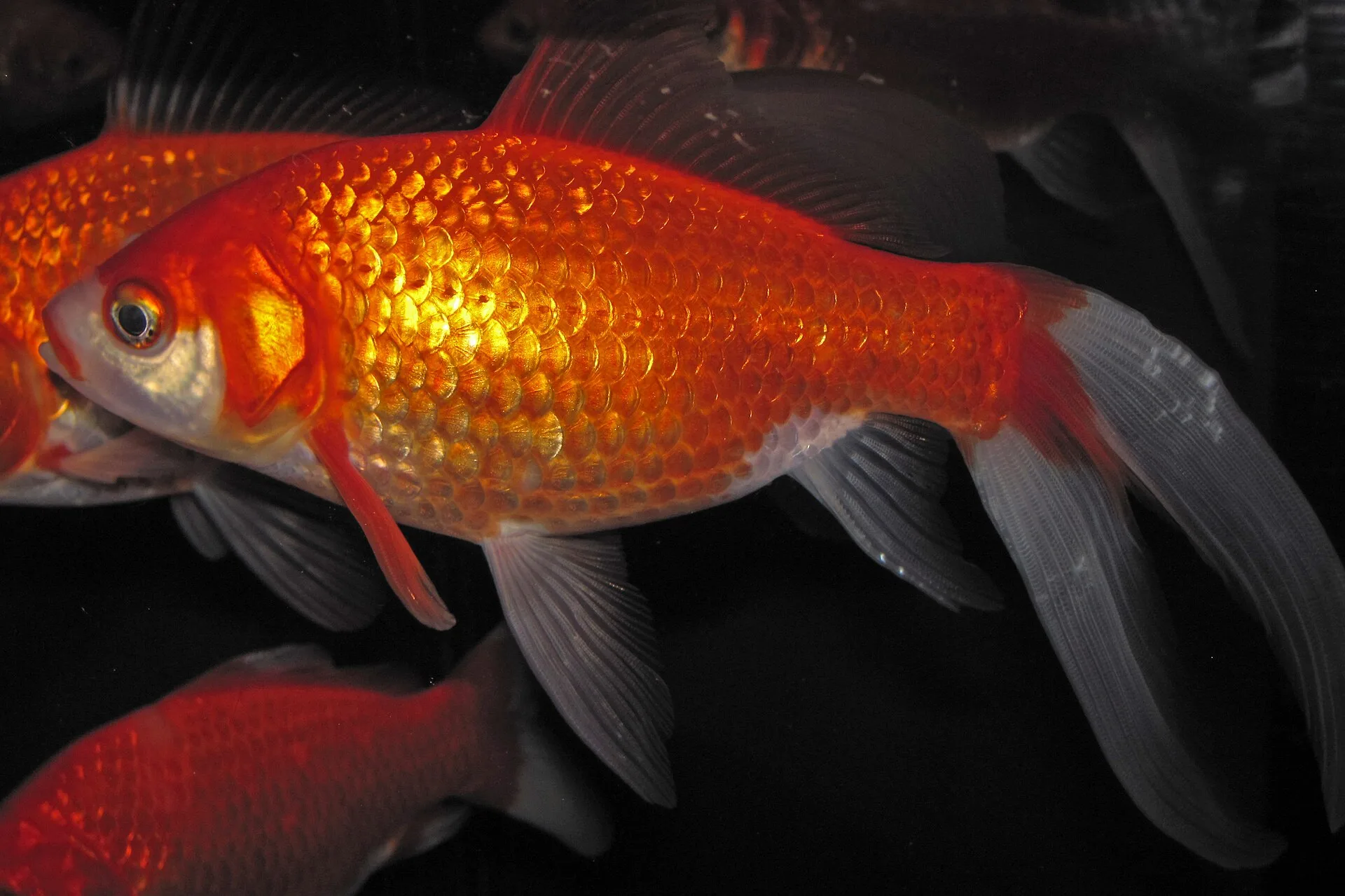 A calm feeding response beats a frantic free-for-all. Photo: James St. John / Wikimedia Commons (CC BY 2.0)
Weekly Fasting
Many keepers skip one day a week for adult fish. A short fast lets guts clear and reduces algae fuel from chronic leftovers — especially useful in densely stocked tanks.
Common Schedule Mistakes
- Feeding every time fish beg at the glass
- Dumping a big pinch without watching consumption
- Leaving an auto feeder blasting oversized vacation doses
- Feeding dry pellets too fast to fish that gulp air
Related Reading
- Complete fish nutrition guide
- Overfeeding signs and fixes
- Ammonia spike emergency guide
- Flake vs pellet fish food
Conclusion
Feed on a calendar, not on guilt. Small, observed portions once or twice a day — adjusted for species, age, and temperature — keep fish bright and water testing clean.


Explore other topics
Dive into more aquarium guides across the site.