

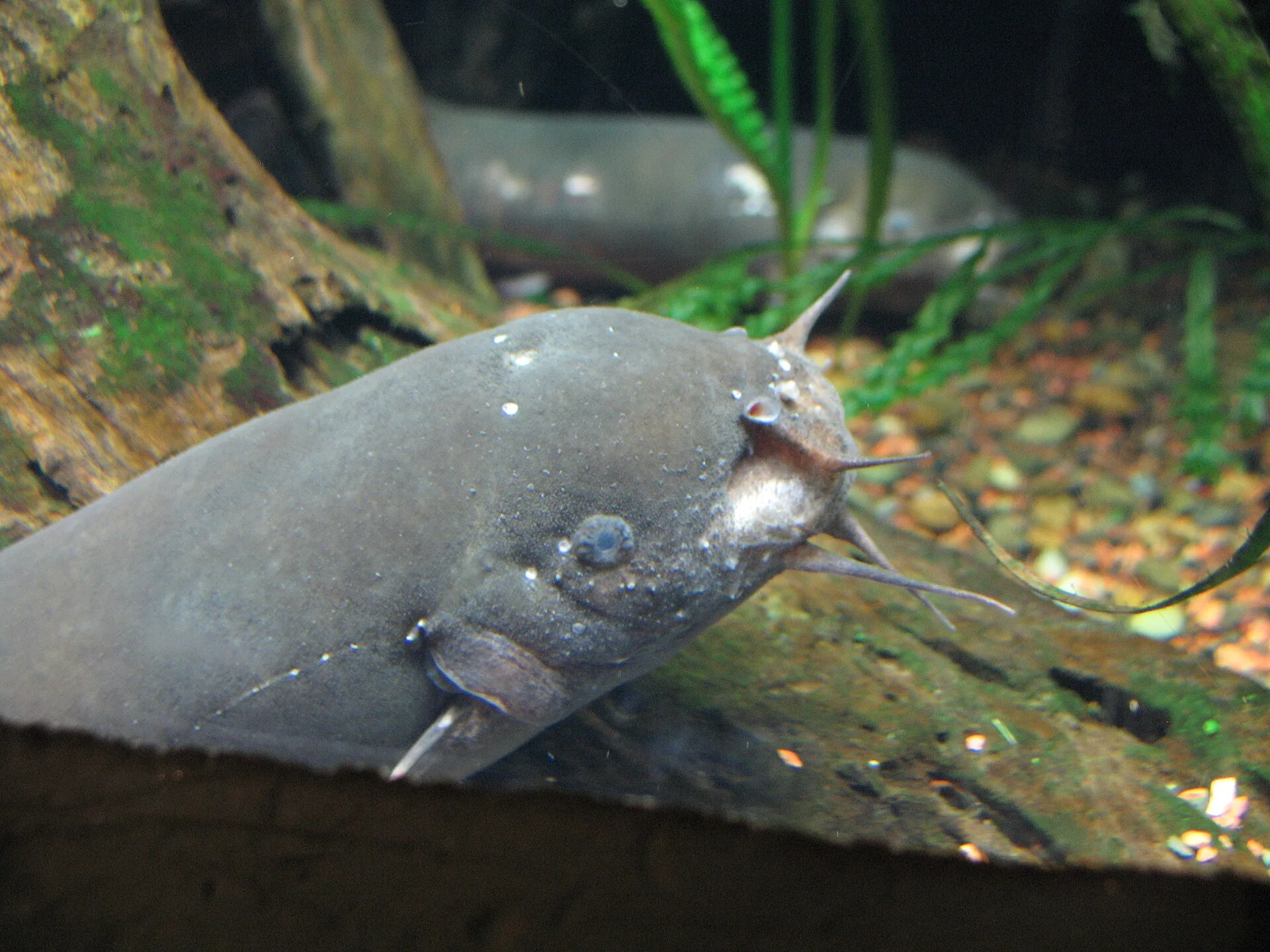
Catfish Types for Home Aquariums
This guide covers aquarium catfish types with practical steps for home aquariums. Catfish aren't all bottom-dwelling algae machines — the family spans tiny Corydoras schools to giant red-tailed predators.
For related reading, see Best Algae-Eating Fish — Honest Guide and Honey Gourami.
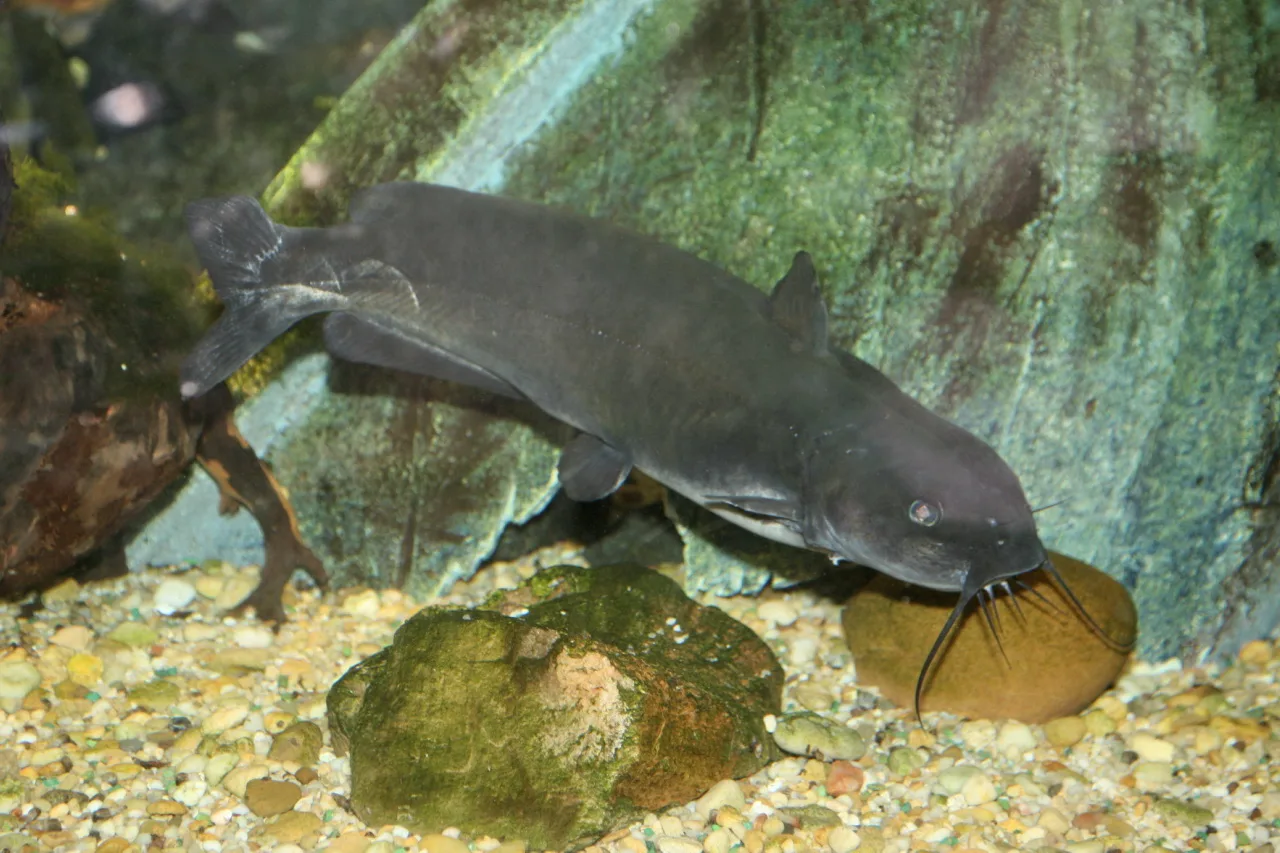 Catfish Types for Home Aquariums. Photo: Cliff from Arlington, Virginia, USA / Wikimedia Commons (CC BY 2.0)
Corydoras and Relatives
Small armored catfish that school on sand — classic community cleanup. Need groups of 6+, smooth substrate, and stable water.
Pygmy and habrosus suit nano tanks; bronze and panda Corydoras fit standard community 20 gallons+.
Plecos and Wood Eaters
Bristlenose plecos stay manageable (~4–6 inches) and eat algae plus vegetables. Common plecos grow huge — avoid unless you have hundreds of gallons.

Provide driftwood for Panaque species that digest cellulose.
Synodontis and African Cats
Synodontis petricola and multipunctatus suit rift lake tanks — nocturnal, territorial in groups. Upside-down cats add oddball appeal in peaceful setups.
Match water chemistry to lake of origin for Africans.
Glass and Swimmer Cats
Glass catfish need schools and gentle flow — transparent mid-water oddities. Asian shark catfish grow large quickly — pet store juveniles mislead buyers.
Always verify adult size on catfish — L-numbers and scientific names help.
Choosing Wisely
Sand substrate protects barbels. Feed sinking wafers — catfish starve when midwater fish eat everything first.
Quarantine wild-caught imports; catfish ship poorly if oxygen is low.

Explore other topics
Dive into more aquarium guides across the site.