

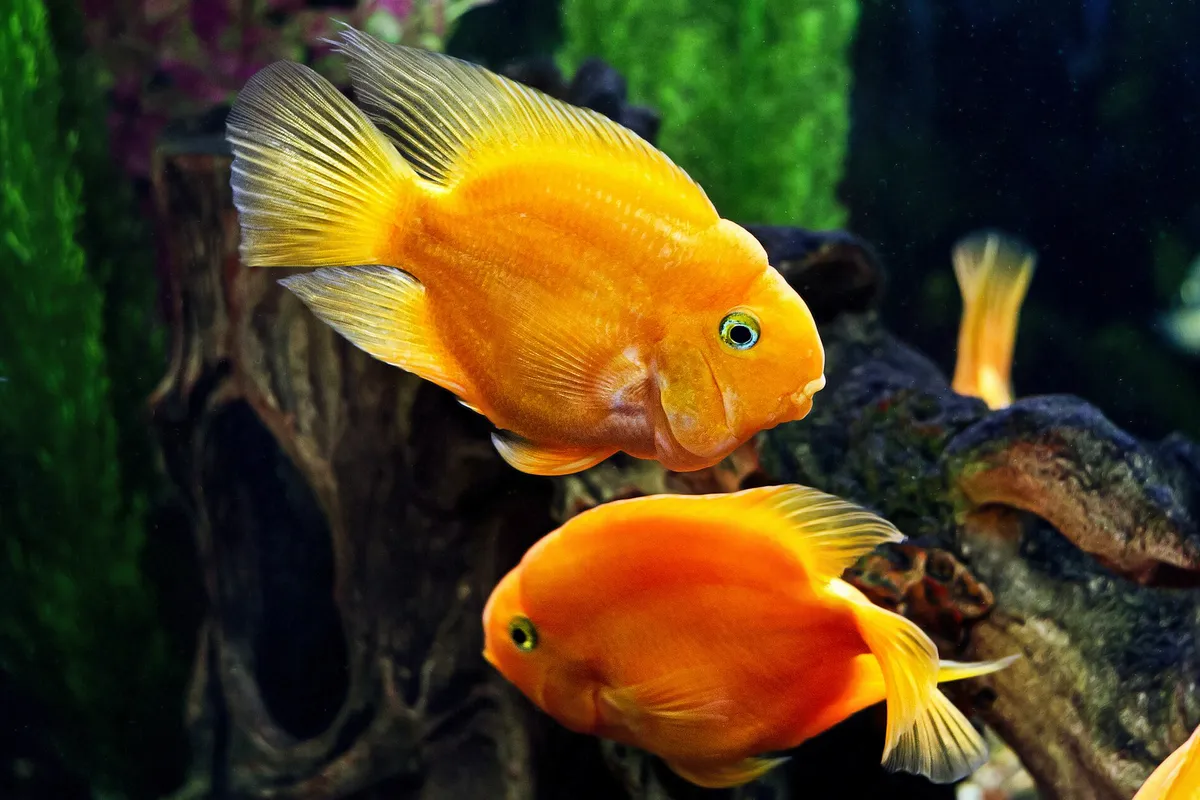
Few fish divide aquarists like the blood parrot. It does not exist in nature: it is a hybrid cichlid, first produced by breeders in Taiwan in the 1980s, with a rounded body, a small beak-like mouth and huge, expressive eyes. Some keepers see a cartoonish deformity. Others see one of the friendliest, most interactive fish they have owned.
Either way, blood parrots are now everywhere in the trade, and they deserve good care. They grow to 15–20 cm, can live 10 to 15 years, and have a few unusual needs that come directly from the way they were bred.
A man-made fish
The exact parent species have never been officially published. Most sources believe they include Central American cichlids such as the Midas cichlid (Amphilophus citrinellus) and the redhead cichlid (Vieja melanurus), possibly with other species involved. Because the blood parrot is a hybrid, it has no scientific name. Most males are infertile, which is why nearly all fish are produced on farms rather than bred at home.
A blood parrot is not the same as a saltwater parrotfish, or the larger, humped flowerhorn, which is a different hybrid line.
The beak, the eyes and the colour
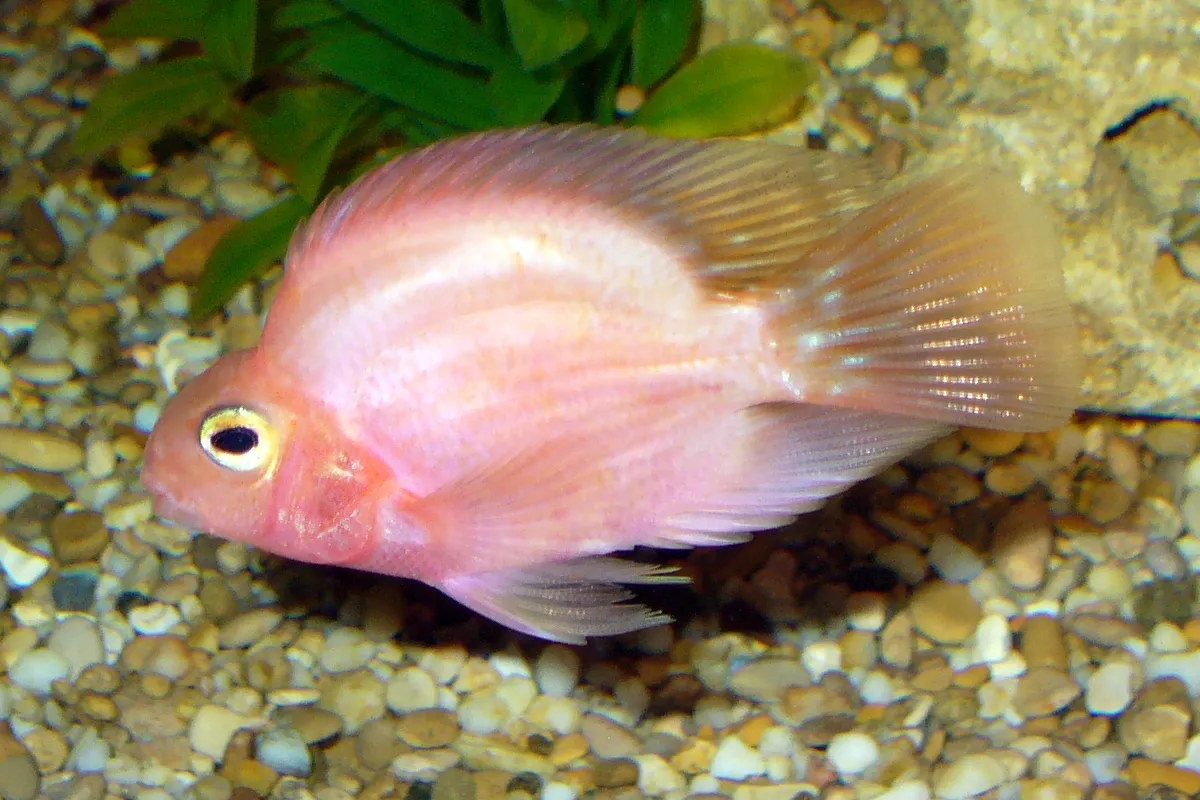
Blood parrots have a short, deep, rounded body, a vertical slit of a mouth that cannot fully close, and large, round eyes. Natural colours are orange, red, yellow and pale peach, with some strains bred to be white, purple-pink or with black patches that often fade with age. Their colour can change a lot with mood and diet.
Avoid fish that have been dyed, injected with colour or tattooed with patterns and words. These fish were coloured artificially, often by painful methods, the colour fades within months, and the process makes them more vulnerable to disease. Buying them keeps the practice going.
Tank size and setup
One blood parrot needs at least 150 litres, and a group of three or more needs 250 litres or more, with a tank around 120 cm long. They are active, curious swimmers that spend a lot of time exploring and rearranging the substrate.
Use sand or smooth gravel, and include several caves and pieces of driftwood. Blood parrots like to claim a cave and will dig around it, so anchor décor and choose tough or epiphyte plants such as Anubias and Java fern. Strong filtration and weekly water changes keep these heavy eaters healthy.

Water parameters
Blood parrots are adaptable. Keep the temperature at 24–28°C, pH 6.5–7.5 and soft to moderately hard water. Stability matters more than exact numbers. Keep ammonia and nitrite at zero and nitrates low with regular water changes, and add new fish only to a fully cycled tank.
Feeding a fish with a beak
The mouth shape makes feeding different from other cichlids. Blood parrots struggle with large or floating foods, so offer small, sinking pellets that they can scoop up from the bottom or mid-water. Many do best on pellets soaked for a few seconds so they sink slowly. Add frozen bloodworms, brine shrimp, mysis and blanched vegetables for variety.
Colour-enhancing foods with natural pigments such as astaxanthin and spirulina can deepen reds and oranges safely, unlike dyeing. Our guide to colour-enhancing fish food explains how they work. Feed small amounts two or three times a day, and make sure the blood parrot is actually getting food in a busy tank.
Tank mates
Blood parrots are generally peaceful but can be territorial around caves, especially when spawning. Because their mouths cannot bite properly, they cannot defend themselves well against aggressive cichlids.
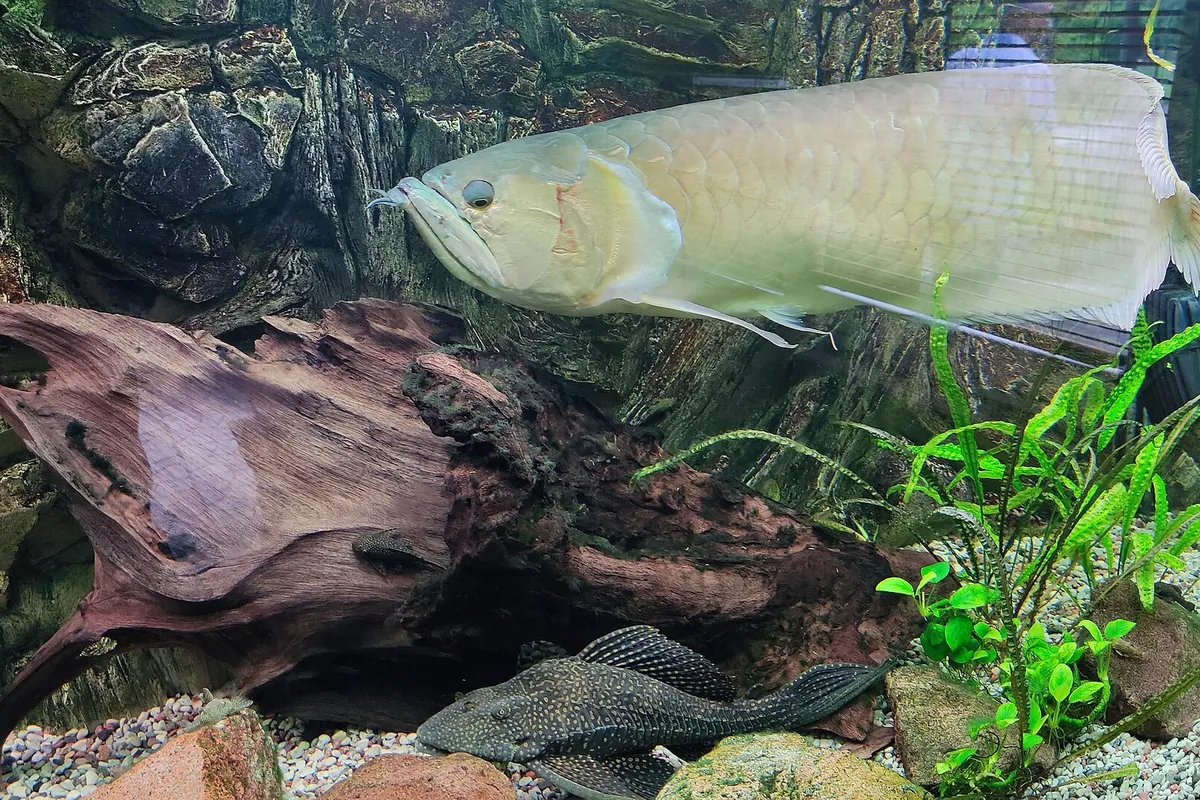
Good tank mates include similar-sized, peaceful fish: other blood parrots, severums, angelfish in a roomy tank, silver dollars, larger tetras, clown loaches and bristlenose plecos. Avoid aggressive cichlids such as convicts, jack Dempseys and most Central American species, and very small fish that might be eaten or bullied. If you are new to cichlids, our guide to choosing your first cichlid is a good next read.
Breeding
Pairs often clean a flat rock or cave and lay eggs, and both parents guard them fiercely. In most cases the eggs are infertile and turn white within a day or two, then get eaten. This is normal, not a sign of illness. Very occasionally, a fertile male or a pairing with another cichlid produces fry.
Common problems
Weight loss despite feeding: the fish may not be able to pick up the food offered; switch to small sinking pellets. Fading colour: diet, stress or a fish that was dyed in the first place. Swim bladder issues: their compressed body makes them more prone; feed sinking foods and avoid overfeeding. With good water and the right food, a blood parrot will be a confident, friendly fish for well over a decade.
Explore other topics
Dive into more aquarium guides across the site.