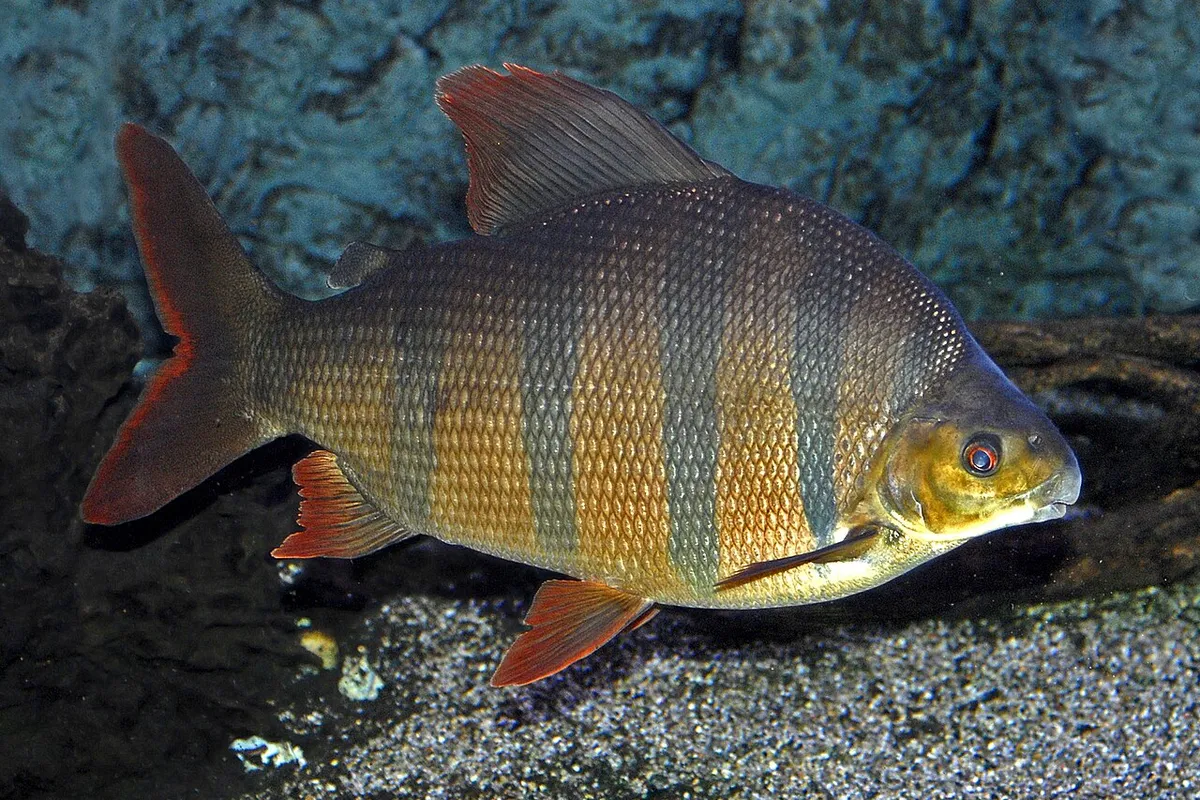
Juvenile six-banded distichodus are among the most eye-catching fish in any store: bright orange, with six bold black bands and red fins. Unfortunately, they do not stay that way. Adults lose some colour and grow to 40 cm or more.
Distichodus sexfasciatus is a powerful, plant-eating fish that becomes aggressive with its own kind. It needs a very large tank and the right tank mates.
Where six-banded distichodus come from
The species lives in the Congo basin and Lake Tanganyika in central Africa. It is found in large rivers and their floodplains, usually near vegetation.
Appearance and behaviour
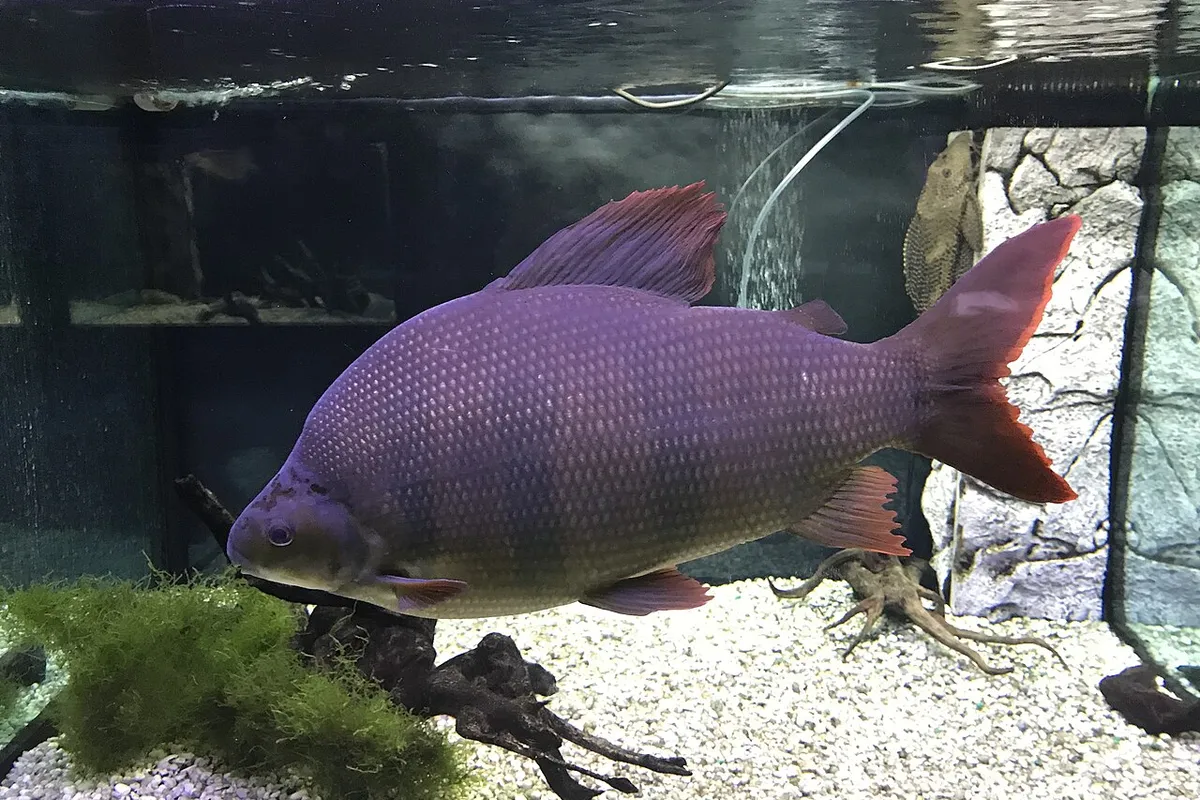
The body is tall and laterally compressed. The orange fades to a duller grey-orange with age, while the bands and red fins remain. Adults become boisterous and often attack others of their own species.
Keep one per tank unless you have an exceptionally large aquarium with a sizeable group.
Tank setup
Plan for at least 750 litres for an adult. Use sand, large rocks and driftwood, firmly placed. Live plants will be eaten, so stick to hardscape or very tough plants such as Java fern and anubias, which may still be nibbled. Use strong filtration and a heavy lid.
Water parameters

- Temperature: 22–26°C
- pH: 6.0–7.5
- Hardness: 4–18 dGH
A big eater means a big waste load. Large weekly water changes and oversized filtration keep nitrates down; see controlling nitrates long term.
Feeding
Distichodus are mainly herbivores. Feed spirulina pellets, algae wafers, blanched lettuce, spinach, peas and courgette, plus duckweed if you have it. Add some frozen foods for protein. Feed two or three times a day.
Tank mates
Good companions are large, robust fish that hold their own, such as large catfish, larger plecos, big barbs and robust cichlids. Small fish and long-finned species are at risk.
Breeding
There are no reliable reports of this species breeding in home aquariums.
Common problems and lifespan
Most problems start with an undersized tank: stunting, aggression and poor water. In a large, well-filtered system they can live 15 years or more.
Explore other topics
Dive into more aquarium guides across the site.