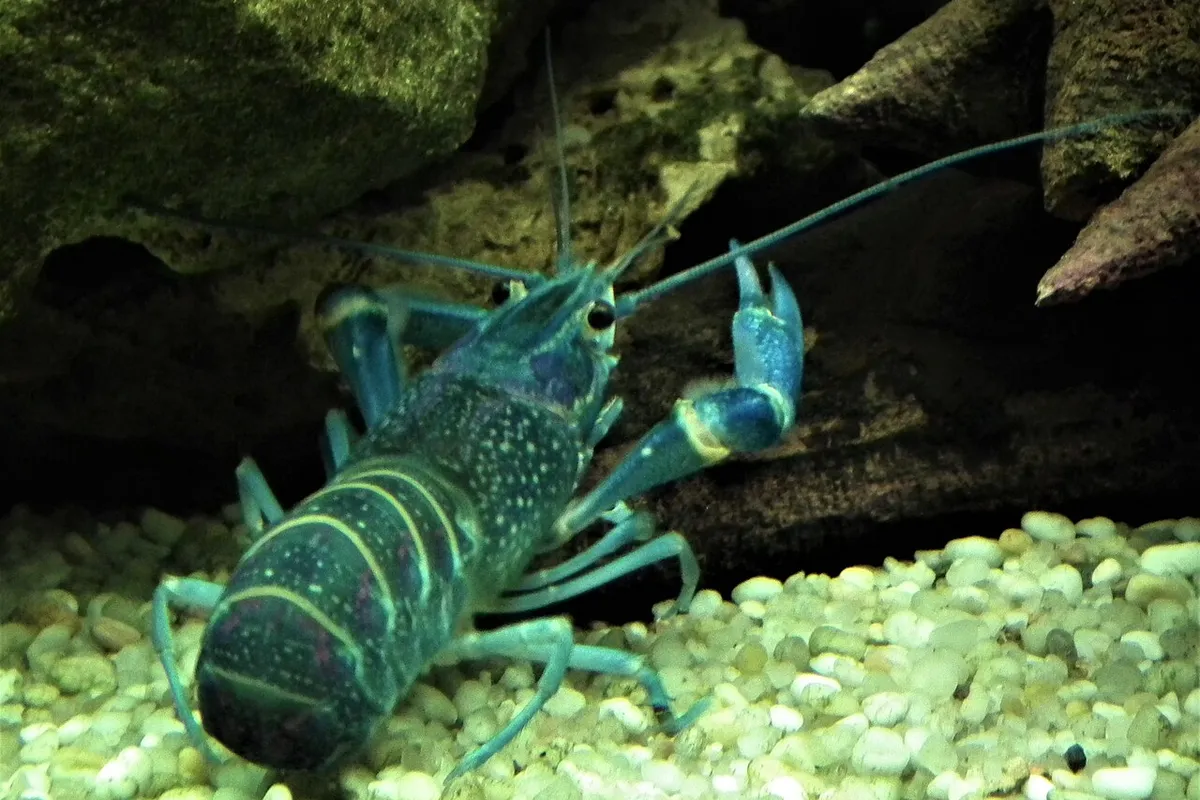
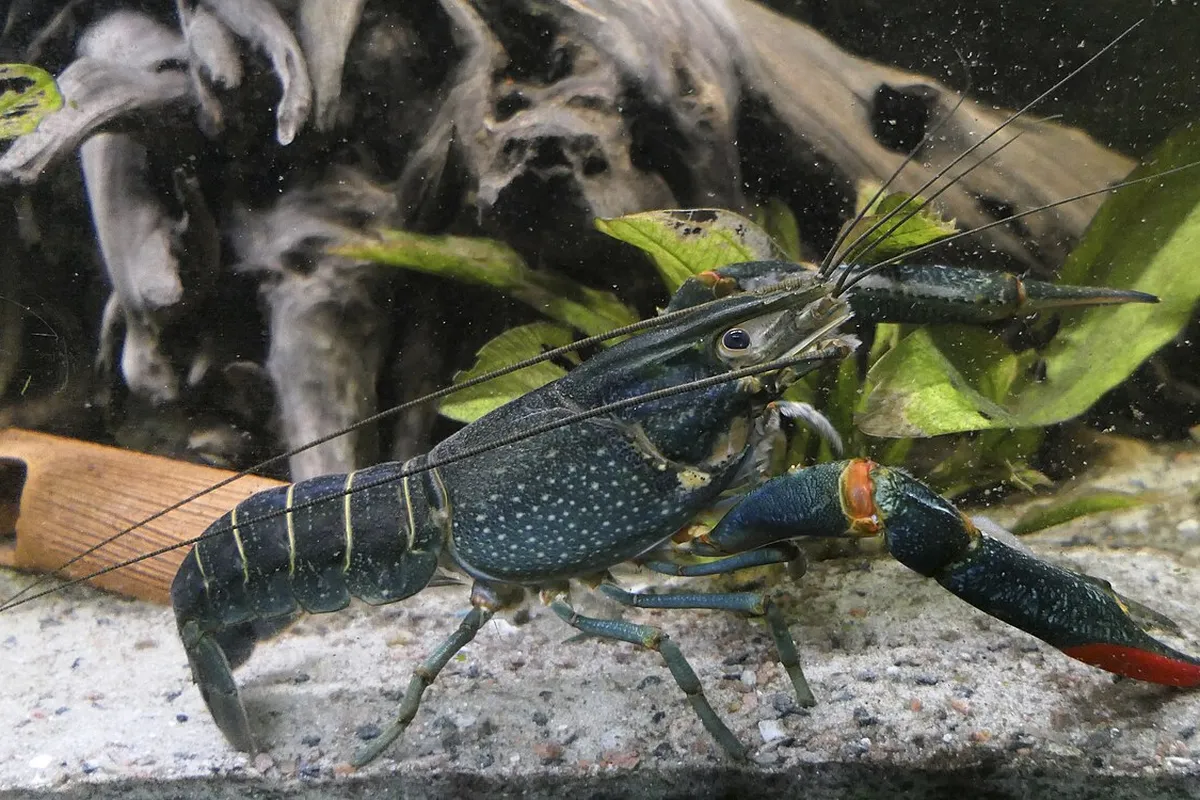
The redclaw crayfish is a large freshwater crayfish with a blue-green shell and a bright red patch on the outer edge of each male's claws. It grows to about 20 cm and is calmer than many crayfish, though still a crayfish.
Cherax quadricarinatus is hardy and interesting to watch. It is also farmed and has become invasive in some regions, so check your local laws before buying, and never release one.
Where redclaws come from
The species is native to northern Queensland, the Northern Territory and southern New Guinea. It lives in rivers, billabongs and swamps with soft bottoms and plenty of cover.
Appearance and behaviour
Mature males have the red claw patch. Redclaws are mostly active at dusk and night, digging and rearranging the tank. Like all crayfish, they moult regularly as they grow, and are soft and vulnerable for a few days afterwards.
Tank setup
A single adult needs at least 120 litres. Provide caves made of rock, pipes or clay pots, a sand or fine gravel substrate, and a tight lid with no gaps around cables, since crayfish climb out. Expect plants to be uprooted or eaten.
Water parameters

- Temperature: 22–28°C
- pH: 7.0–8.5
- Hardness: 8–20 dGH
Hard water provides the minerals they need for moulting. Avoid copper-based medications, which are toxic to invertebrates.
Feeding
Redclaws are omnivores and scavengers. Feed sinking pellets, blanched vegetables, leaf litter and occasional frozen bloodworms or shrimp. Feed every day or two and remove leftovers.
Tank mates
Redclaws are best alone or in a large tank with fast, midwater fish that stay out of reach, such as larger barbs and rainbowfish. Bottom-dwellers, slow fish and shrimp are likely to be caught. Two adult males fight.
Breeding
Females carry eggs under the tail for six to ten weeks, then the young stay with her for a few days. Move the young to a separate tank, as adults eat them.
Common problems and lifespan
Failed moults, often due to soft water, and escapes are the most common problems. Related species include the blue crayfish and the much smaller dwarf orange crayfish. Redclaws live about five years.
Explore other topics
Dive into more aquarium guides across the site.