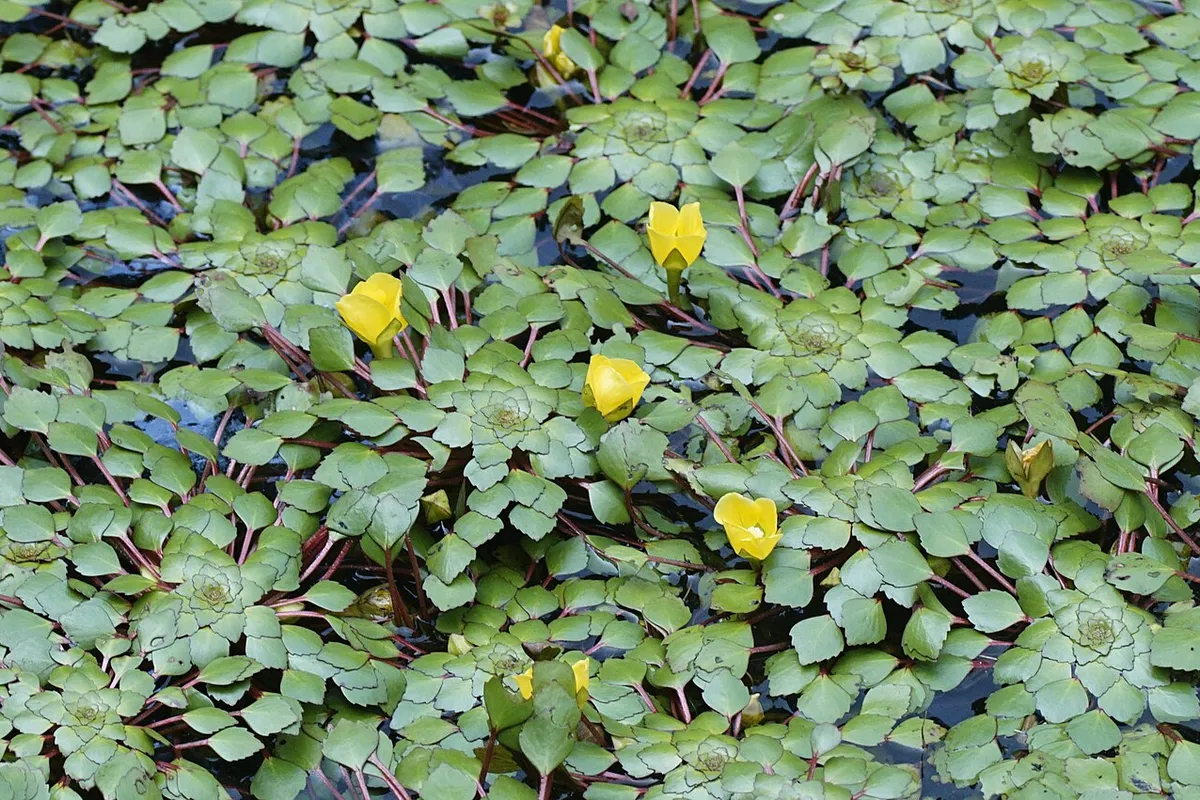
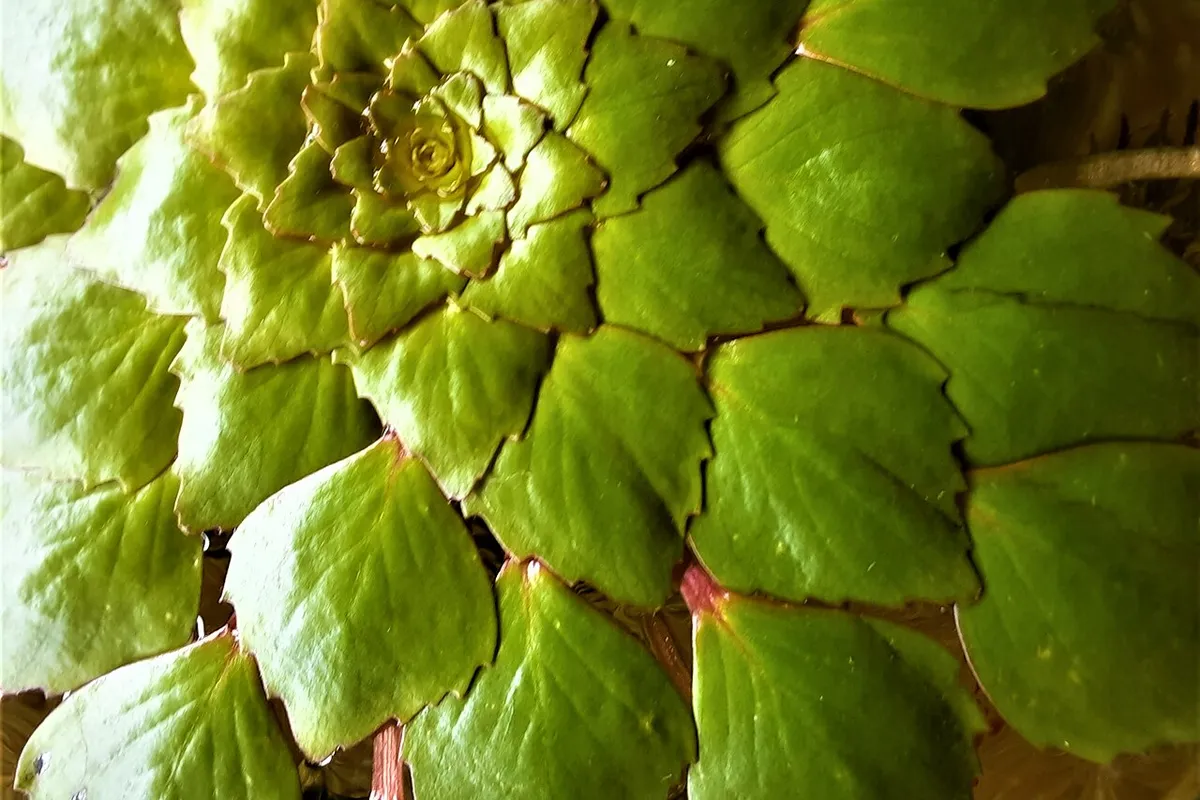
The mosaic plant is one of the most geometric plants you can grow. Each stem ends in a floating rosette of small, diamond-shaped leaves arranged like tiles, in green with red edges. In summer it opens bright yellow flowers above the water.
Ludwigia sedioides is rooted in the substrate but lives at the surface, so it suits open-top aquariums, tubs and ponds rather than covered tanks.
Origin
The species comes from Central and South America, from Mexico to Brazil, where it grows in still, shallow water of lakes and ponds.
Appearance and growth
A long, flexible stem rises from the roots to the surface, where a rosette of 10–15 cm forms. Leaves turn redder under strong light and in cooler water.
Placement
Plant in water 30–60 cm deep in a pot of rich soil or a nutrient substrate. In an aquarium, an open top and strong overhead light are essential; the rosettes need space on the surface.
Light, CO2 and nutrients

It needs strong light, ideally direct sun outdoors. CO2 is unnecessary because the leaves take it from the air. Feed with root tabs or pond fertiliser tablets pressed into the pot.
Water conditions
- Temperature: 20–30°C
- pH: 6.0–7.5
- Hardness: 2–12 dGH
It is not frost-hardy. In Canada, grow it outdoors only in summer and bring it indoors under lights for winter.
Propagation and maintenance
Cut a rosette with some stem and push it into a new pot, or separate side shoots. Remove old, yellowing leaves from the rosette.
Compatibility
Suits ponds and tubs with small fish such as white cloud minnows or ricefish. Large goldfish and koi may eat it.
Common problems
Rosettes shrink and fade in low light or cold water. Aphids sometimes attack the leaves outdoors; rinse them off with a gentle spray.
Explore other topics
Dive into more aquarium guides across the site.