

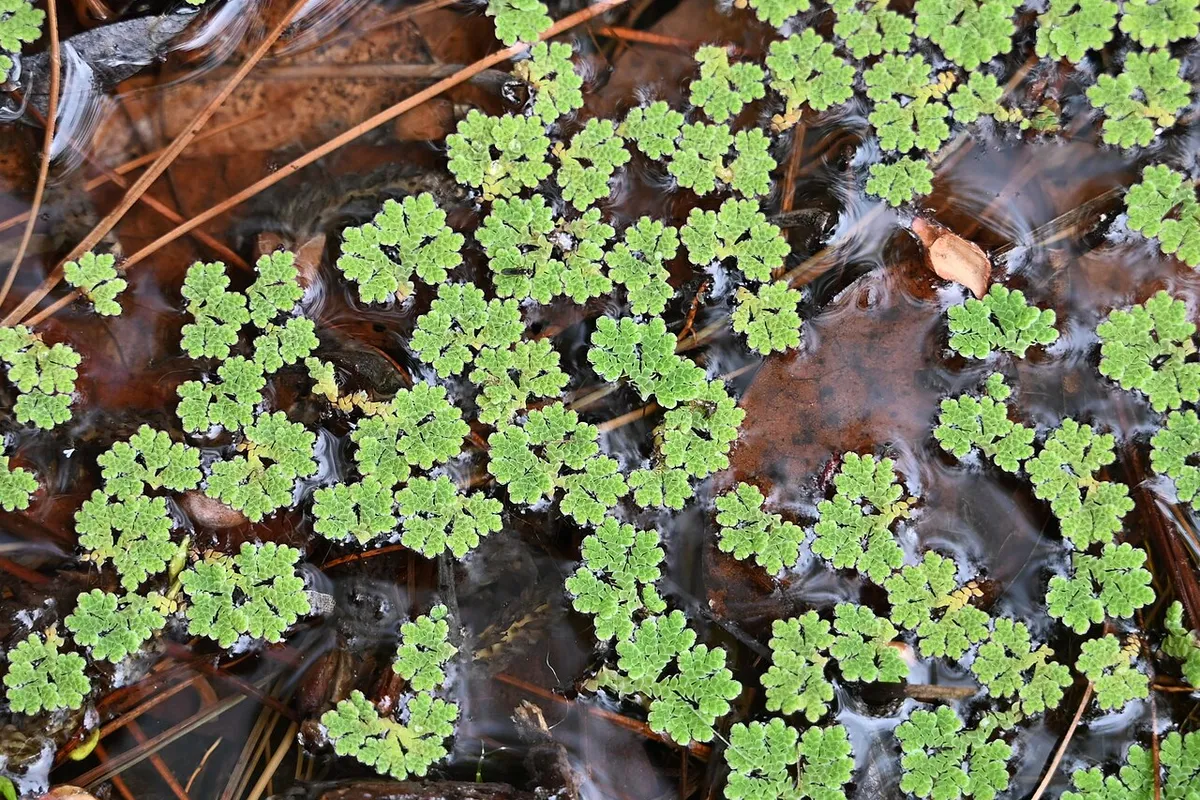
Mosquito fern is a tiny floating fern, each plant just 1–2 cm across, made of small overlapping scale-like leaves. It is green in shade and turns red or burgundy in strong light or cold weather.
Azolla filiculoides lives in partnership with a cyanobacterium inside its leaves that captures nitrogen from the air. That lets it grow very quickly even in nutrient-poor water. It is best in open-top tanks, tubs and ponds.
Origin
The species is native to the Americas, from British Columbia south to South America. It has been introduced to Europe, Africa and Asia, and is considered invasive in several countries.
Appearance and growth
Plants branch and break apart to form new plants, quickly building a dense mat. The roots hang a few centimetres below the surface.
Placement
It needs still water and dislikes condensation dripping from a lid, so open-top tanks and outdoor tubs suit it best. In covered tanks it often struggles.
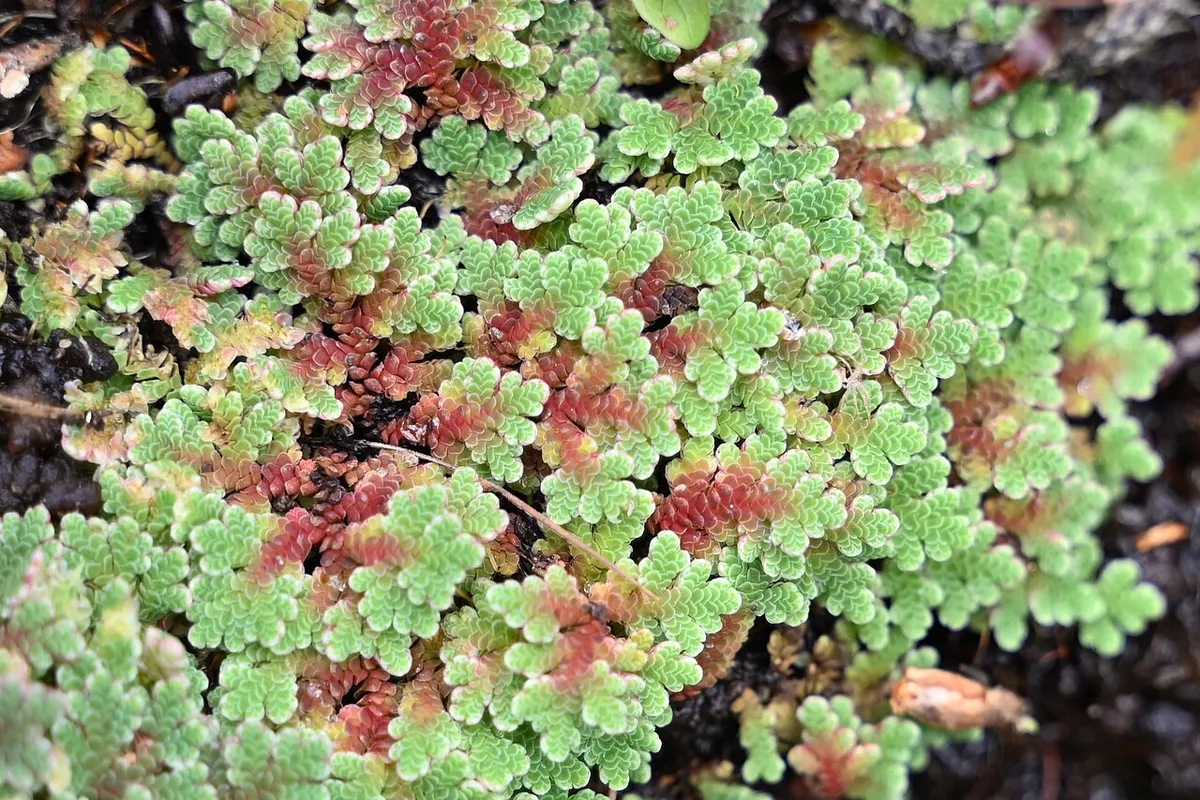
Light, CO2 and nutrients

Medium to strong light. No CO2 or extra nitrogen is needed, but it benefits from some phosphate, potassium and iron.
Water conditions
- Temperature: 5–28°C
- pH: 5.0–8.0
- Hardness: any
It tolerates cool water and light frost, but it rarely survives a hard Canadian winter outdoors. Keep a portion indoors in a bright tank or tub over winter.
Propagation and maintenance
It propagates itself. Remove a portion weekly to keep at least half of the surface clear. Compost removed plants well away from waterways.
Compatibility
Goldfish, koi and some cichlids eat it. It gives cover to fry and small fish such as livebearers. Keep some surface open for surface-breathing fish.
Common problems
Plants rot when water splashes on them or condensation drips. In ponds, it can cover the surface completely and reduce oxygen. Never release it into the wild.
Explore other topics
Dive into more aquarium guides across the site.