

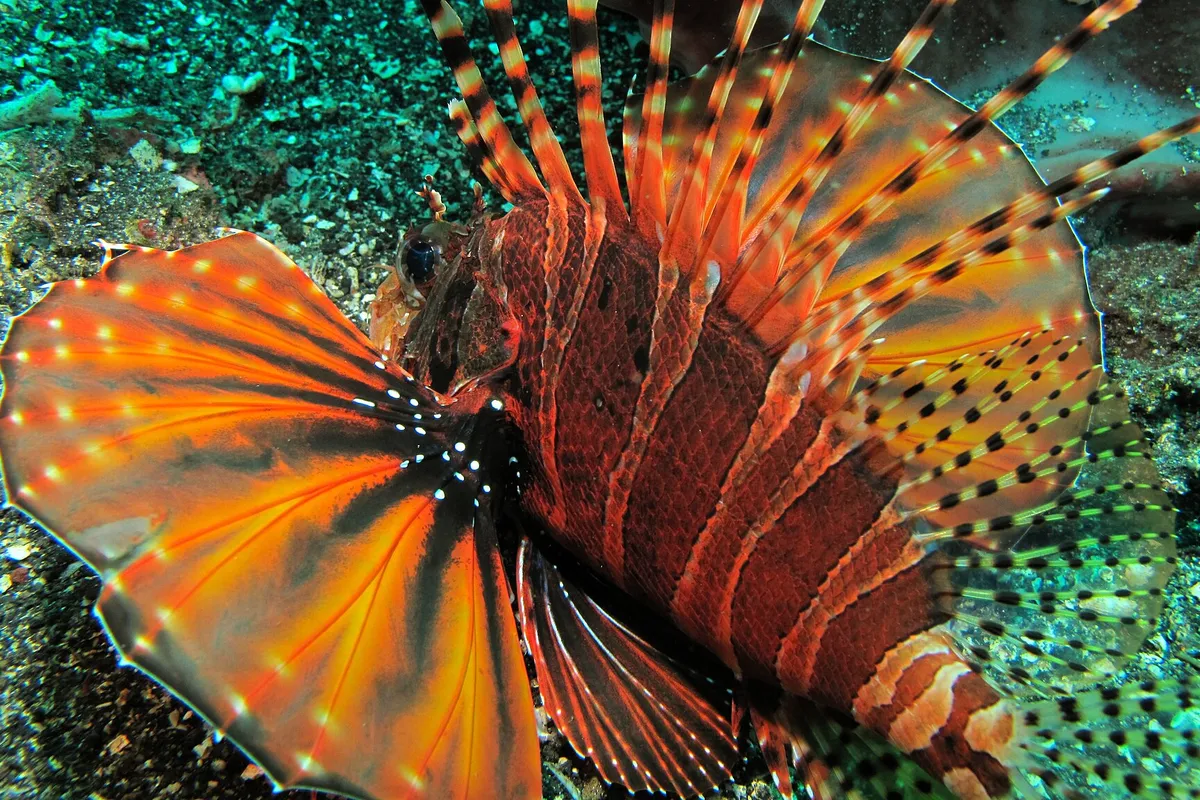
The zebra lionfish, also called the zebra turkeyfish or dwarf zebra lionfish, is a smaller and more manageable relative of the big red lionfish. Dendrochirus zebra grows to about 20 cm, has broad, fan-shaped pectoral fins striped in red-brown and white, and spends its days drifting around the rocks. It is a slow, graceful fish with a lot of character.
It is also venomous, and it will eat any fish or shrimp that fits in its mouth. Plan for both before buying one.
Where zebra lionfish come from
The species is found across the Indo-Pacific and Red Sea, from East Africa to Samoa and from southern Japan to Australia. It lives on reefs and rocky areas, often resting in caves or under ledges during the day and hunting at dusk.
Appearance and behaviour
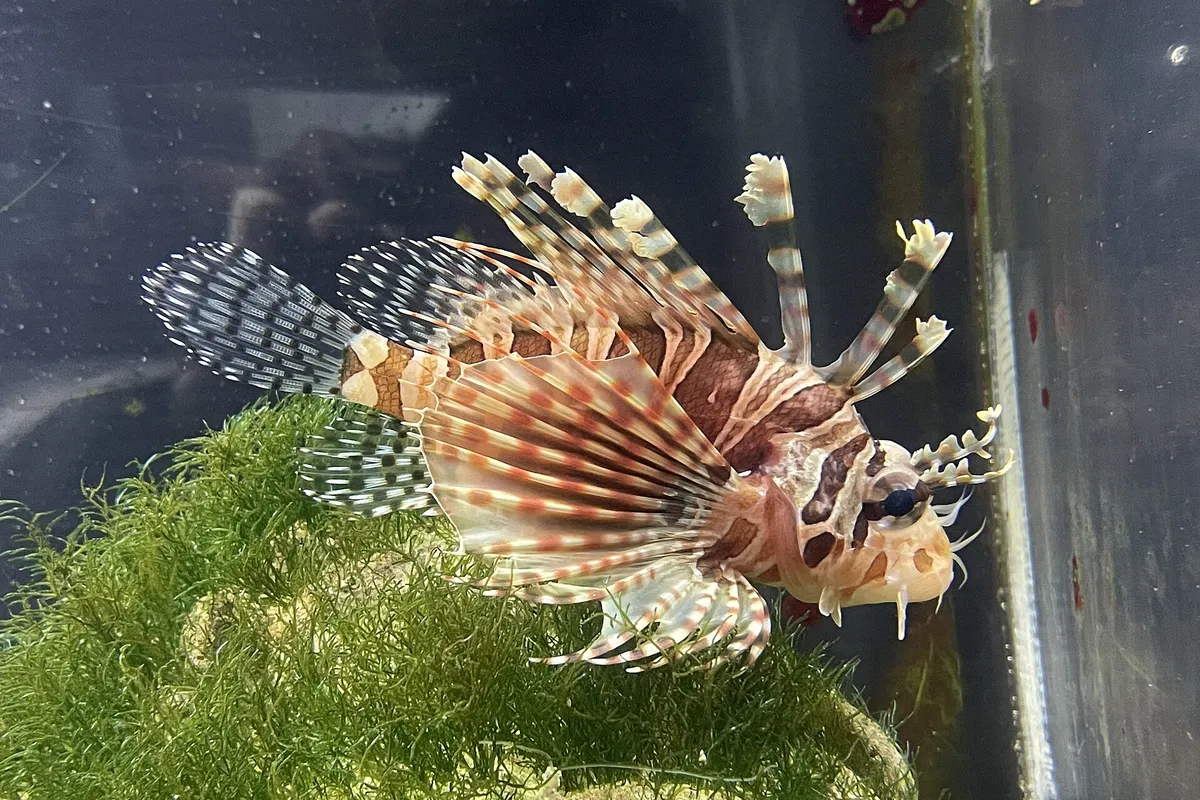
The body has red-brown and white vertical bands, and the pectoral fins are wide and fan-like, with joined rays and a pattern of bands and spots. The dorsal spines are long and venomous. Unlike the red lionfish, the pectoral fins form a single fan instead of separate feathery rays.
Zebra lionfish are peaceful towards fish they cannot eat. They hunt by slowly herding prey into a corner with their fins spread, then striking.
Tank setup
A single zebra lionfish needs at least 200 litres. Provide caves and overhangs to rest under, and open space to cruise. Moderate flow and dim areas help them feel secure. Lionfish are often kept in fish-only tanks with live rock, as they eat shrimp and other small invertebrates.
Venom safety
The dorsal, pelvic and anal spines carry venom. A sting is very painful and can cause swelling, nausea and, rarely, more serious reactions. Always know where the fish is before putting your hands in the tank, use long tools, and never handle it. If you are stung, soak the area in water as hot as you can stand without burning yourself, and get medical help if symptoms are severe or you have an allergic reaction.

Water parameters
Keep the temperature at 24–27°C, specific gravity at 1.020–1.025 and pH at 8.1–8.4. Lionfish are messy eaters, so use good skimming and change water regularly.
Feeding
Wild lionfish eat small fish and crustaceans. Most can be weaned onto frozen foods: start with live ghost shrimp, then offer frozen shrimp, krill, silversides and chopped seafood on a feeding stick. Feed juveniles daily and adults every two to three days, and avoid overfeeding, which causes fatty liver disease. Do not feed freshwater feeder fish, which lack the right nutrition.
Tank mates
Good companions are fish too big to swallow and calm enough not to nip: tangs, larger angelfish, large wrasses, groupers and other lionfish of similar size. Avoid small fish, shrimp and crabs, and avoid triggerfish and puffers, which may nip the fins.
Breeding
Lionfish release floating egg masses in the open water. Breeding in home aquariums is very rare.
Common problems and lifespan
Refusing frozen food, overfeeding and stings to the keeper are the main issues. Lionfish are sensitive to copper, so use other treatments if needed.
With good care, zebra lionfish live 10 years or more.
Explore other topics
Dive into more aquarium guides across the site.