

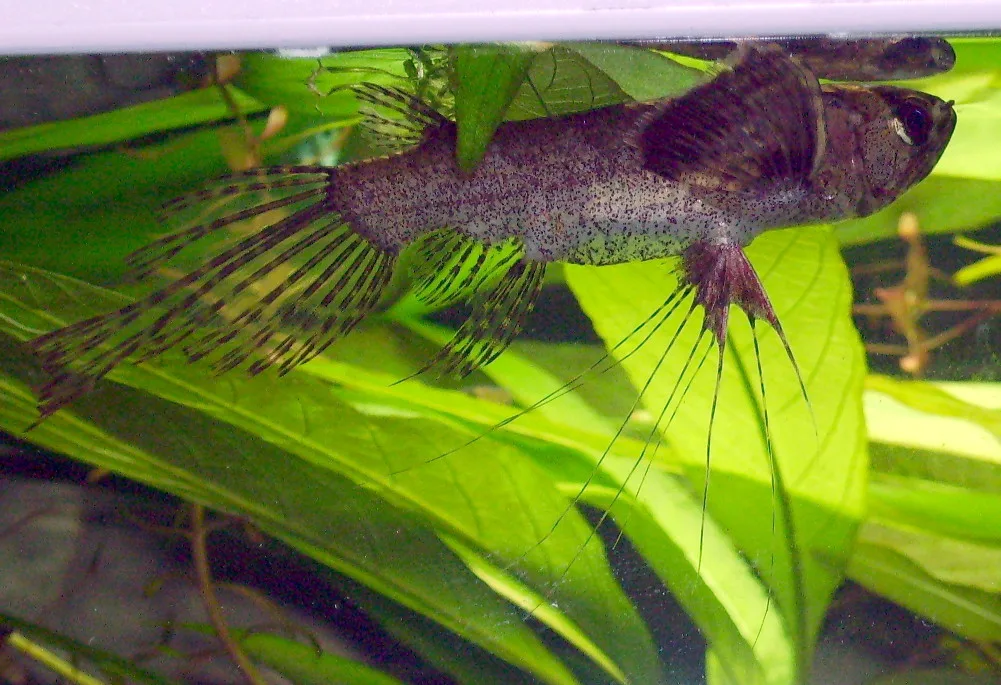
The African Butterfly Fish (Pantodon buchholzi) is a distinctive freshwater aquarium fish valued for its appearance and behaviour. It is native to slow rivers, swamps and forest pools across parts of West and Central Africa. Understanding its small natural habitat details helps aquarists provide the right flow, cover, food and tank mates.
African Butterfly Fish Size and Aquarium Setup
Adults reach about 10–13 cm (4–5 inches). A tank of at least 110 litres (29 gallons) is recommended, with more width than height. Leave calm surface areas beneath floating plants and use a completely secure lid. The aquarium should be fully cycled before the fish are added, and routine partial water changes should be used to keep nitrate and dissolved waste under control.
- Use a mature, fully cycled aquarium.
- Provide cover as well as open swimming or feeding space.
- Match filtration strength to the species’ natural habitat.
- Prevent sudden changes in temperature or water chemistry.
Water Conditions
Recommended conditions are 24–28°C (75–82°F), pH 6.0–7.5, and soft to moderately hard water. Keep surface movement gentle while maintaining good overall oxygenation and water quality. Always acclimate new fish gradually and test ammonia, nitrite and nitrate, especially during the first weeks after introduction.
Diet and Feeding
The African Butterfly Fish should be fed floating carnivore pellets, crickets, flies, mealworms in moderation, shrimp, bloodworms and other meaty foods. Food that sinks may be ignored.. Offer portions that can be eaten promptly, vary the diet through the week and remove uneaten food before it affects water quality.
Sexing African Butterfly Fish
Males have a distinctly curved rear edge to the anal fin and specialized fin rays, while females have a straighter anal fin and often become fuller when mature. Juveniles can be difficult to sex, so differences may only become clear as the fish mature.
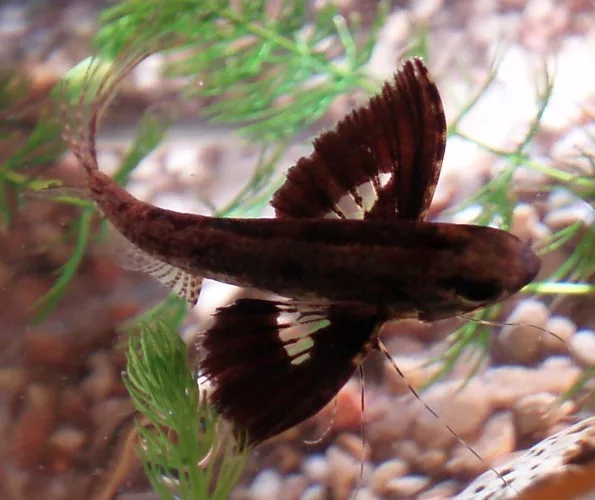
By Isidro Martínez - originally posted to Flickr as Pantodon buchholzi, CC BY-SA 2.0, https://commons.wikimedia.org/w/index.php?curid=9984608
Breeding

Breeding is uncommon in community aquariums. A conditioned pair may spawn at the surface, producing floating eggs. The adults should be removed, and the fry require tiny live foods once free-swimming. Consistent feeding and very clean water are usually more important than frequent handling or major changes to the aquarium.
Is It Good for a Community Tank?
It can be calm with suitably sized fish but will eat anything that fits in its mouth. Keep it with peaceful midwater or bottom fish such as larger Congo Tetras and medium catfish. Avoid fin nippers and other surface predators.
Species Variations and Albino Forms
Geographic populations may differ slightly in pattern and colour. Albino African Butterfly Fish are exceptionally uncommon and are not a standard trade variety.
Ease of Care
Care level: Intermediate. Success depends on choosing healthy stock, avoiding overcrowding and ensuring every fish receives suitable food. Observe the group daily for clamped fins, unusual hiding, rapid breathing or weight loss.
Frequently Asked Questions
How many African Butterfly Fish should be kept together?
Follow the species’ social needs described above and provide enough room for natural displays, feeding and escape from dominant individuals. A proper group usually produces more confident behaviour than keeping only one or two schooling fish.
Can African Butterfly Fish live in a beginner aquarium?
The listed care rating is a useful guide, but even beginner-friendly fish need a cycled tank and stable water. Species rated intermediate often have special feeding, flow or social requirements that should be prepared before purchase.
What is the best way to introduce African Butterfly Fish?
Dim the aquarium lights, acclimate gradually, and release the fish near cover. Feed lightly on the first day and watch existing tank mates for chasing or food competition.
Explore other topics
Dive into more aquarium guides across the site.