

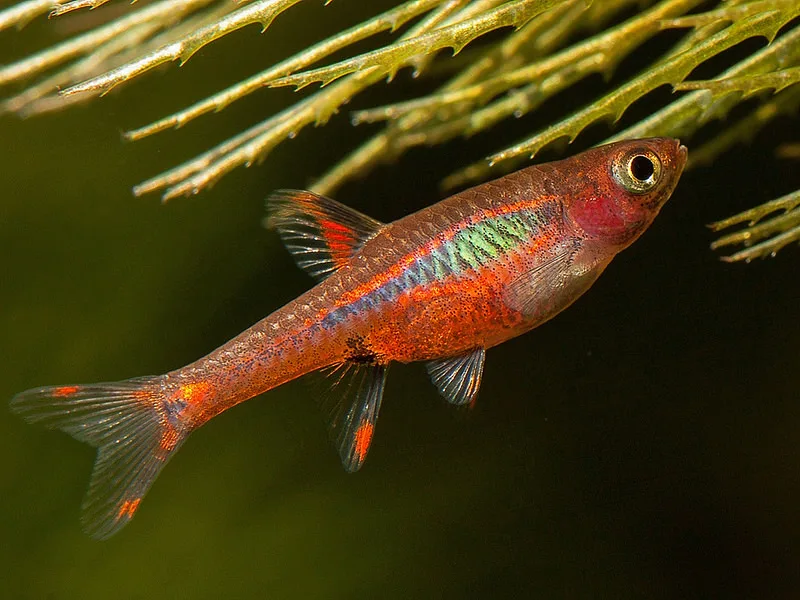
The Chili Rasbora, Boraras brigittae, is one of the smallest and most colourful freshwater fish commonly kept in planted aquariums. Despite the name rasbora, this species belongs to the genus Boraras and is famous for its red body, dark lateral marking and tiny adult size. A settled group can create a vivid display without requiring a large fish.
Native Range and Habitat
Chili Rasboras are native to southern Borneo in Indonesia. Their natural environments are associated with soft, acidic freshwater habitats where plant matter, roots and leaf litter create shaded conditions. These habitats help explain why the species often looks and behaves best in a mature planted aquarium with subdued areas rather than an extremely bright, bare tank.
Adult Size and Tank Setup
This is a true nano fish. A common adult length is around 2 cm, although FishBase records a maximum total length of about 3.5 cm. Their small size does not mean they should be kept alone in a tiny container. They are schooling fish and feel more secure when kept in a group.
A planted aquarium with gentle filtration, fine-leaved plants and some floating cover is ideal. Darker substrate can help their red colour stand out. If you are building a planted setup from scratch, see our beginner planted tank guide.
Water Conditions
Chili Rasboras prefer warm water, commonly around 24–28°C. Soft to moderately soft water and an acidic to near-neutral pH are suitable. Captive-bred fish can be adaptable, but rapid swings in pH, temperature or hardness should be avoided. Because the fish are so small, they can be affected quickly by poor water quality.
Diet and Feeding
Feed tiny foods that can fit into their mouths. Crushed quality flakes, micro pellets and powdered foods can form the staple diet. Small frozen or live foods such as baby brine shrimp, cyclops, daphnia and microworms help improve condition and colour. Feed modest amounts once or twice daily and make sure food reaches the entire group.
Sexing Chili Rasboras
Mature males are normally slimmer and develop stronger red coloration, particularly when displaying. Females are usually slightly fuller through the abdomen and may appear less intensely coloured. Condition, stress and lighting can affect appearance, so sex is easier to judge in a settled group of mature fish.
No. Gentle to moderate circulation is better than a powerful current that forces these tiny fish to struggle continuously.
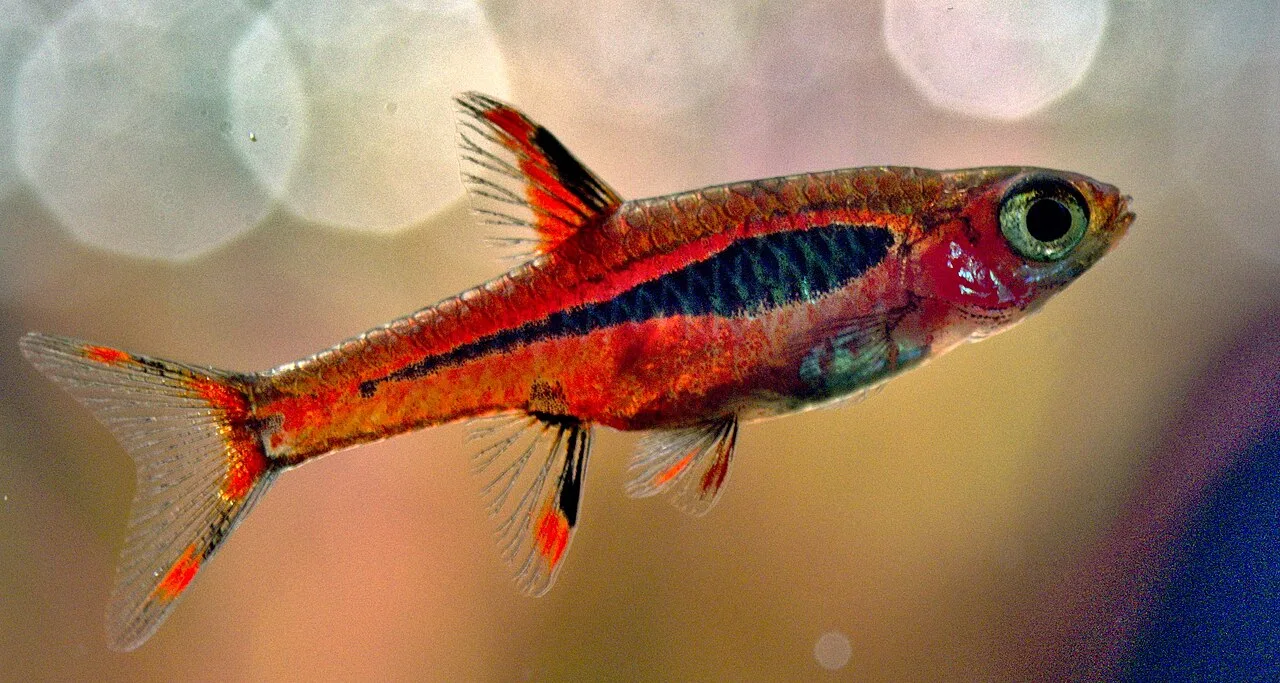
By JoKrimmel - Own work, CC BY-SA 4.0, https://commons.wikimedia.org/w/index.php?curid=151854869

Breeding
Chili Rasboras scatter or deposit small eggs among plants. FishBase reports that eggs can be placed on the underside of leaves and that larvae may hatch after about 48 hours. In a heavily planted mature aquarium, a few fry may occasionally survive without intervention, but controlled breeding is more reliable in a separate setup.
Use fine plants or spawning media and remove adults if you want to maximize fry survival. The fry are extremely small and initially require microscopic foods such as infusoria before progressing to larger live foods.
Are Chili Rasboras Good Community Fish?
They are peaceful, but their tiny size makes tank-mate selection important. They do well with other small, gentle species such as Celestial Pearl Danios, small peaceful Corydoras and suitable dwarf shrimp. Large or boisterous fish may frighten them, outcompete them for food or view them as prey.
Ease of Care
Chili Rasboras are relatively easy once established in a mature aquarium, but their small body size makes them less forgiving of unstable conditions. They are a good choice for careful beginner-to-intermediate aquarists who understand aquarium cycling and can provide appropriately small foods.
Species Variations and Albino Chili Rasboras
No recognized albino Chili Rasbora strain is commonly established in the aquarium trade. Colour may range from orange-red to deep crimson depending on sex, genetics and condition. Other Boraras species can look similar, including Boraras merah and Boraras maculatus, but these are separate species and should not be treated as simple colour forms.
Frequently Asked Questions
How many Chili Rasboras should I keep?
A group of at least eight to ten is preferable, and a larger school can look even better in a suitably sized aquarium.
Can Chili Rasboras live with shrimp?
They are generally compatible with adult dwarf shrimp, although very small shrimplets can potentially be eaten by almost any small omnivorous fish.
Do Chili Rasboras need strong water flow?
Explore other topics
Dive into more aquarium guides across the site.