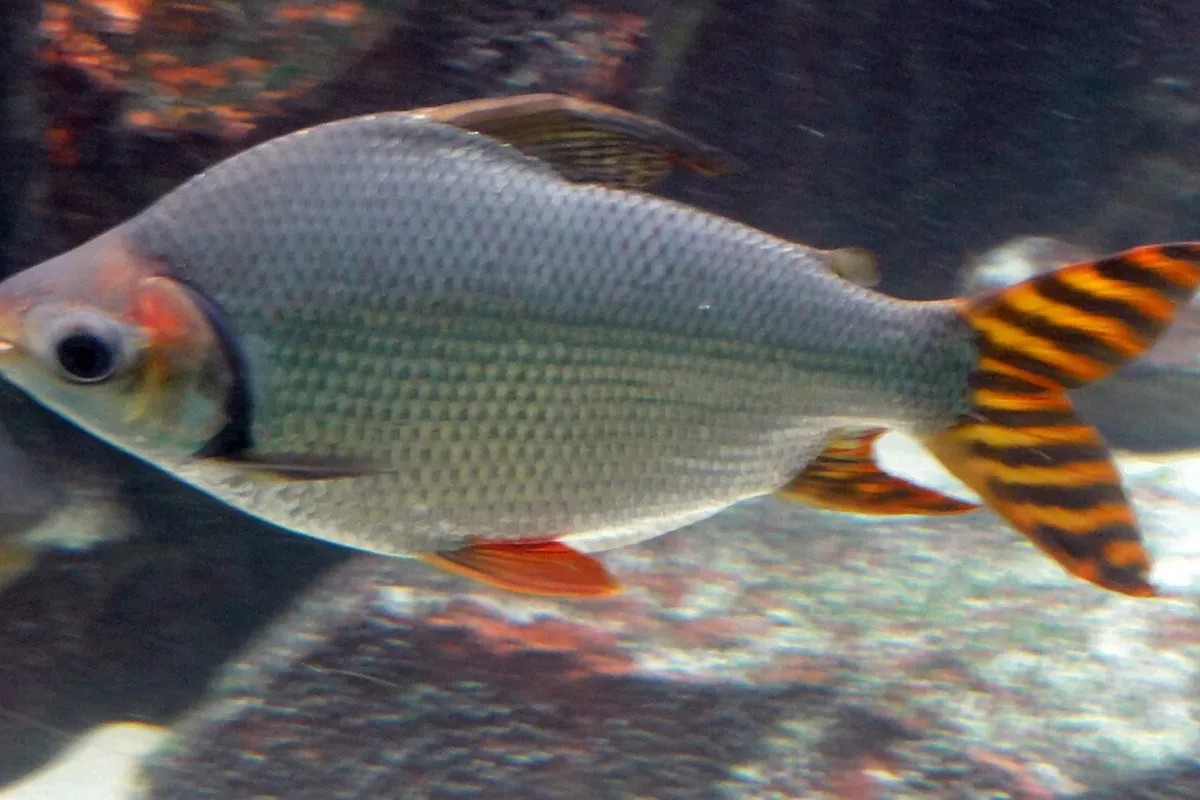
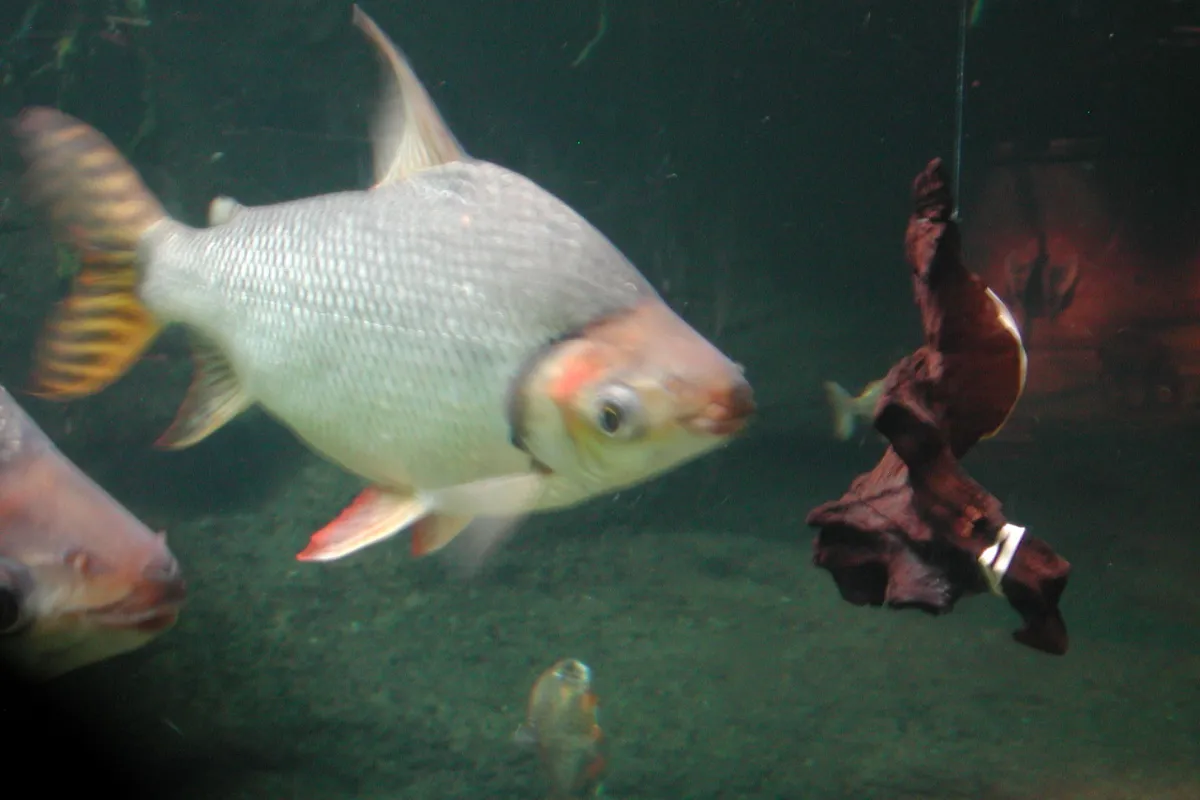
The flagtail prochilodus is a silver, deep-bodied fish with a tail striped boldly in black and yellow, and red-tipped pelvic fins. It is peaceful and a tireless grazer of algae and detritus. The catch is size: Semaprochilodus insignis reaches 30 cm or more.
Small juveniles are sometimes sold as algae eaters for community tanks. They quickly outgrow them, so this is a fish for keepers with very large aquariums.
Where flagtails come from
The species lives in the Amazon basin, in Brazil, Colombia and Peru. It migrates in huge schools between blackwater tributaries and the main river, and it is an important food fish locally.
Appearance and behaviour
Adults have a silver body with fine scales and that striking tail. The lips are thick and fleshy, made for rasping biofilm off wood and rocks. Flagtails are constantly on the move and can be skittish, especially when kept alone.
They are peaceful with other species but sometimes chase each other. Keep one, or a group of four or more in a very large tank.
Tank setup
An adult needs 500 litres or more, in a long tank with lots of open swimming space. Use sand, smooth stones and large pieces of driftwood. Plants are likely to be eaten. Strong filtration and a heavy lid are essential, since these are powerful jumpers.
Water parameters

- Temperature: 23–28°C
- pH: 5.5–7.5
- Hardness: 1–15 dGH
They tolerate a wide range, but stable, clean water is important for a fish this size. Weekly large water changes are a must.
Feeding
Flagtails are detritivores and herbivores. Offer algae wafers, spirulina flakes and pellets, blanched vegetables and nori, with some frozen foods for variety. Feed two or three times a day; they are always hungry.
Tank mates
Large, peaceful fish work best: silver dollars, large peaceful cichlids such as severums, larger plecos and big catfish. Avoid aggressive species that might stress them.
Breeding
They spawn during mass migrations in the wild and have not been bred in home aquariums.
Common problems and lifespan
Stunting and stress in tanks that are too small are the main problems, along with jumping injuries. In suitable conditions they can live ten years or more.
Explore other topics
Dive into more aquarium guides across the site.