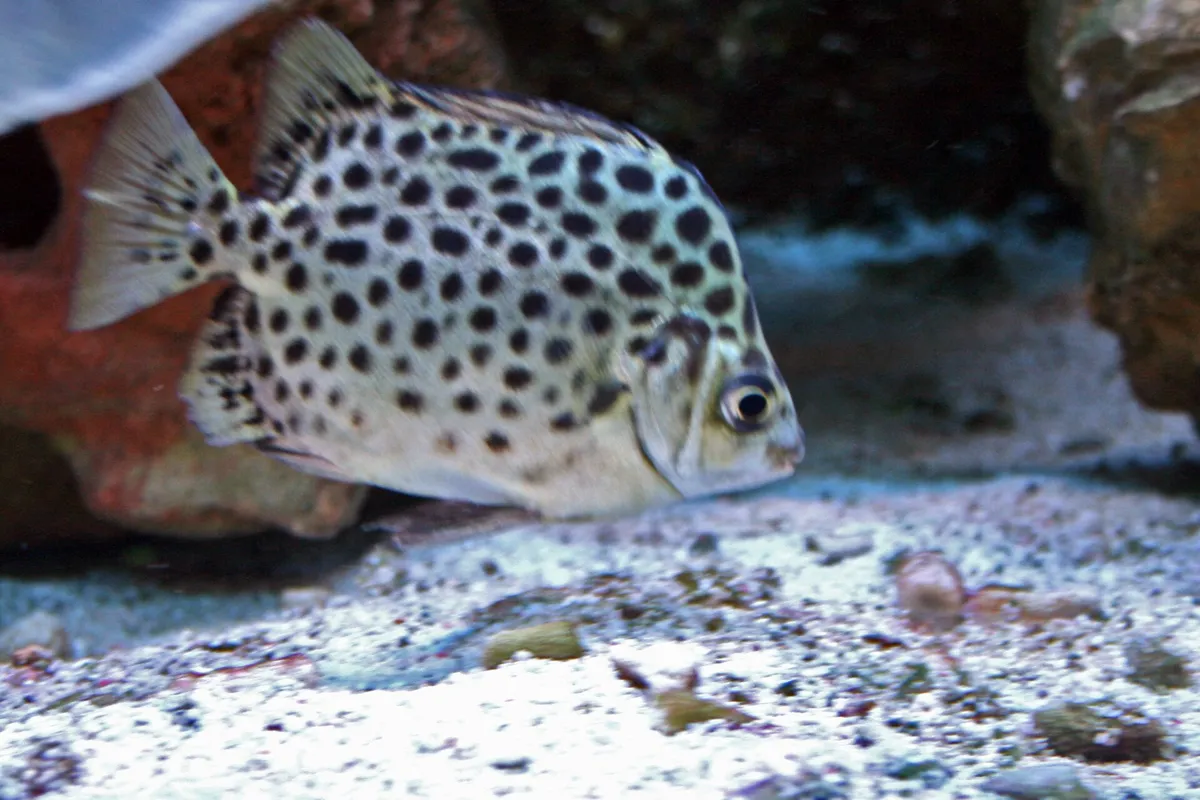
The spotted scat is sold as a cute, coin-sized fish with leopard spots, often in the freshwater section. That small fish will grow into a 20–30 cm, plate-shaped eating machine that wants brackish and eventually almost marine water. Scatophagus argus is a great fish for the right keeper, but it is not a community tank fish.
Scats are tough, active and full of character. They learn who feeds them, beg at the glass and stay healthy for well over a decade when their water is right. This guide covers what that takes.
Where scats come from
Spotted scats are found across the Indo-Pacific, from India and Sri Lanka through Southeast Asia to northern Australia and the Pacific islands. They live in estuaries, mangroves, harbours and the lower reaches of rivers. Young fish move upriver into fresher water, then head back to the sea as they mature.
The name comes from their habit of feeding around sewage outlets and harbours, eating almost anything. That appetite is still the first thing new owners notice.
Appearance and behaviour
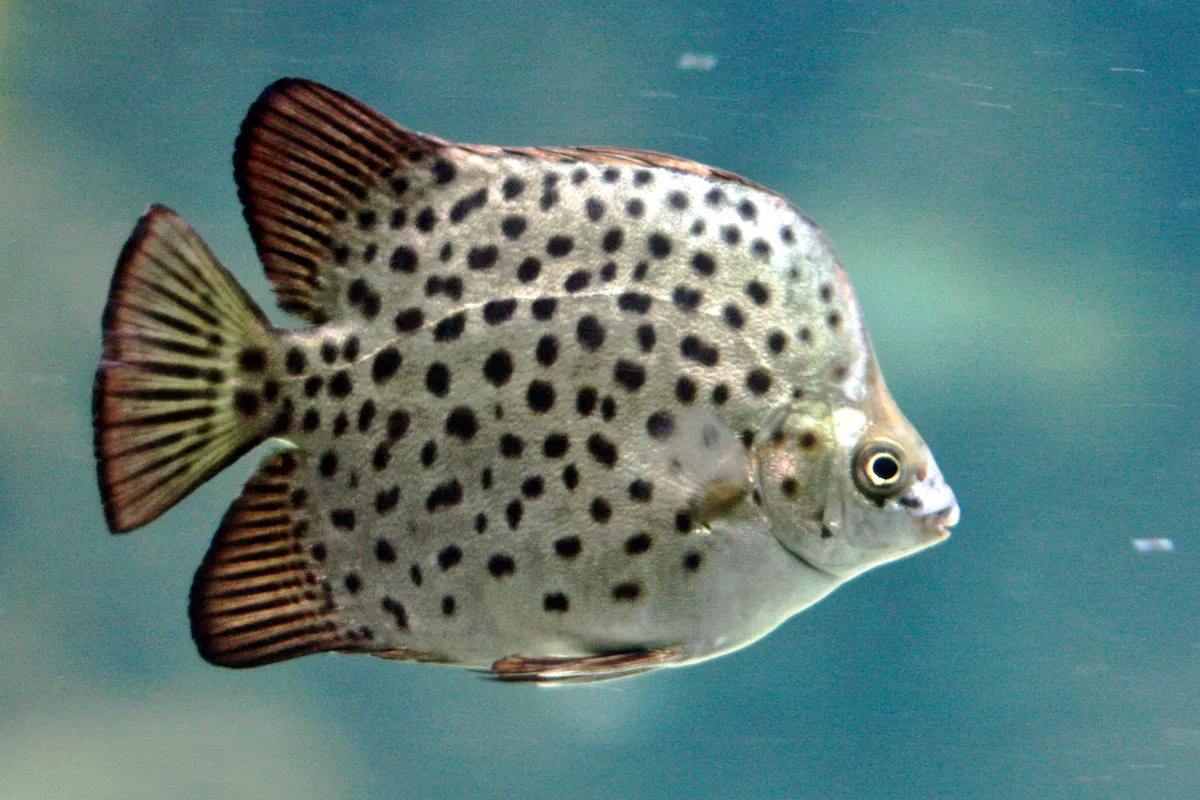
Scats have a deep, almost square body, sharp spines on the dorsal and anal fins, and a silver to green body covered in round black spots. Juveniles from some areas show red or orange on the head and back and are sold as red or ruby scats; this colour fades with age. The fin spines carry a mild venom, so handle them with a net, never bare hands.
They are peaceful with fish their own size and do best in groups of four or more. A single scat is often shy; a group is bold and busy.
Tank setup
A group of adults needs 400 litres or more, with plenty of open swimming space. Use sand, smooth rocks and driftwood, and skip live plants, because scats will eat them. Strong filtration and regular water changes are essential: these are messy, heavy feeders. A protein skimmer becomes useful once you move to higher salinity.
Salinity and water parameters

Juveniles can live in hard fresh water for a few months, but should be moved to low brackish water (specific gravity 1.005) early. As they grow past 8–10 cm, raise the salinity slowly to 1.010–1.015, and many keepers take adults to full marine levels. Make changes of no more than 0.002 per week and measure with a refractometer.
Keep the temperature at 24–28°C and pH at 7.8–8.5. Nitrate builds quickly with scats, so read our guide to controlling nitrates long term.
Feeding
Scats are omnivores that lean towards plants. Give them a mix of spirulina flakes or pellets, blanched spinach, lettuce, peas and nori seaweed, plus frozen mysis, krill and bloodworms. Feed two or three small meals a day rather than one big one. They will always act hungry, so do not let begging decide the portion size.
Tank mates
Good companions are other brackish fish of similar size: monos, archerfish, larger gobies, and some brackish puffers that are not fin-nippers. Our archerfish guide covers a classic pairing. Avoid small fish and plants, and avoid slow, long-finned species.
Breeding
Spotted scats have not been bred in home aquariums. In the wild they spawn in the sea, and the larvae go through an armoured stage before drifting into estuaries. All scats in the trade are wild caught or farmed in Asia.
Common problems and lifespan
Long-term life in fresh water is the main cause of problems, leading to weak immune systems, fin rot and skin infections. Poor water quality from overfeeding comes a close second. Stable brackish water, big water changes and a quarantine tank for newcomers prevent most of it.
With good care, scats live 15–20 years.
Explore other topics
Dive into more aquarium guides across the site.