

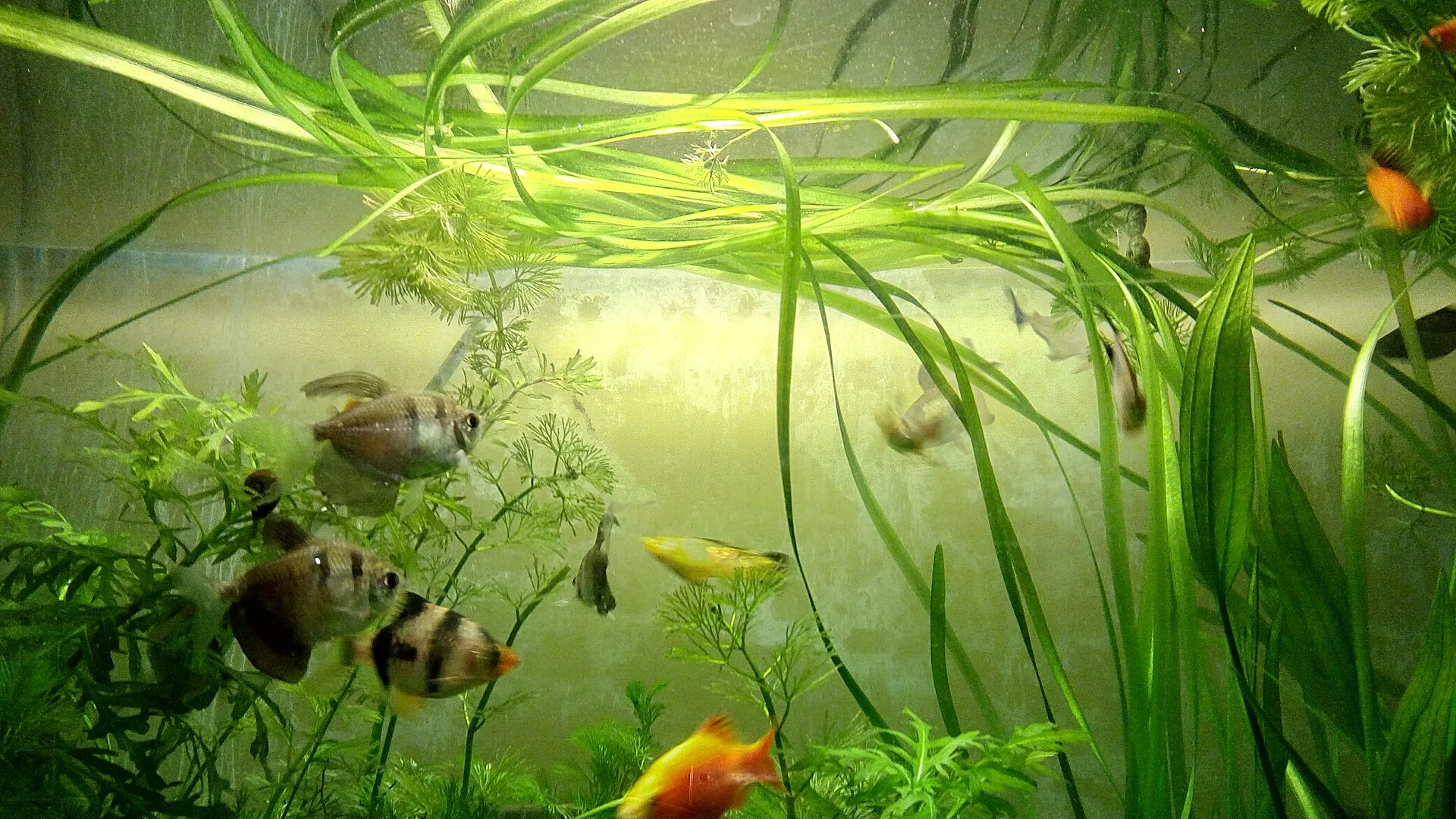
Aquarium Stocking Guide: How Many Fish Can Your Tank Hold?
“One inch of fish per gallon” is a slogan, not science. Real aquarium stocking balances adult size, bioload, swimming behaviour, filtration, and temperament. This guide shows how to plan a community that still looks calm and tests clean six months later.
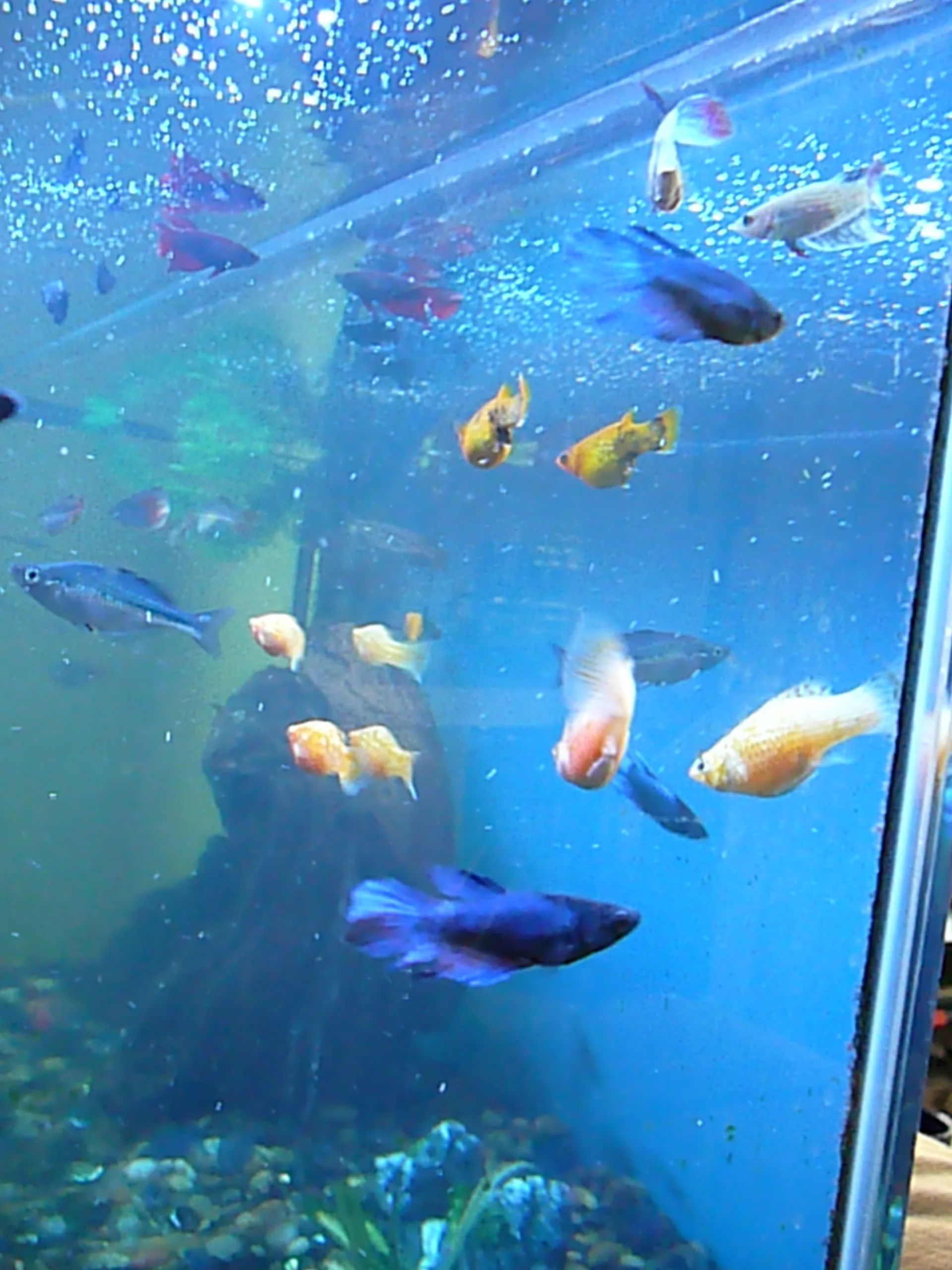 Healthy stocking leaves swimming lanes and plant mass for stability. Photo: No machine-readable author provided. Epastore assumed (based on copyright claims). / Wikimedia Commons (CC BY-SA 3.0)
Why Inch-Per-Gallon Fails
A 3-inch goldfish and a 3-inch neon are not equal. Goldfish produce far more waste; neons need schools and horizontal swimming room. Inch counting also ignores territory, aggression, and the difference between a densely planted low-bioload community and a bare predatory tank.
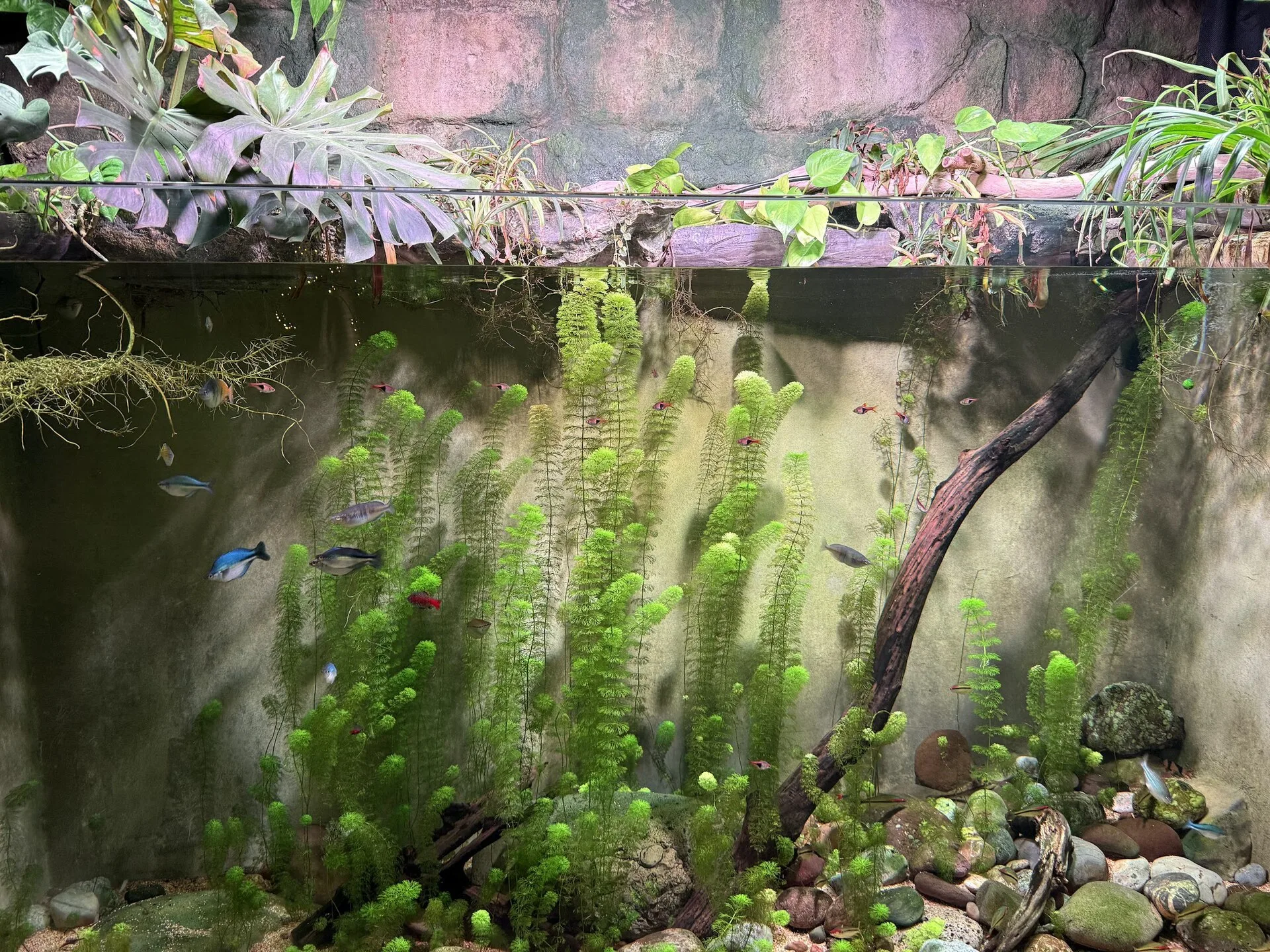 Active schoolers need length more than raw gallon count. Photo: Netha Hussain / Wikimedia Commons (CC0)
Stock by These Five Factors
- Adult size: Always stock for full-grown fish, not shop juveniles.
- Bioload: Messy eaters and large-bodied fish need more filter capacity and water volume.
- Social needs: Schooling species need groups (often 6+), which multiplies space needs.
- Territory: Cichlids, bettas, and some rasboras claim zones — floorplan matters.
- Filtration & maintenance: Strong biological filtration and weekly water changes expand what is realistic.
Practical Starting Benchmarks
- 10–20 gallon: Small community or nano specialists — not a full school of large barbs
- 29–40 gallon: Classic beginner community with tetras/rasboras + corydoras + one centrepiece
- 55–75 gallon: Room for larger peaceful fish, bigger schools, or mild Malawi/Tanganyika setups with research
Add livestock in stages after a full cycle. New groups every 1–2 weeks let the biofilter catch up.

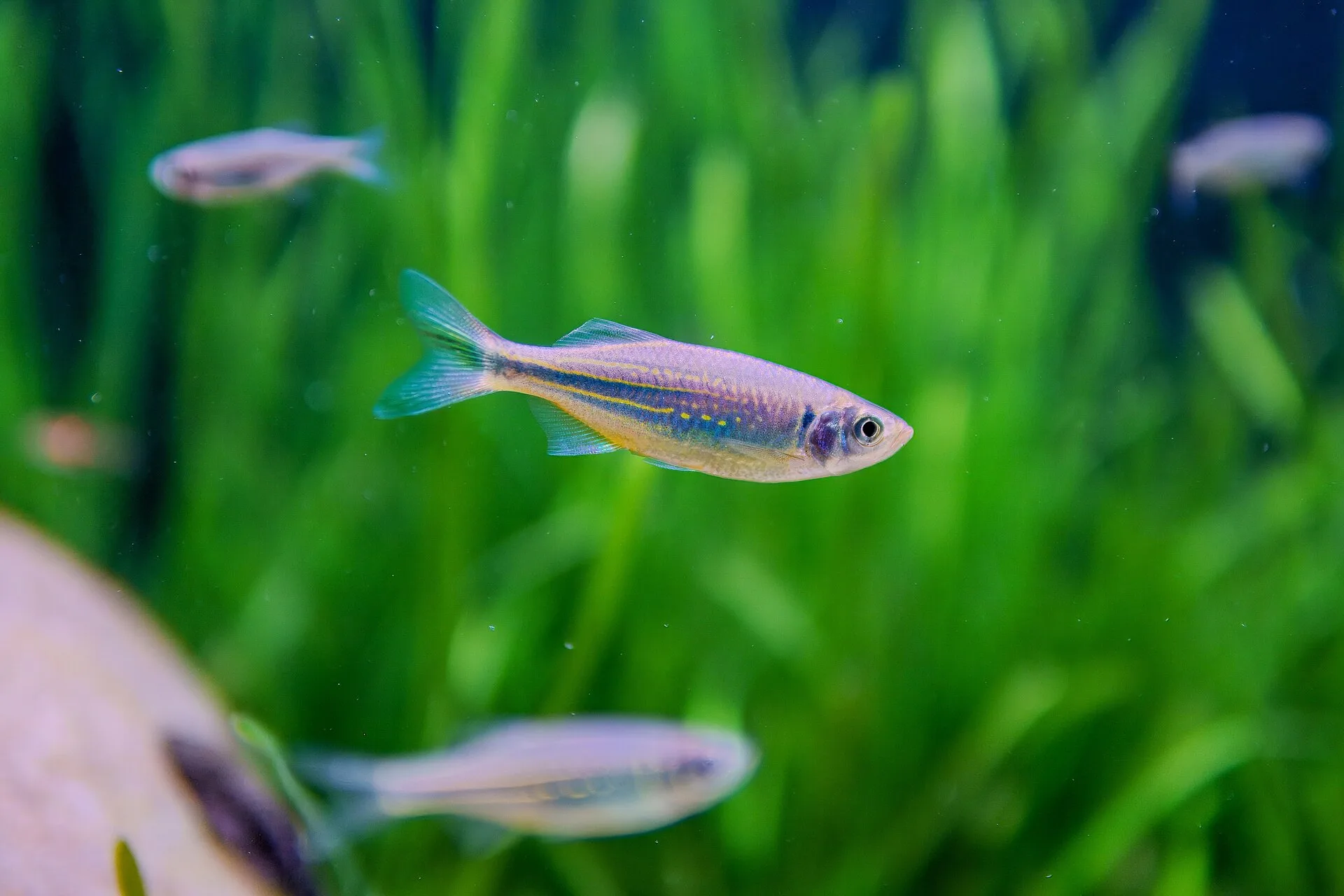 Temperament mismatches cause stress long before the filter fails. Photo: Shifu Tanks / Wikimedia Commons (CC BY-SA 4.0)
Stocking Math That Actually Helps
Sketch a stock list with adult lengths, then ask:
- Will the largest fish still have clear open water when plants mature?
- Can the filter handle 2× the expected bioload on a bad maintenance week?
- Are there too many territorial “boss” species for the footprint?
If nitrates climb above ~40 ppm between weekly water changes despite normal feeding, you are overstocked or under-maintained — treat that as a stocking problem, not only a water-change problem.
Compatibility Shortcuts
- Match temperature and temperament first, colour wishlist second
- Long-finned show fish + chronic nippers = shredded fins
- Bottom dwellers still need groups and soft substrate — they are not free filler slots
- Leave headroom: a “finished” tank is harder to rescue after impulse buys
Related Reading
- Best community fish
- Best beginner freshwater fish
- Choosing the right aquarium size
- How to cycle your aquarium
Conclusion
Good stocking is patient stocking. Plan for adults, respect schools and territories, build filtration with margin, and add fish slowly. A slightly understocked tank looks better — and stays healthier — than a crowded one that always needs emergency water changes.




Explore other topics
Dive into more aquarium guides across the site.