

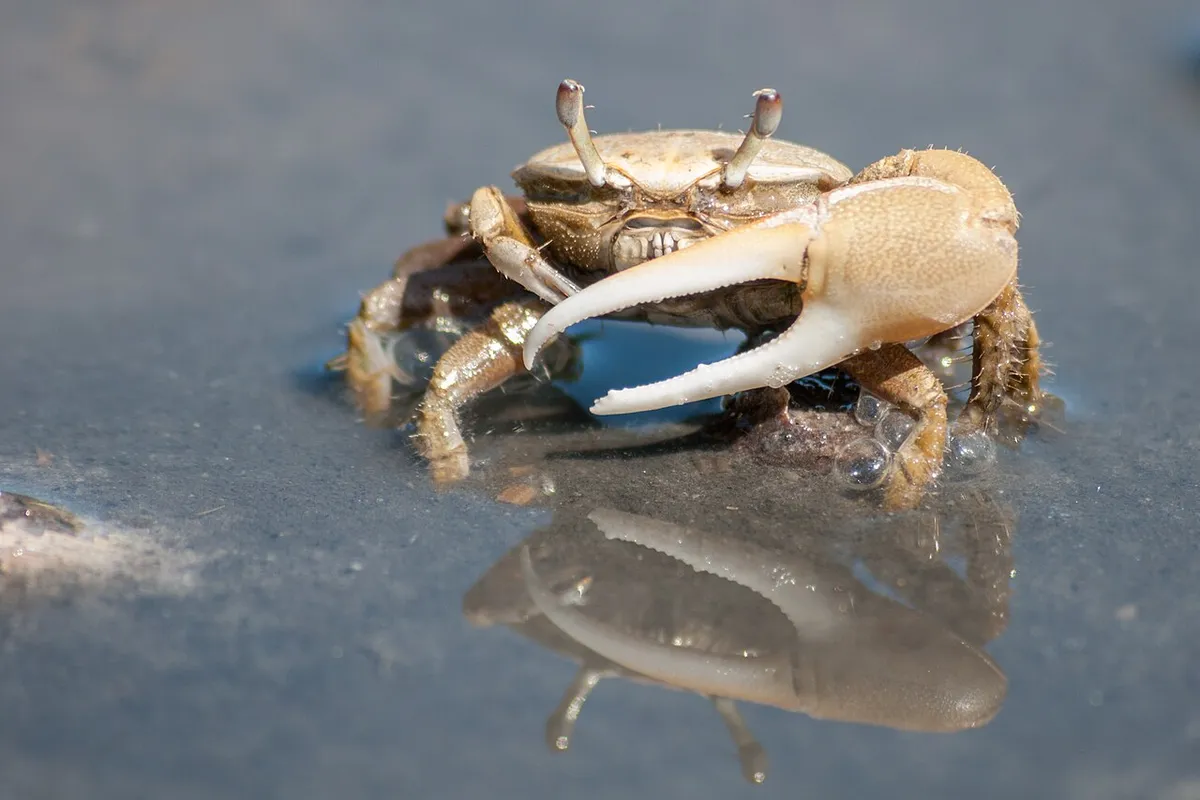
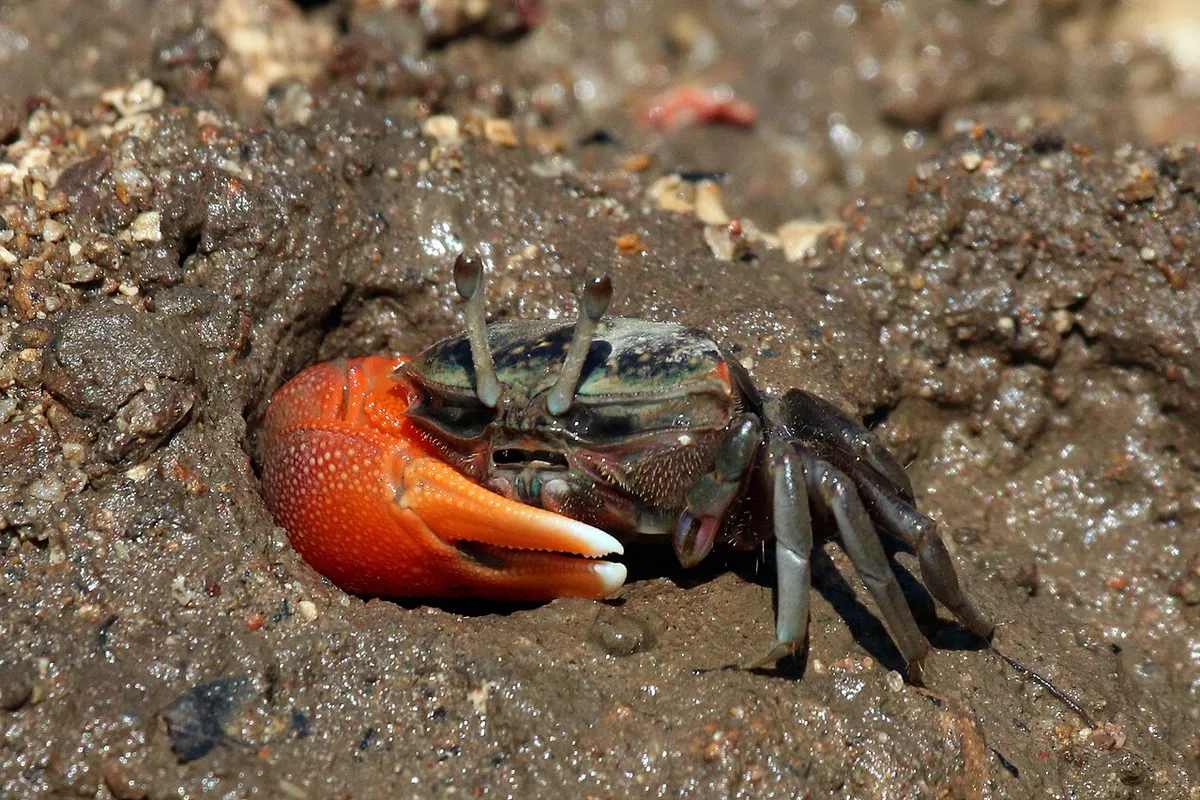
Fiddler crabs are small, semi-terrestrial crabs. Males have one hugely enlarged claw, which they wave to attract females and warn off rivals, as if playing a fiddle. Most species have a body only 2–3 cm wide.
The crabs in the trade belong to several genera, traditionally lumped together as Uca, and are often sold as freshwater animals. They are not. Fiddler crabs need brackish water and dry land, or they slowly decline.
Where fiddler crabs come from
Fiddler crabs live on tropical and subtropical coasts around the world, in mangroves, salt marshes and muddy beaches. They dig burrows above the low-tide line and come out to feed when the tide goes out.
Appearance and behaviour
Females have two small claws and use both to feed. Males feed with their small claw only. Fiddlers are social and spend most of their time on land, sifting sand for food and waving at each other.
Tank setup
Use a tank of at least 40 litres for a small group, set up as a paludarium: a sloping sand beach covering most of the floor, with shallow brackish water at one end. They need to leave the water whenever they like. A tight lid is essential, since they climb well.
Water parameters

- Temperature: 22–28°C
- pH: 7.8–8.5
- Salinity: specific gravity 1.005–1.012
Use marine salt, not aquarium or table salt, and check salinity with a refractometer. Keep the air humid.
Feeding
Fiddlers sift sand for algae, detritus and tiny organisms. Feed sinking crab or shrimp pellets, crushed flakes, algae wafers and the occasional bit of frozen food, placed on the wet sand.
Tank mates
A species tank is best. Small brackish fish such as mollies can share the water section, but the crabs may catch slow fish. Keep one male per small group of females to reduce fighting.
Breeding
Females carry eggs, but the larvae need full-strength sea water and plankton. Fiddler crabs are not bred in home tanks.
Common problems and lifespan
Crabs kept fully submerged or in fresh water die early. Failed moults are another risk, so leave shed shells in the tank for them to eat. With a good setup they live two to three years.
Explore other topics
Dive into more aquarium guides across the site.
