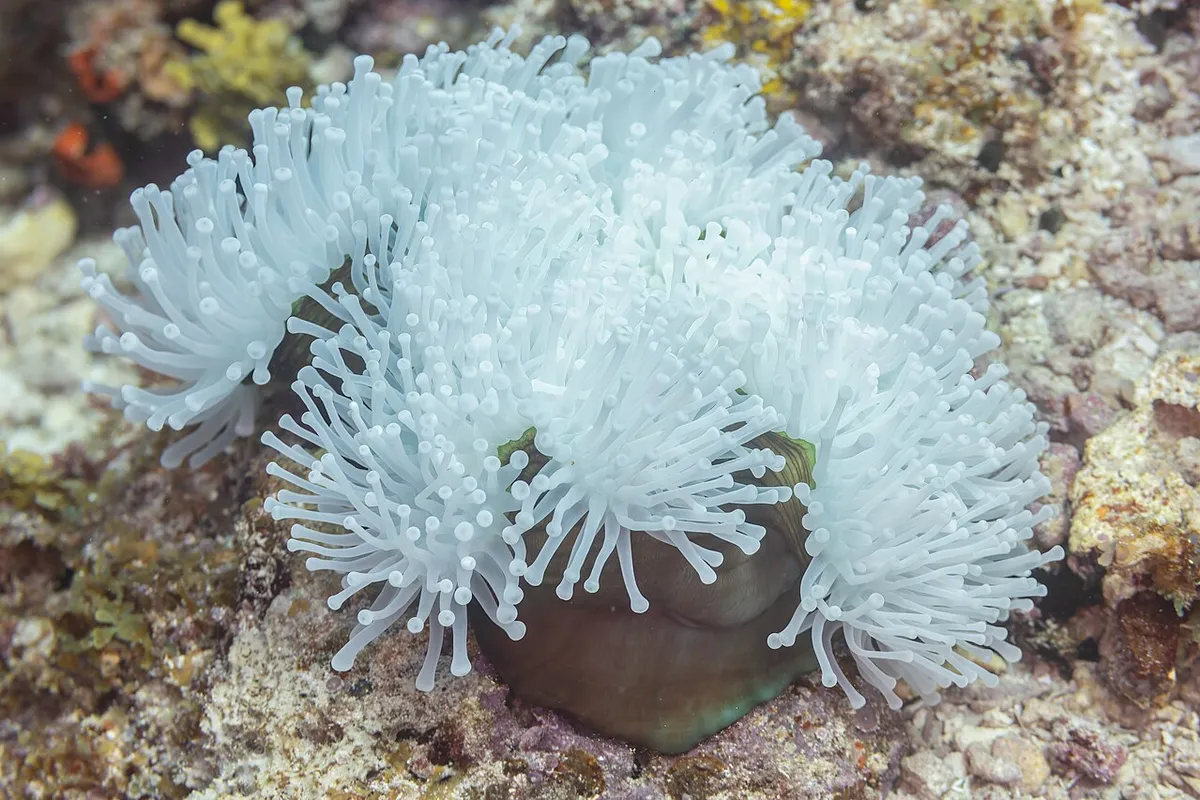
The magnificent sea anemone, also sold as the ritteri anemone, is the one many people picture when they think of clownfish. It has a brightly coloured column, often purple, red or pink, and a carpet of finger-like tentacles up to a metre across in the wild.
Heteractis magnifica, recently moved to the genus Radianthus, is also one of the hardest anemones to keep. Most specimens die within months in aquariums. It is only for experienced reefkeepers with large, mature systems.
Where magnificent anemones come from
The species lives across the Indo-Pacific, from the Red Sea to French Polynesia. It sits on exposed rock tops and ledges in shallow water, where light is intense and currents are strong.
Appearance and behaviour
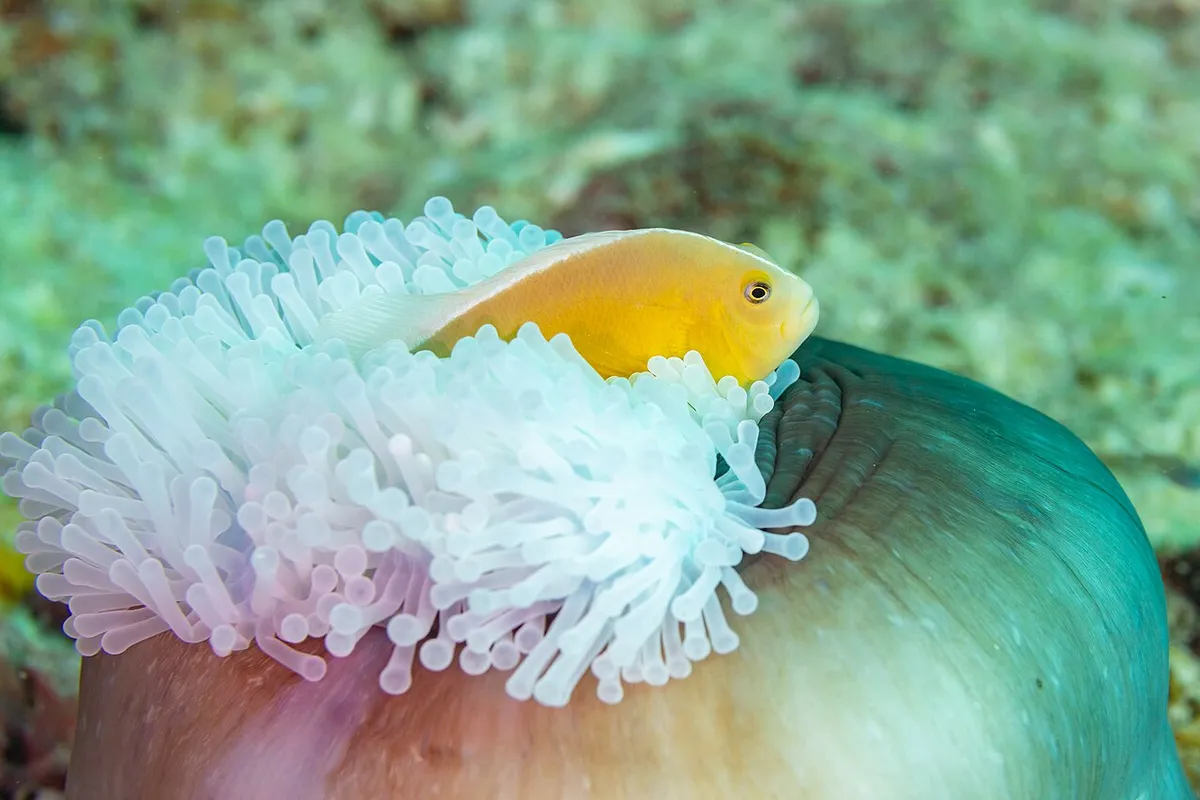
Unlike many anemones, it attaches to the tops of rocks rather than burying its foot in sand. It hosts ten species of clownfish, including the ocellaris clownfish, the orange clownfish and the skunk clownfish shown below.
Tank setup
Plan for at least 500 litres, with very strong light, strong turbulent flow and a high, open rock surface for the anemone to settle on. Guard all pump intakes, since wandering anemones are easily shredded. A mature tank of a year or more is best.
Water parameters

- Temperature: 24–27°C
- pH: 8.1–8.4
- Alkalinity: 8–11 dKH
- Nitrate and phosphate: low and stable
Feeding
Most of its energy comes from symbiotic algae, so lighting is critical. Supplement with small pieces of shrimp, mysis or fish once or twice a week.
Tank mates
Clownfish are the obvious partners. Keep the anemone away from corals, which it will sting if it moves. Avoid angelfish and butterflyfish that nip tentacles.
Breeding
They occasionally split in aquariums, but this is rare. Wild collection is still the main source, which is another reason to choose an easier host.
Common problems and lifespan
Bleaching, wandering and slow decline are common. For most keepers, the bubble-tip anemone is a far better host. Healthy magnificent anemones can live for decades in the wild.
Explore other topics
Dive into more aquarium guides across the site.