

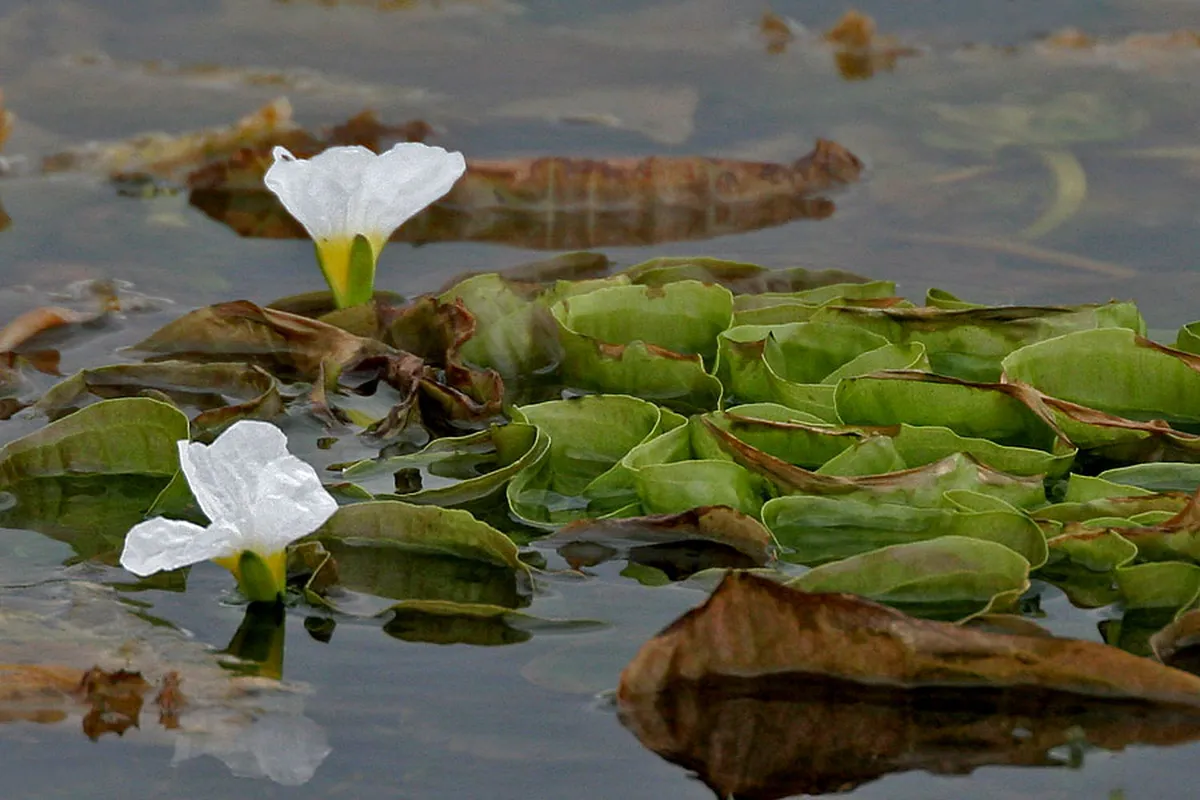
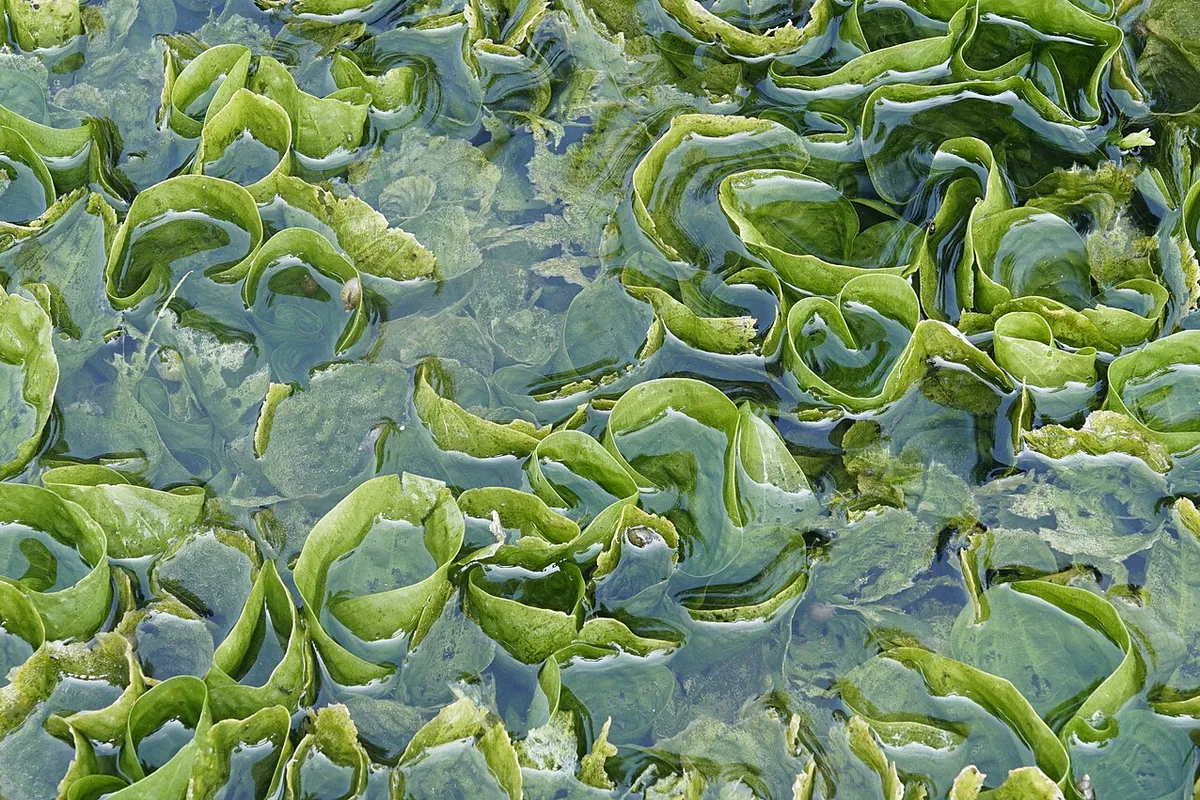
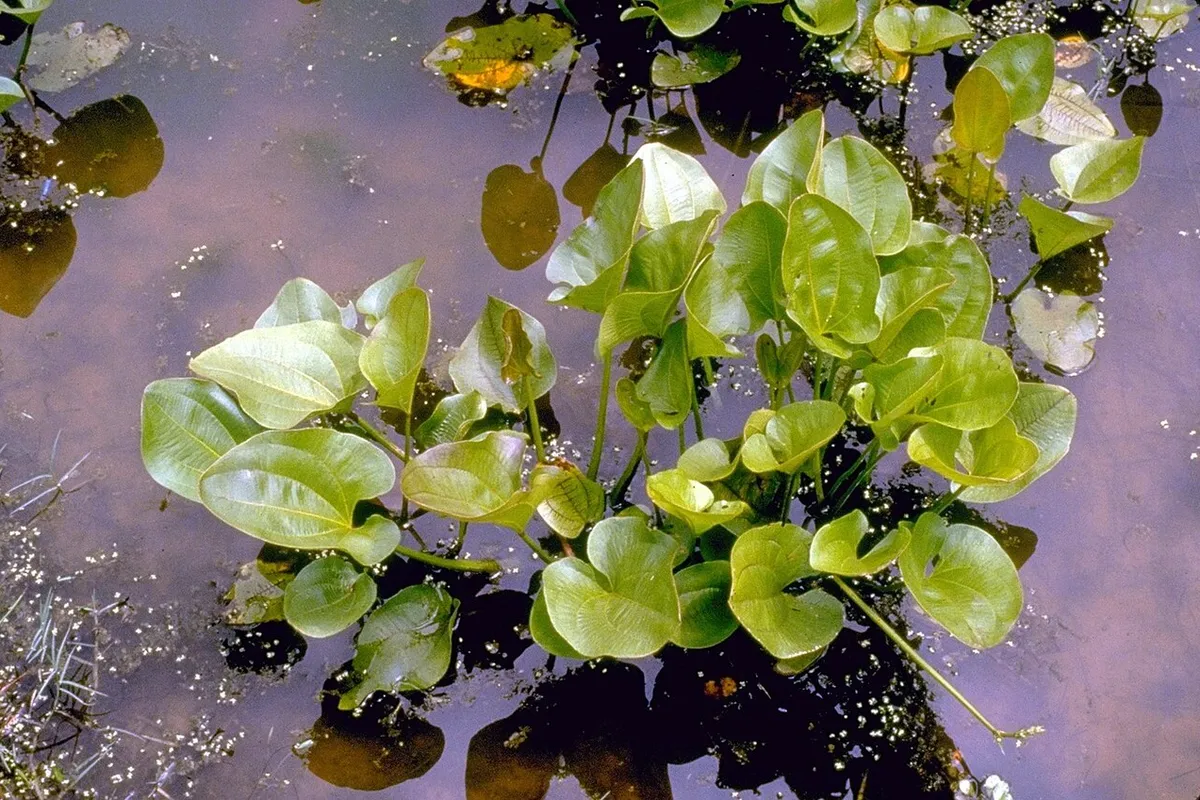
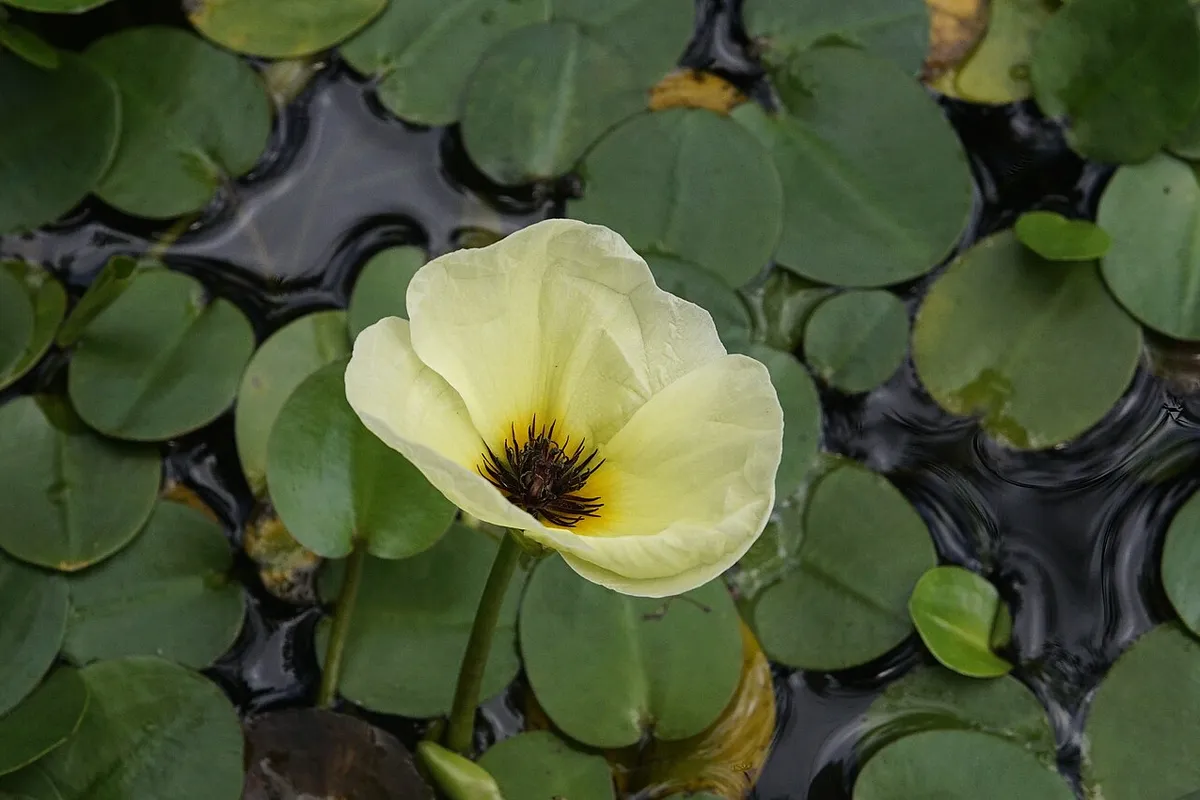
Duck lettuce forms a large rosette of broad, wavy, almost translucent leaves, like a sheet of soft green lettuce underwater. When it is happy, it sends white or pale pink flowers to the surface on long stalks.
Ottelia alismoides is an unusual, eye-catching centrepiece for a large planted tank. It is a heavy root feeder and needs a rich substrate.
Origin
The species grows across tropical and subtropical Asia and northern Australia, in rice paddies, ponds and slow streams. In some places it is eaten as a vegetable.
Appearance and growth
Leaves can reach 20–30 cm long and 15 cm wide, with ruffled edges. The plant grows from a central crown and can produce seeds that sprout in the tank. It is often grown as an annual in the wild.
Placement
Plant it as a solitary centrepiece in the midground or background of tanks 100 litres or larger. Give it space so its leaves are not shaded by other plants.
Light, CO2 and nutrients

Medium to high light. CO2 helps but is not essential. Use a nutrient-rich soil substrate and add root tabs near the crown every month or two.
Water conditions
- Temperature: 20–30°C
- pH: 6.0–7.5
- Hardness: 2–12 dGH
Propagation and maintenance
Duck lettuce reproduces mainly by seed. Let flowers develop and collect the seeds, or leave them to sprout in the substrate. Remove old outer leaves as they yellow.
Compatibility
Its soft leaves are eaten by goldfish, silver dollars and many cichlids. Suits calm community tanks with small fish.
Common problems
Plants may melt after transport but often regrow from the crown. Holes and yellowing usually mean a lack of root nutrients.
Explore other topics
Dive into more aquarium guides across the site.