

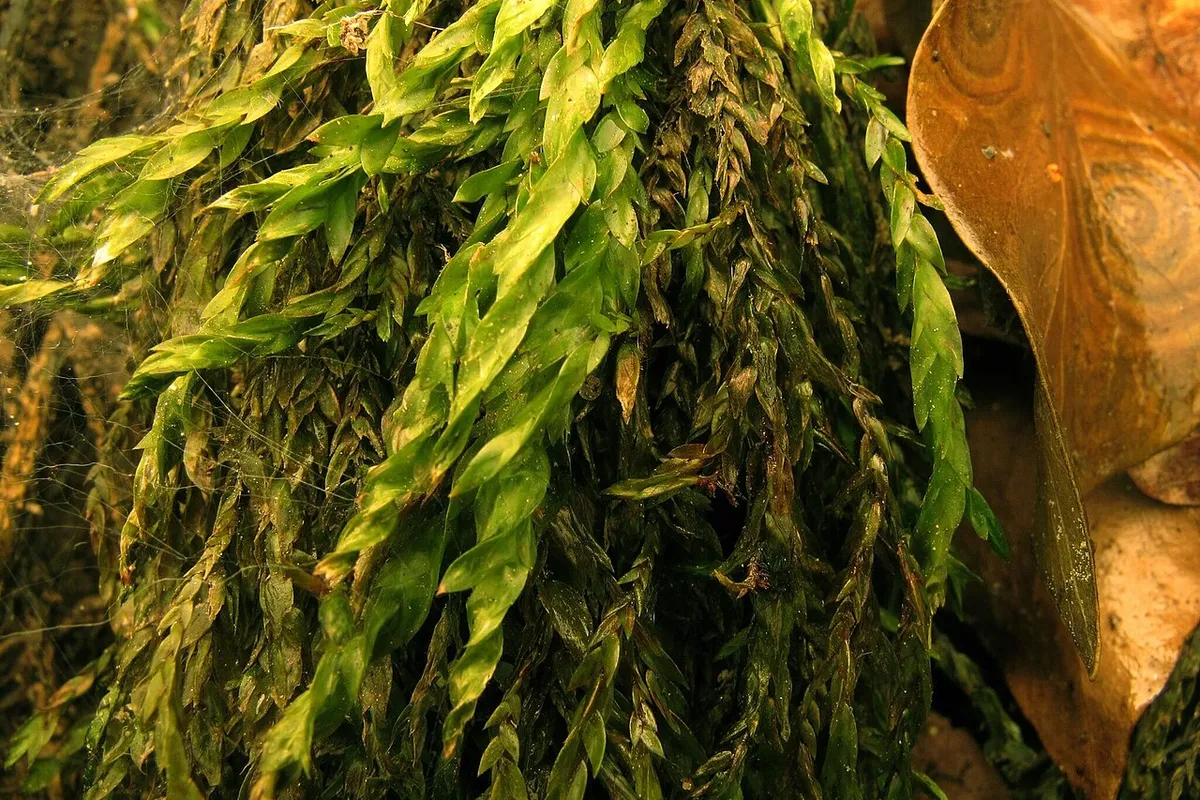
Willow moss is a large aquatic moss with long, trailing stems covered in small, pointed, three-ranked leaves. In flowing water it forms streamers 30 cm or more long, swaying in the current.
Fontinalis antipyretica is native to cool streams across the Northern Hemisphere, including Canada. It is an excellent plant for coldwater aquariums, goldfish tanks and ponds, where many tropical mosses fail.
Origin
The species grows in streams, rivers and lakes across North America, Europe, Asia and North Africa, attached to rocks and submerged wood. Its scientific name refers to an old use as fire-proofing material between chimneys and walls.
Appearance and growth
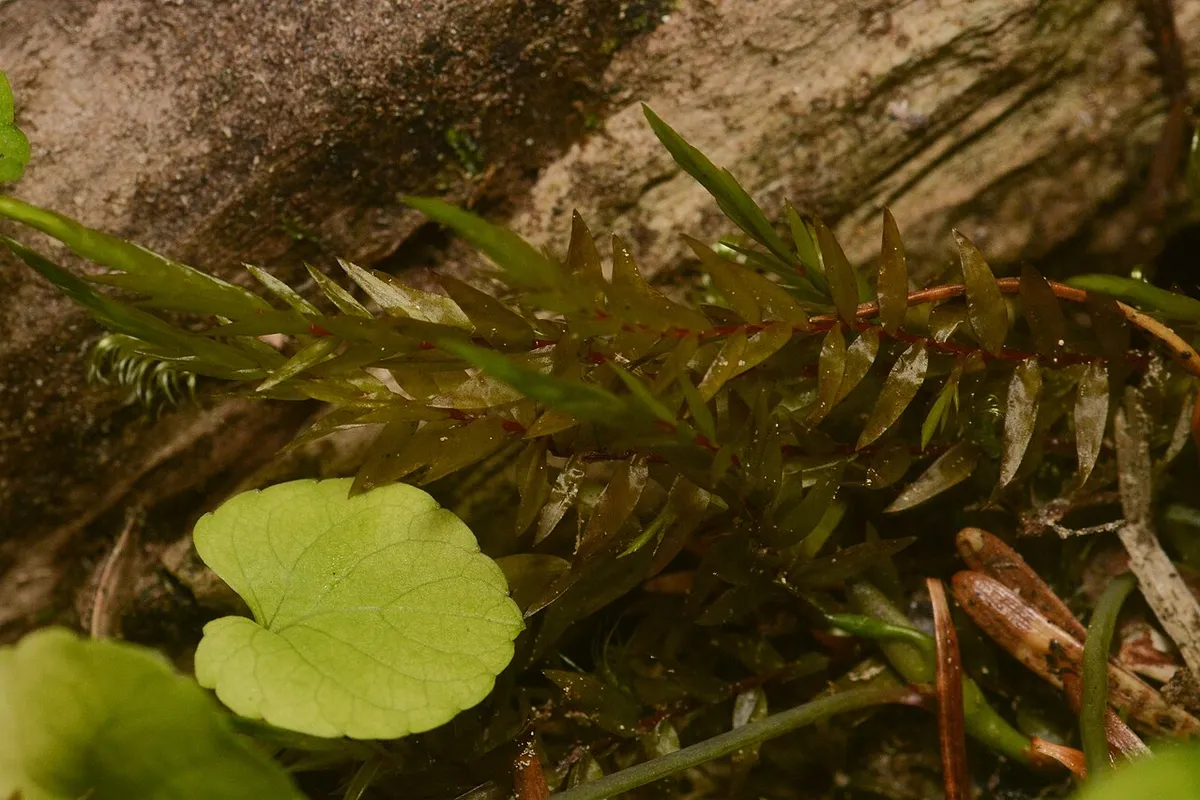
Stems are dark green to brownish and branch irregularly. Growth is slow in warm water and steady in cool water.
Placement
Tie it to stones or wood with cotton thread or fishing line, or wedge it between rocks. Place it where it gets some water flow, such as near a filter outlet.
Light, CO2 and nutrients

Low to medium light is enough. It takes nutrients directly from the water, so a light dose of liquid fertiliser helps in clean tanks. CO2 is not needed.
Water conditions
- Temperature: 4–22°C
- pH: 6.0–8.0
- Hardness: 3–20 dGH
It struggles above 24°C, so it is not suitable for most tropical tanks. It survives winter outdoors in ponds that do not freeze solid.
Propagation and maintenance
Cut stems and tie them to new surfaces. Remove any brown, dying sections to keep the clump healthy.
Compatibility
Suits coldwater fish such as white cloud minnows, goldfish and native species. Goldfish may pick at it but rarely destroy it.
Common problems
Browning and decline in warm water is the main problem. Algae can settle on slow-growing moss in still, brightly lit tanks.
Explore other topics
Dive into more aquarium guides across the site.