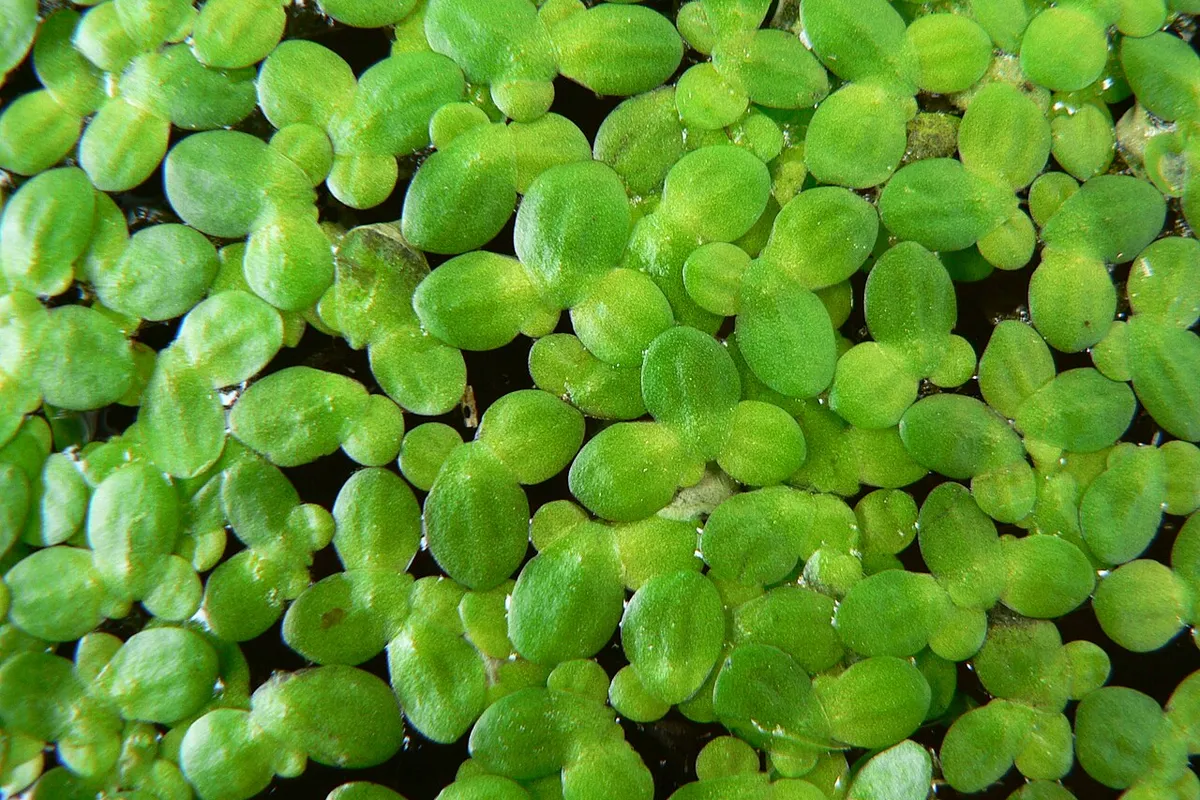
Duckweed is one of the smallest flowering plants in the world. Each plant is just one to three tiny oval leaves, a few millimetres long, with a single root hanging below. In the right conditions it doubles its coverage in a couple of days.
Some fishkeepers love Lemna minor as a free, fast nitrate sponge and fish food. Others treat it as a pest, because once it gets into a tank it is almost impossible to remove completely. Both views are fair.
Origin
Common duckweed grows on still and slow fresh water across most of the world, including all of Canada. It often arrives in aquariums as a hitchhiker on other plants.
Appearance and growth
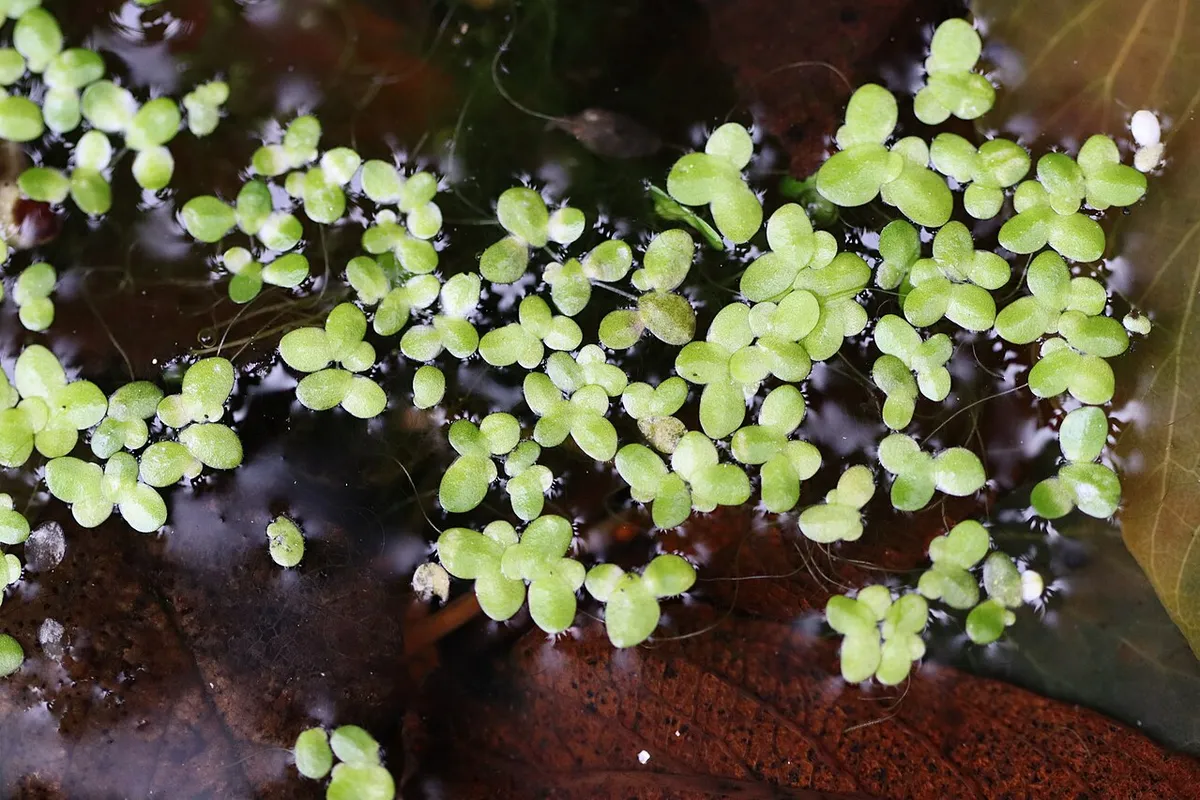
Each leaf-like frond floats flat on the surface. New fronds bud from the sides of old ones, so a single plant quickly becomes a carpet. It rarely flowers in aquariums.
Placement
Duckweed covers the surface of any tank with calm water. Use a floating ring or airline loop to confine it to one area if you want light to reach plants below.
Light, CO2 and nutrients

Duckweed grows under almost any light and needs no CO2, since it takes carbon from the air. It absorbs nitrate, ammonia and phosphate directly from the water, which helps starve algae.
Water conditions
- Temperature: 6–30°C
- pH: 5.0–8.5
- Hardness: any
Propagation and maintenance
It propagates itself. Scoop out a third to half of the mat each week with a fine net to stop it blocking all the light and gas exchange. A complete layer can reduce oxygen at the surface; see signs your fish need more oxygen.
Compatibility
Goldfish, many cichlids, silver dollars and some barbs eat duckweed, making it a free green food. Surface-breathing fish such as bettas and gouramis need some open water, so keep part of the surface clear.
Common problems
The main problem is that it spreads to every tank, net and bucket. If you do not want it, quarantine new plants. For a floating plant that is easier to control, try Amazon frogbit or salvinia.
Explore other topics
Dive into more aquarium guides across the site.