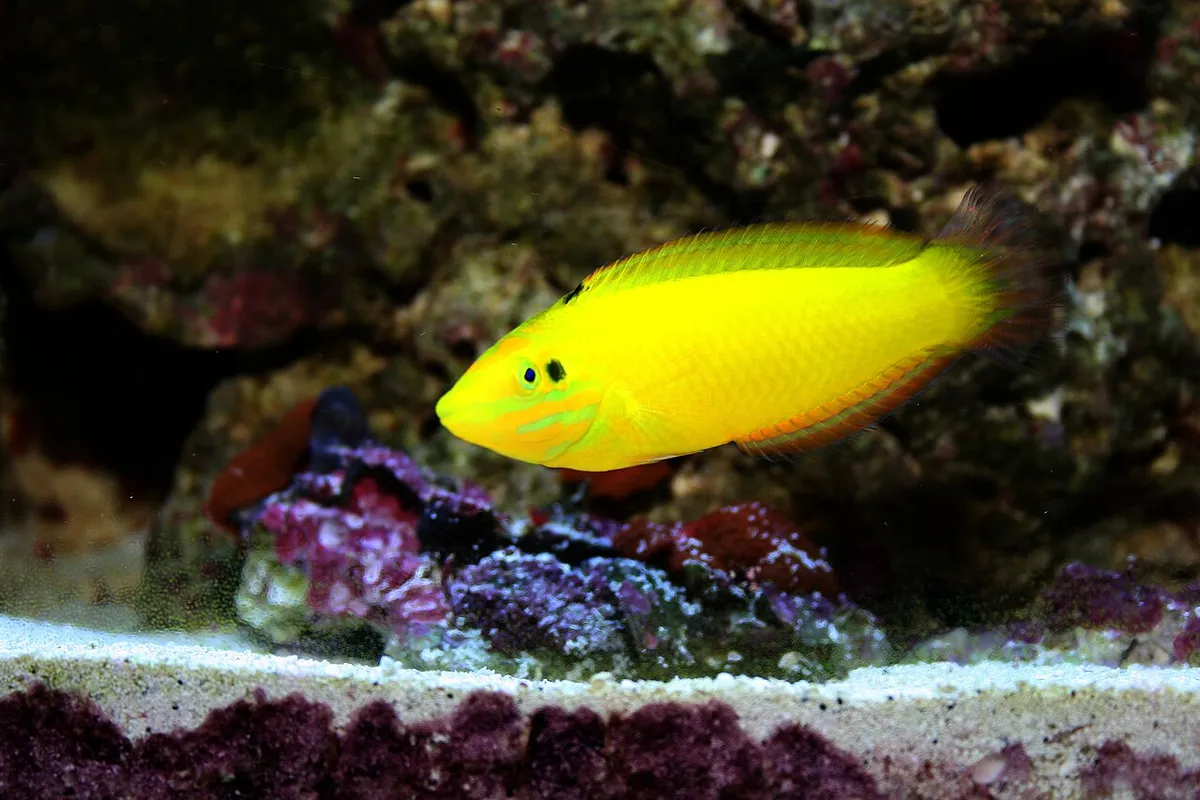
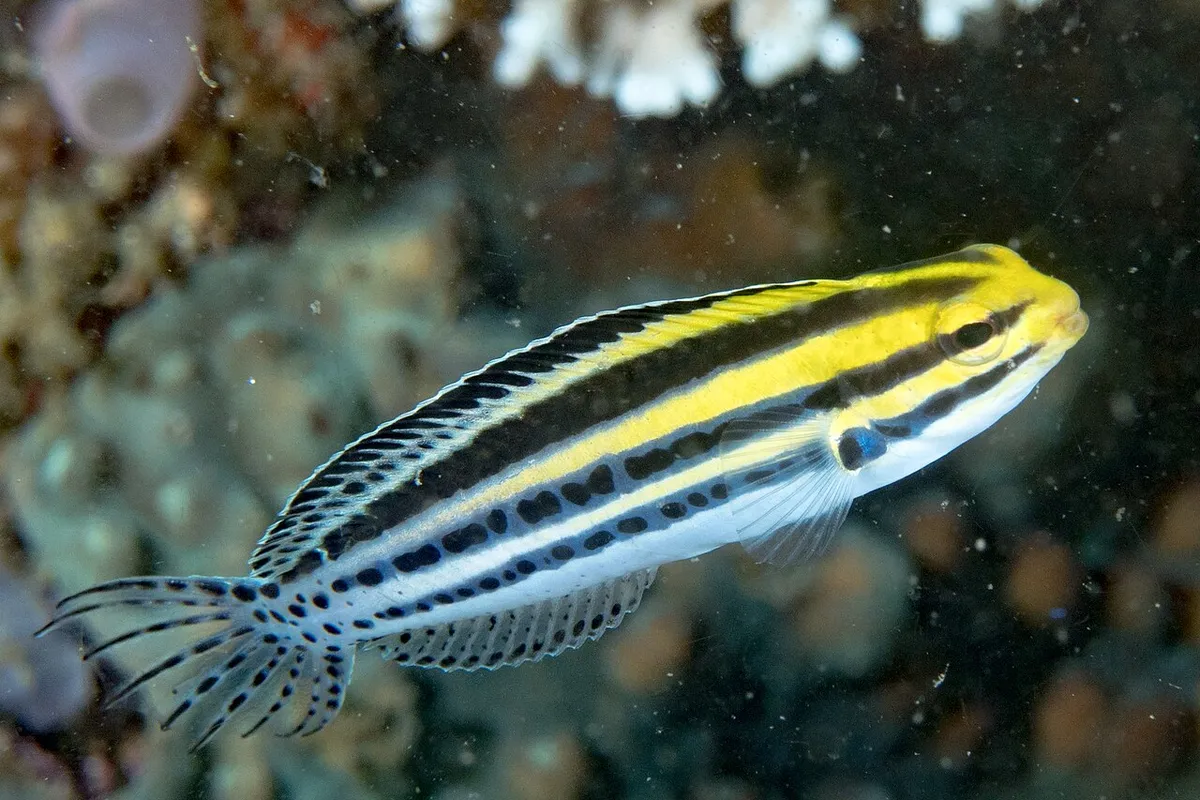
The canary wrasse, also sold as the yellow coris wrasse, is a solid lemon-yellow fish with a few small black spots on the fins. It reaches about 12 cm and spends the day busily searching the rockwork for small invertebrates.
Halichoeres chrysus is hardy, peaceful and reef safe. It is also a useful hunter of pests such as flatworms and pyramidellid snails.
Where canary wrasses come from
The species lives in the western Pacific, from Indonesia and the Philippines to Australia and Micronesia. It is found over sand and rubble near reefs, usually at moderate depths.
Appearance and behaviour
Juveniles and females have two or three black spots on the dorsal fin; terminal males may lose some of them. At night, and when frightened, the wrasse dives into the sand and buries itself. New fish may stay buried for several days after arrival.
Keep one per tank, or a group of females with one male in a large system.
Tank setup
A tank of at least 200 litres with a fine sand bed 5 cm deep or more is essential. Coarse gravel damages their skin. Use plenty of live rock and a tight lid, as wrasses jump.


Water parameters
- Temperature: 24–27°C
- pH: 8.1–8.4
- Specific gravity: 1.023–1.025
Feeding
Feed small meaty foods two or three times a day: frozen mysis, brine shrimp, copepods and marine pellets. A well-established tank with live rock provides extra natural food.
Tank mates
Canary wrasses get along with most peaceful and semi-aggressive fish, including clownfish, tangs, gobies and dwarf angels. Avoid large predators. They may eat very small ornamental shrimp and bristle worms, but leave corals alone.
Breeding
Like many wrasses, they start as females and the dominant fish changes to male. Spawning happens in open water, and the larvae have not been raised at home.
Common problems and lifespan
Jumping, and stress from a missing or coarse sand bed, are the main problems. They live five to eight years.
Explore other topics
Dive into more aquarium guides across the site.