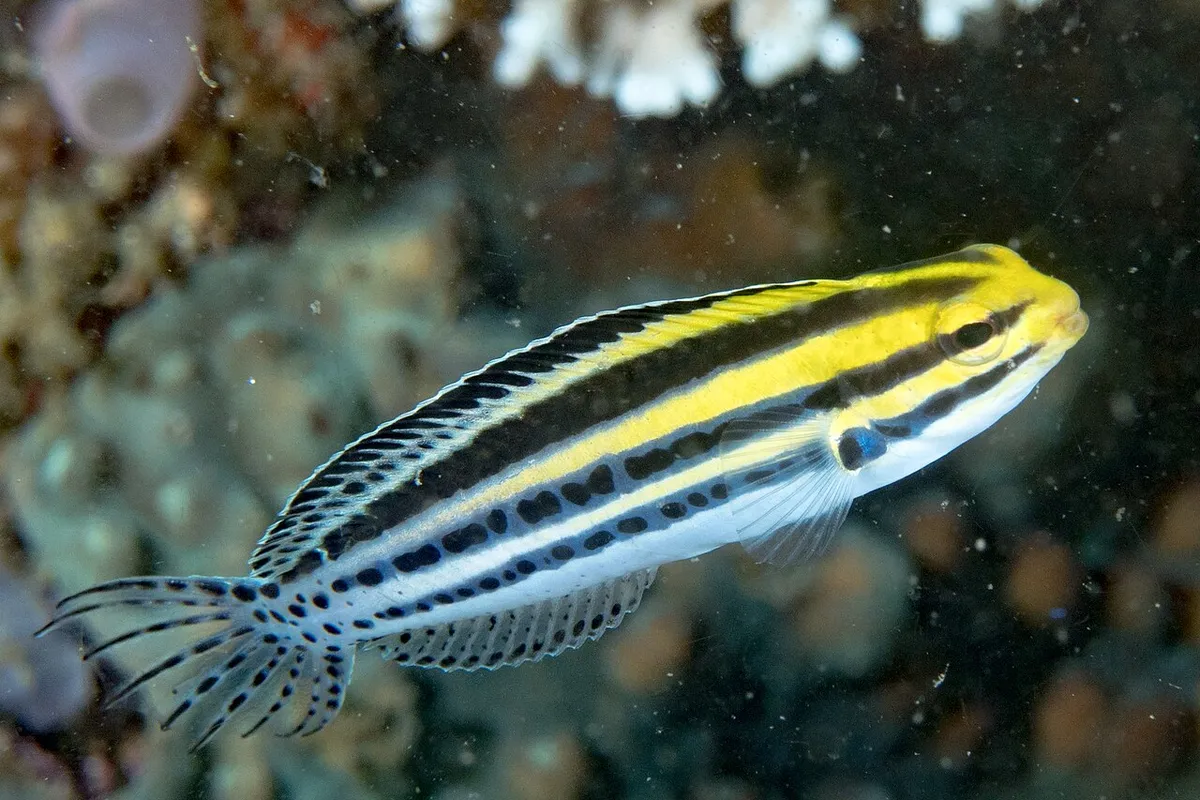
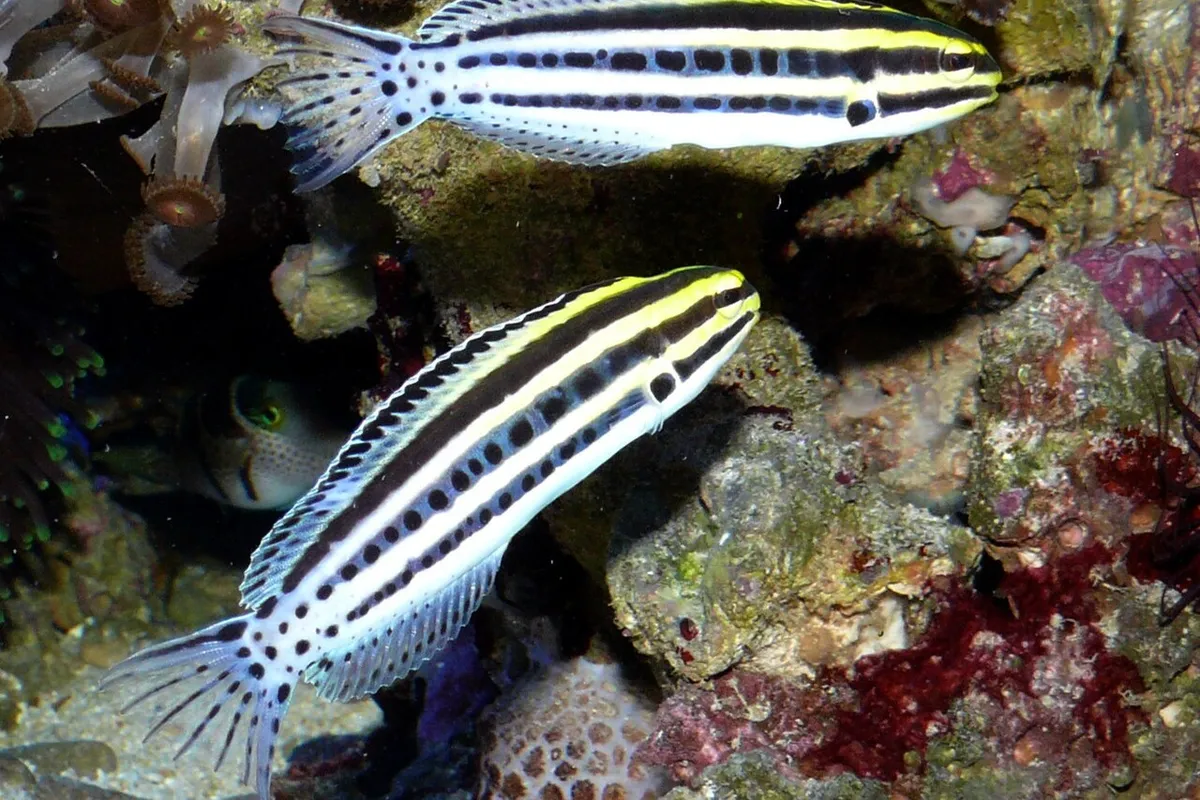
The striped fang blenny has black and pale yellow stripes running from nose to tail, with a yellow wash over the head. It reaches about 11 cm. Unlike most blennies, which perch on rocks, it swims in open water above the reef.
Meiacanthus grammistes has a pair of grooved fangs connected to venom glands. The venom is used for defence, mainly against predators that try to swallow it, and the fish is peaceful towards tank mates. Several other fish mimic its pattern for protection.
Where striped fang blennies come from
The species lives in the western Pacific, from Indonesia and the Philippines to northern Australia and Papua New Guinea. It is common on lagoon and seaward reefs.
Appearance and behaviour
Males and females look alike. Fang blennies are active and bold, hovering near caves or empty shells that they use for shelter and spawning. They rarely bother other fish, but two of the same species may spar.
The bite is mildly painful to people, comparable to a bee sting. Use a net, not your hand, when catching one.
Tank setup
A tank of at least 120 litres with live rock, caves and some open water suits one fish. Provide small holes in the rock or a short piece of PVC pipe as a refuge.

Water parameters
- Temperature: 24–28°C
- pH: 8.1–8.4
- Specific gravity: 1.020–1.025
Feeding
Fang blennies eat zooplankton and small invertebrates. Feed frozen mysis, brine shrimp, copepods and quality marine pellets two or three times a day.
Tank mates
They suit most community reef fish: clownfish, gobies, cardinalfish, chromis and small wrasses. Predators usually learn to leave them alone. Keep one per tank unless you have a known pair.
Breeding
Pairs spawn in a cave or pipe, and the male guards the eggs until they hatch. The larvae are tiny and need rotifers, so raising them at home is a challenge.
Common problems and lifespan
They are hardy and reef safe, ignoring corals and most invertebrates. They live four to six years.
Explore other topics
Dive into more aquarium guides across the site.