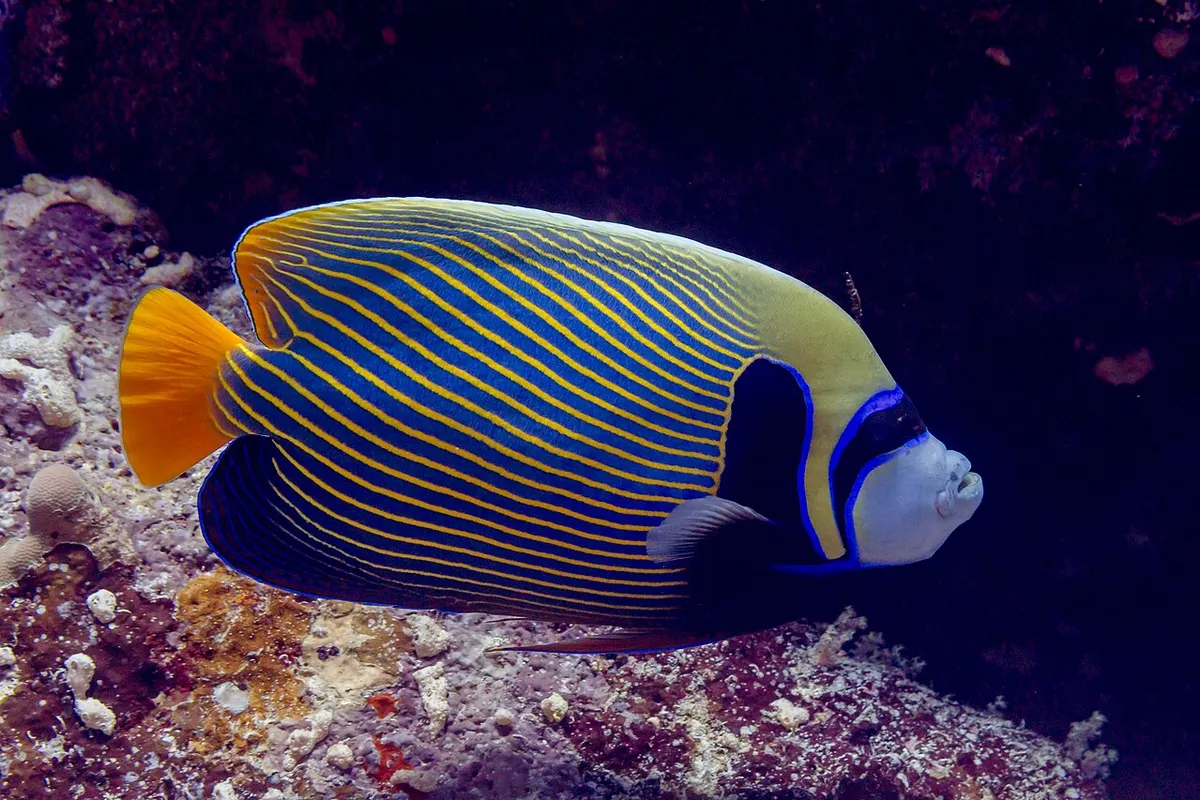
The adult emperor angelfish is unmistakable: bright yellow and blue stripes along the body, a blue-black mask across the eyes, and an orange tail. Juveniles look like a different species altogether, dark blue with white rings. The change happens gradually as the fish reaches 8–12 cm.
Pomacanthus imperator grows to about 40 cm in the wild and 25–30 cm in aquariums. It needs a very large tank, excellent water quality and a varied diet.
Where emperor angelfish come from
The species ranges across the Indo-Pacific, from the Red Sea and East Africa to Hawaii. Adults live on coral-rich reefs and drop-offs, often near caves and ledges.
Appearance and behaviour
Emperors are confident and inquisitive once settled, and they recognise the person who feeds them. They can make a loud knocking or grunting sound when threatened.
They are aggressive towards other large angelfish and similar-shaped fish. Keep one per tank.
Tank setup
An adult needs at least 800 litres, with plenty of open swimming space and caves in the rockwork. Strong filtration and a protein skimmer are essential; see protein skimmers explained.

Water parameters

- Temperature: 24–27°C
- pH: 8.1–8.4
- Specific gravity: 1.020–1.025
Keep nitrates low. Large angelfish are prone to head and lateral line erosion in poor water.
Feeding
In the wild, emperors eat mostly sponges and tunicates. Feed a commercial angelfish formula with sponge, plus mysis, krill, chopped seafood, spirulina and nori. Feed two or three times a day.
Tank mates
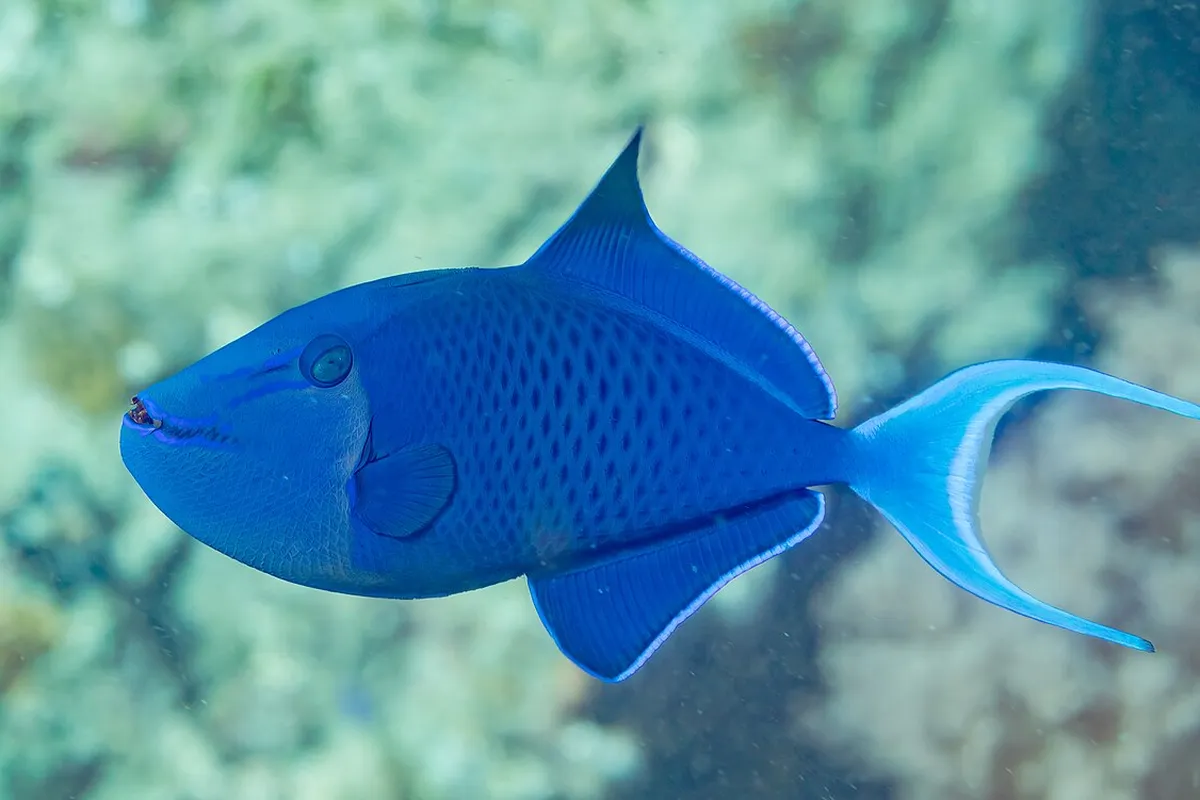
Good companions are large, robust fish such as tangs, larger wrasses, triggerfish like the niger trigger, and groupers in very large systems. Avoid other large angels unless the tank is huge.
Breeding
Emperor angelfish have not been bred in home aquariums.
Common problems and lifespan
Emperors are not reef safe: they nip large-polyp stony corals, soft corals, zoanthids and clams. Choose a fish-only tank or a carefully stocked reef. They can live 20 years or more.
Explore other topics
Dive into more aquarium guides across the site.