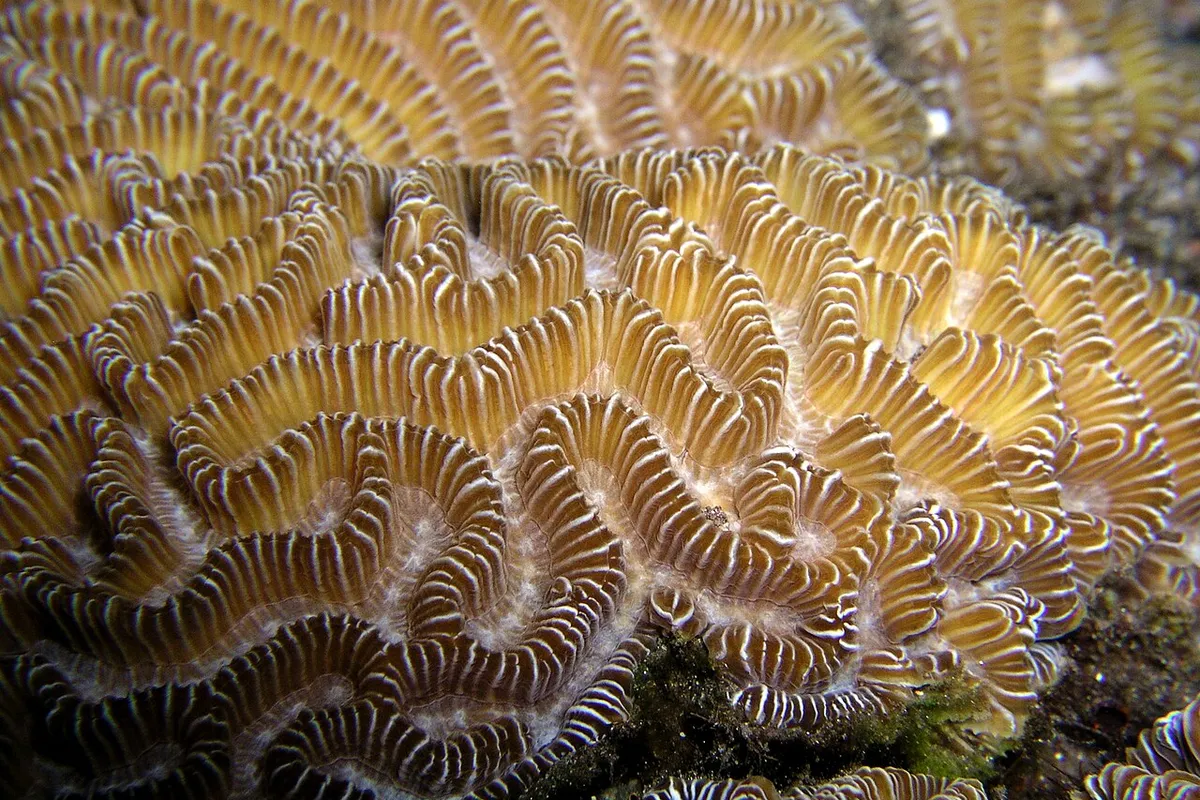
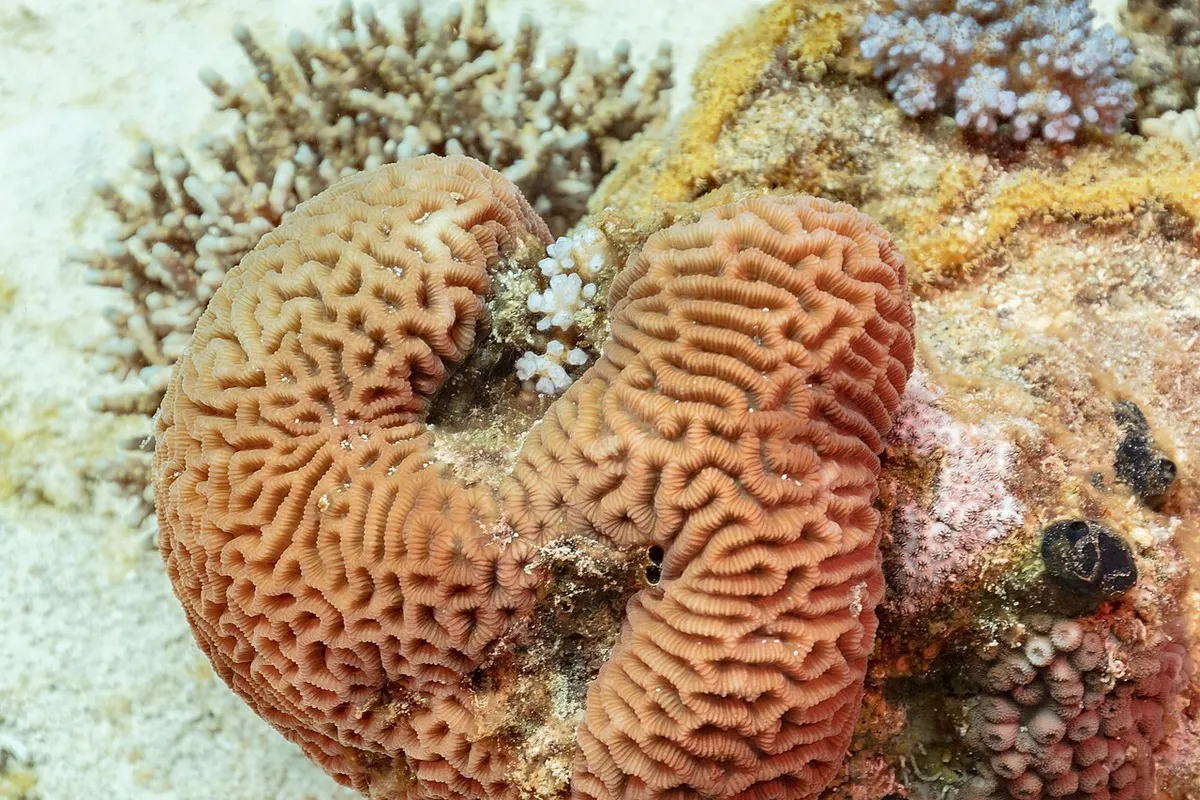
Maze brain corals grow as rounded boulders or encrusting plates covered in long, winding valleys that look like a maze or the surface of a brain. Colours range from brown and green to grey and bright aquacultured reds and greens.
Platygyra is a hardy stony coral once settled. It grows slowly, but a healthy colony becomes a long-lived centrepiece.
Where maze brain corals come from
The genus is common across the Indo-Pacific and Red Sea, on reef flats, slopes and lagoons. Many aquarium pieces are now farmed or fragged.
Appearance and behaviour
The valleys hold the polyp mouths, and the ridges between them are the colony walls. At night, small feeding tentacles emerge along the valleys. Brain corals also send out long sweeper tentacles that can sting nearby corals.
Tank setup
Place maze brain coral on the rockwork or sand bed in medium to high light, with moderate flow. Leave at least 10–15 cm of space around it to protect neighbours from its sweepers.
Water parameters

- Temperature: 24–27°C
- pH: 8.1–8.4
- Alkalinity: 8–11 dKH
- Calcium: 400–450 ppm
- Magnesium: 1,250–1,350 ppm
Stony corals need stable alkalinity and calcium. See our guides to alkalinity and magnesium.
Feeding
Most of its energy comes from light, but maze brains grow faster when fed. Once or twice a week, target feed small meaty foods such as mysis, rotifers or coral pellets in the evening when the feeding tentacles are out.
Tank mates
Most reef fish ignore it, but some angelfish and butterflyfish nip at brain corals. Keep it away from other aggressive LPS corals such as galaxea and hammer corals.
Breeding
Maze brains can be fragged with a saw, but the cut edges heal slowly. Many keepers prefer to buy small aquacultured colonies instead.
Common problems and lifespan
Tissue recession usually follows unstable alkalinity, too much light too quickly, or stinging from a neighbour. Acclimate new colonies to light gradually. Healthy colonies can live for decades.
Explore other topics
Dive into more aquarium guides across the site.