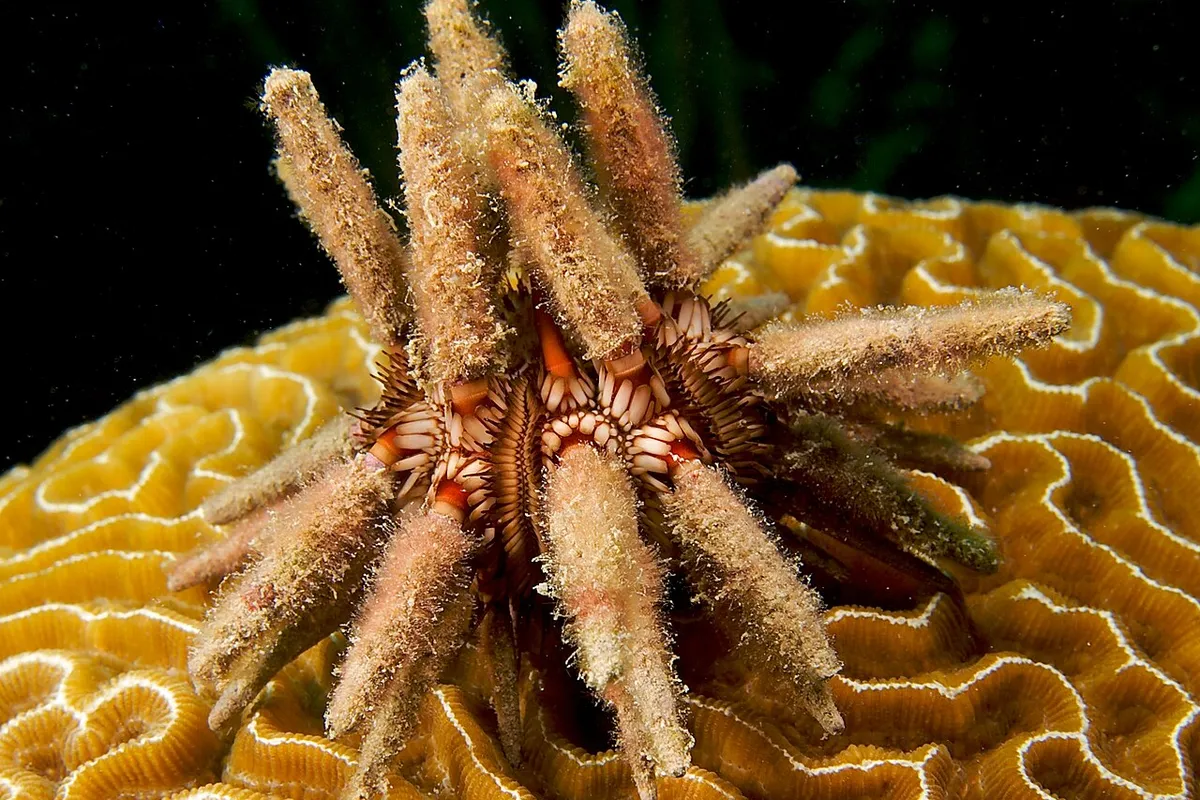
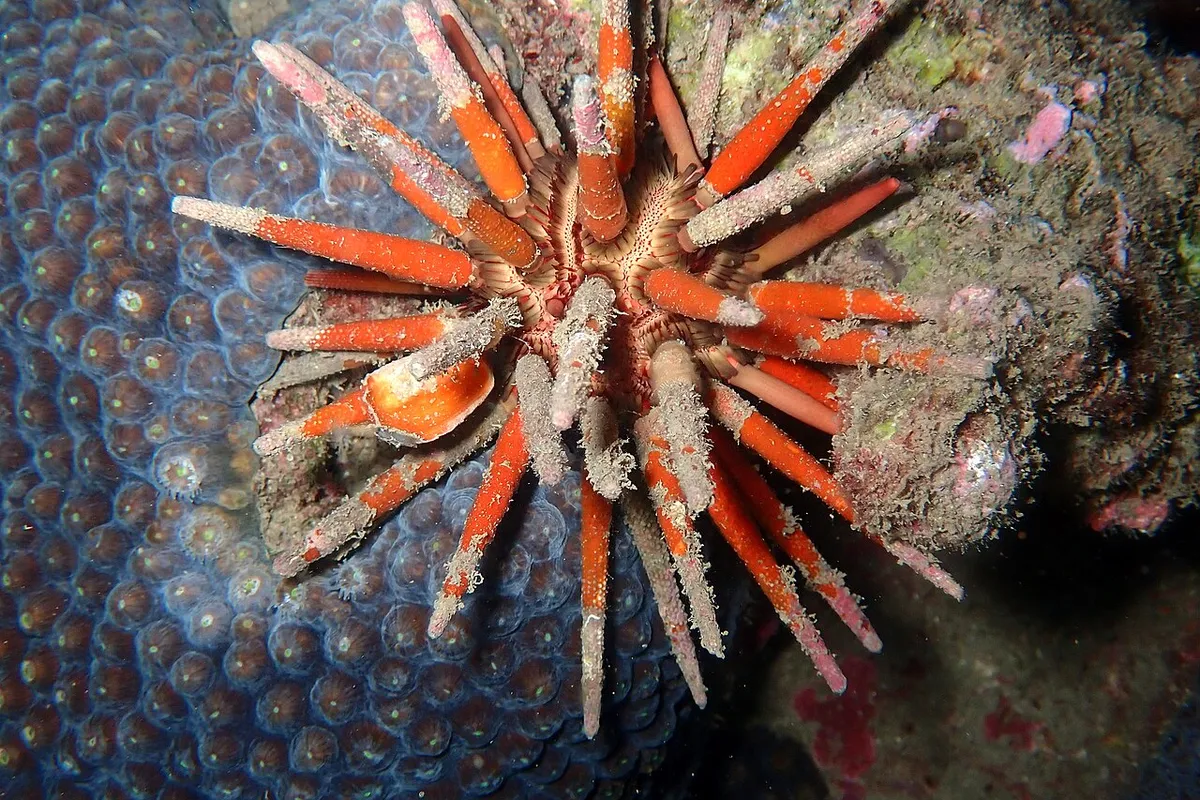
The slate pencil urchin, also called the pencil urchin or club urchin, has thick, blunt spines rather than the needle-like spines of most urchins. The body is dark red-brown, and the spines are often coated with algae, sponges and other growth. It reaches about 5 cm across the body, plus spines.
Eucidaris tribuloides is hardy and eats algae, but it also eats some corals and invertebrates, so it is best in a fish-only tank or with tough corals.
Where pencil urchins come from
The species lives in the western Atlantic, from North Carolina through the Caribbean to Brazil, and around West Africa. It hides in crevices by day on reefs and in seagrass beds.
Appearance and behaviour
Pencil urchins are mostly nocturnal. During the day they wedge themselves into the rockwork and come out at night to graze. They move slowly, using tube feet and spines, and can knock over loose rocks and corals.
Tank setup
A tank of at least 100 litres with plenty of live rock suits one urchin. Glue corals and rocks securely. Urchins do not tolerate copper or rapid changes.
Water parameters

- Temperature: 23–27°C
- pH: 8.1–8.4
- Specific gravity: 1.023–1.026
Feeding
Pencil urchins eat algae, encrusting organisms and small invertebrates. Supplement with algae wafers, nori and small pieces of frozen seafood if the tank lacks natural food.
Tank mates
Most fish ignore them. Avoid triggerfish, large wrasses and puffers, which eat urchins. They may graze on coralline algae, sponges, small polyps and sessile invertebrates.
Breeding
Pencil urchins spawn by releasing eggs and sperm into the water. Larvae are rarely raised in home aquariums.
Common problems and lifespan
Spine loss is a warning sign of poor water quality or copper. Healthy urchins can live five years or more.
Explore other topics
Dive into more aquarium guides across the site.