

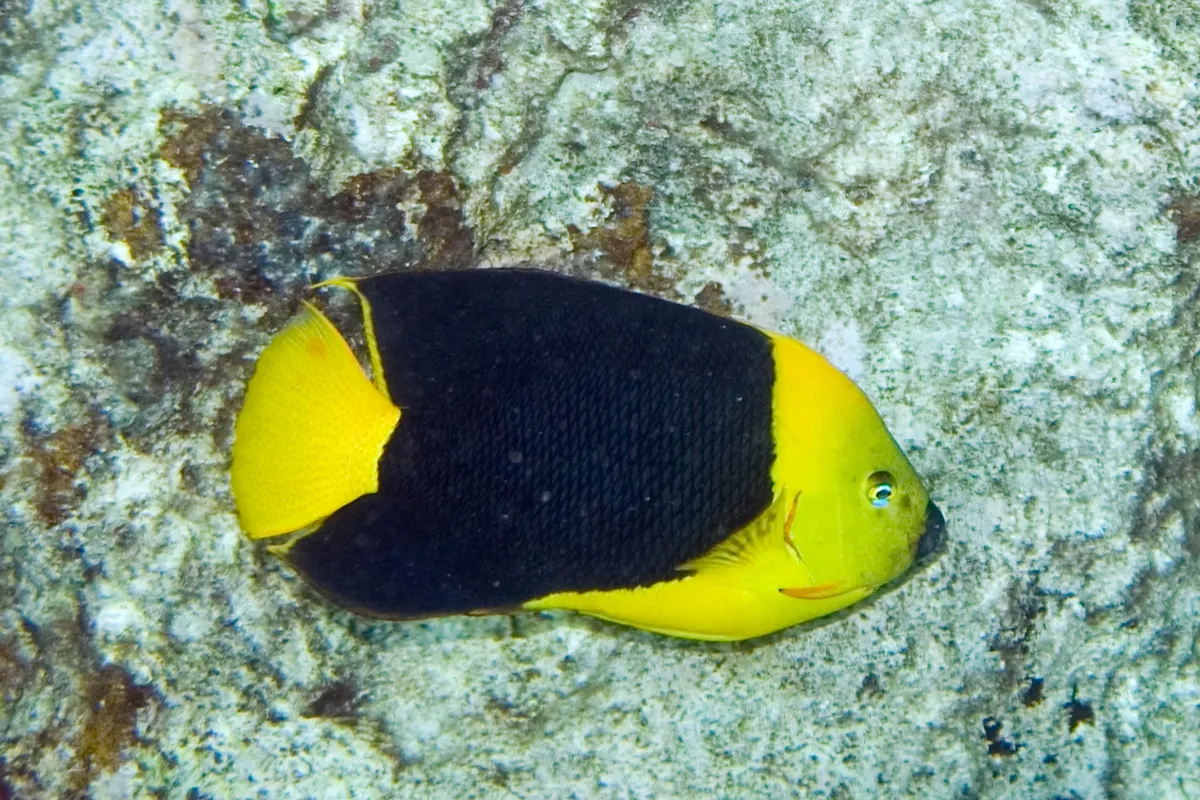
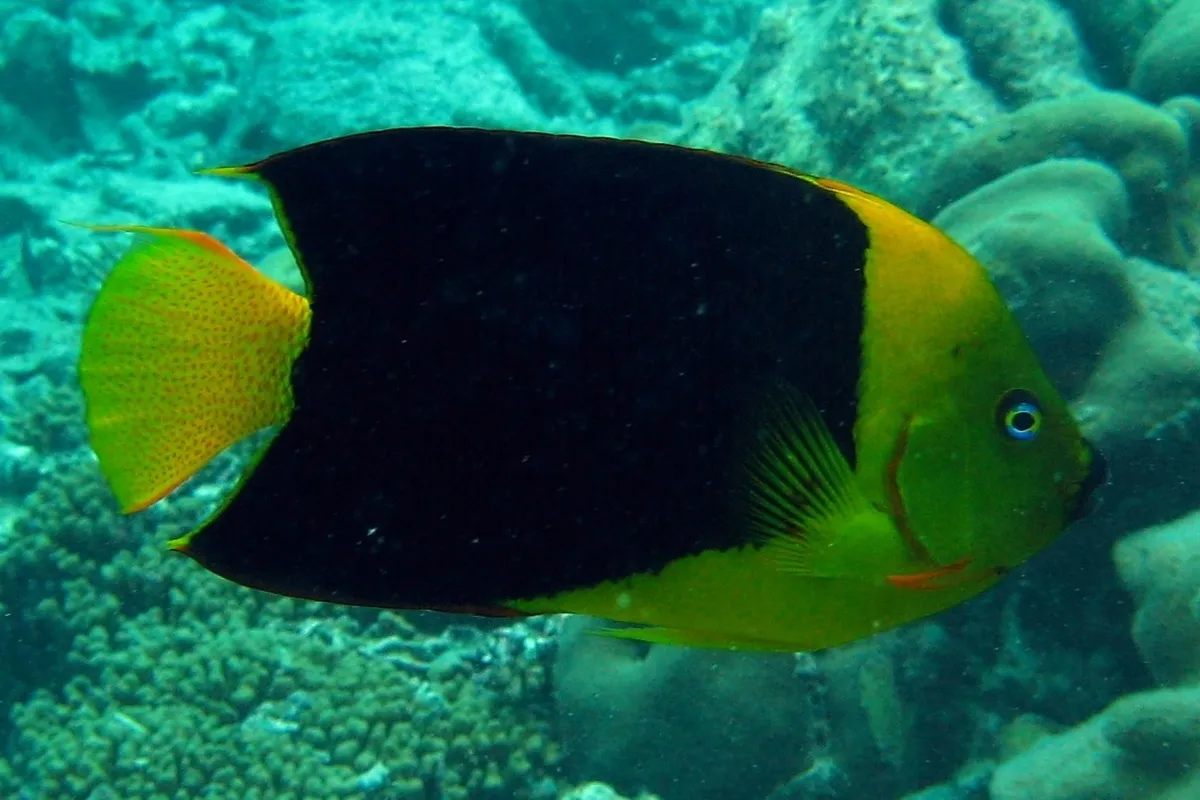
The rock beauty is one of the most graphic fish on Caribbean reefs. Adults are bright yellow on the head, belly and tail, with a large black patch covering most of the body. Juveniles are almost entirely yellow, with a blue-ringed black spot that grows into the adult patch.
Holacanthus tricolor reaches about 30 cm. It is beautiful and widely available, but it has a poor survival record in aquariums because its natural diet is mostly sponge. This is a fish for experienced keepers only.
Where rock beauties come from
The species lives in the western Atlantic, from the Carolinas and Bermuda through the Gulf of Mexico and the Caribbean to Brazil. It is found on rocky and coral reefs, usually near sponges.
Appearance and behaviour
Rock beauties are active and often aggressive, especially towards other angelfish. They can be shy at first and may refuse food for several days after arrival.
Tank setup
An adult needs at least 500 litres with plenty of mature live rock to graze, caves to hide in and good water flow. Introduce it to an established, stable system.
Water parameters

- Temperature: 24–27°C
- pH: 8.1–8.4
- Specific gravity: 1.020–1.025
Feeding
Feed frozen angelfish formulas that contain sponge, several times a day, along with mysis, spirulina and nori. Some keepers also offer fresh sponge. Fish that will not eat prepared foods within a week or two rarely recover, so ask the store to show yours feeding before you buy.
Tank mates
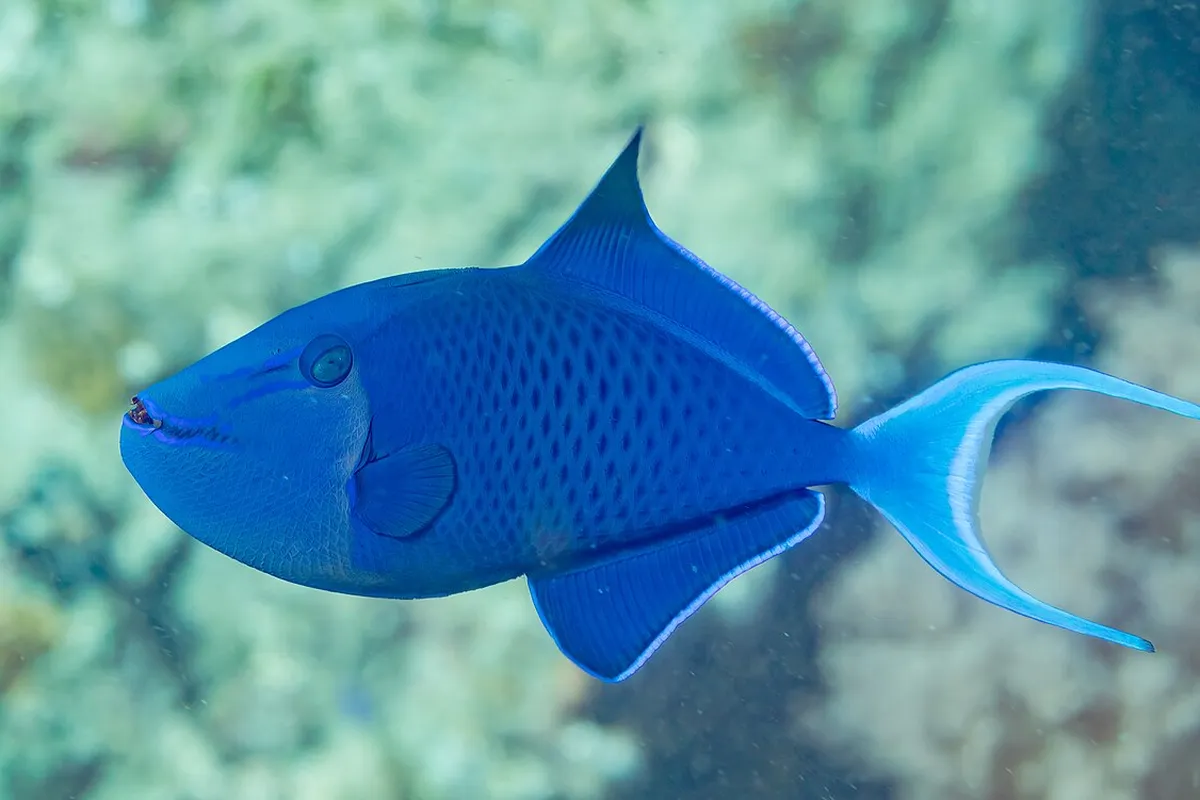
Choose robust fish that are not angelfish: tangs, larger wrasses, triggerfish and large damsels. Avoid timid fish and other large angels.
Breeding
Rock beauties have not been bred in home aquariums.
Common problems and lifespan
Slow starvation is the main problem. They are not reef safe and will eat sponges, soft corals, zoanthids and clam mantles. If one does adapt, it can live ten years or more.
Explore other topics
Dive into more aquarium guides across the site.