

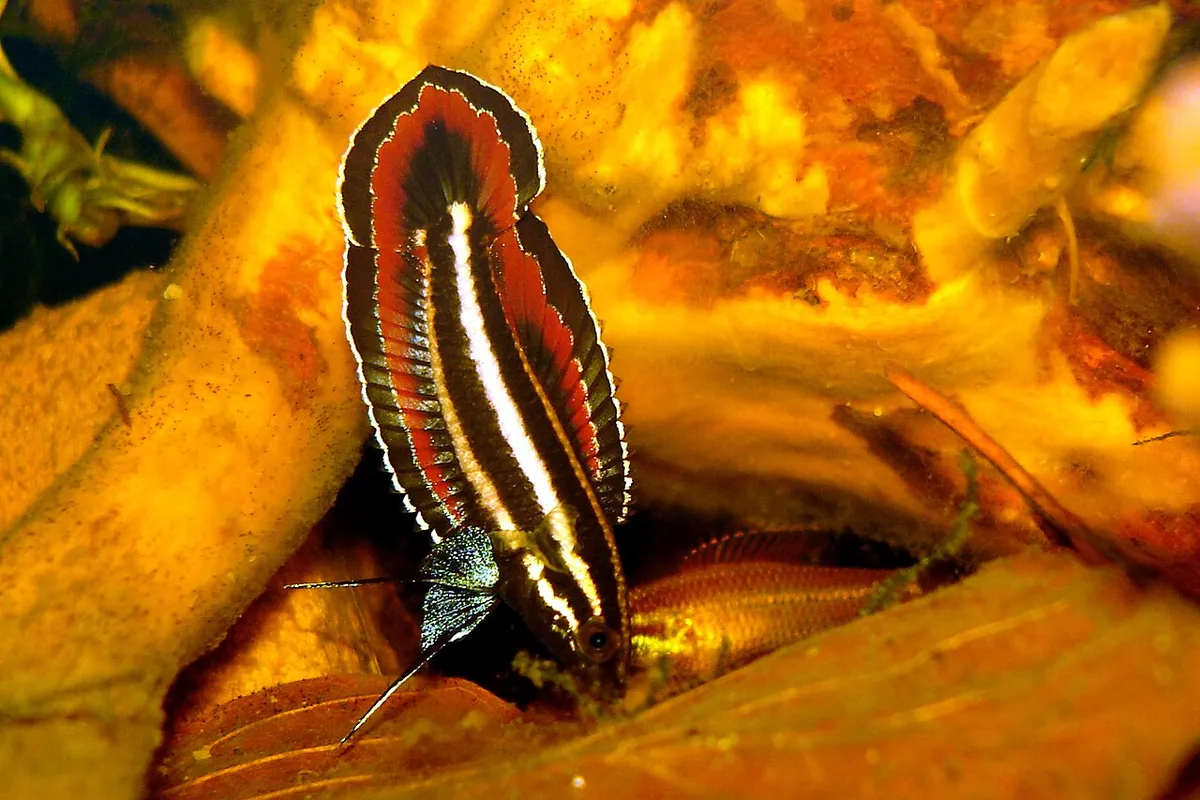
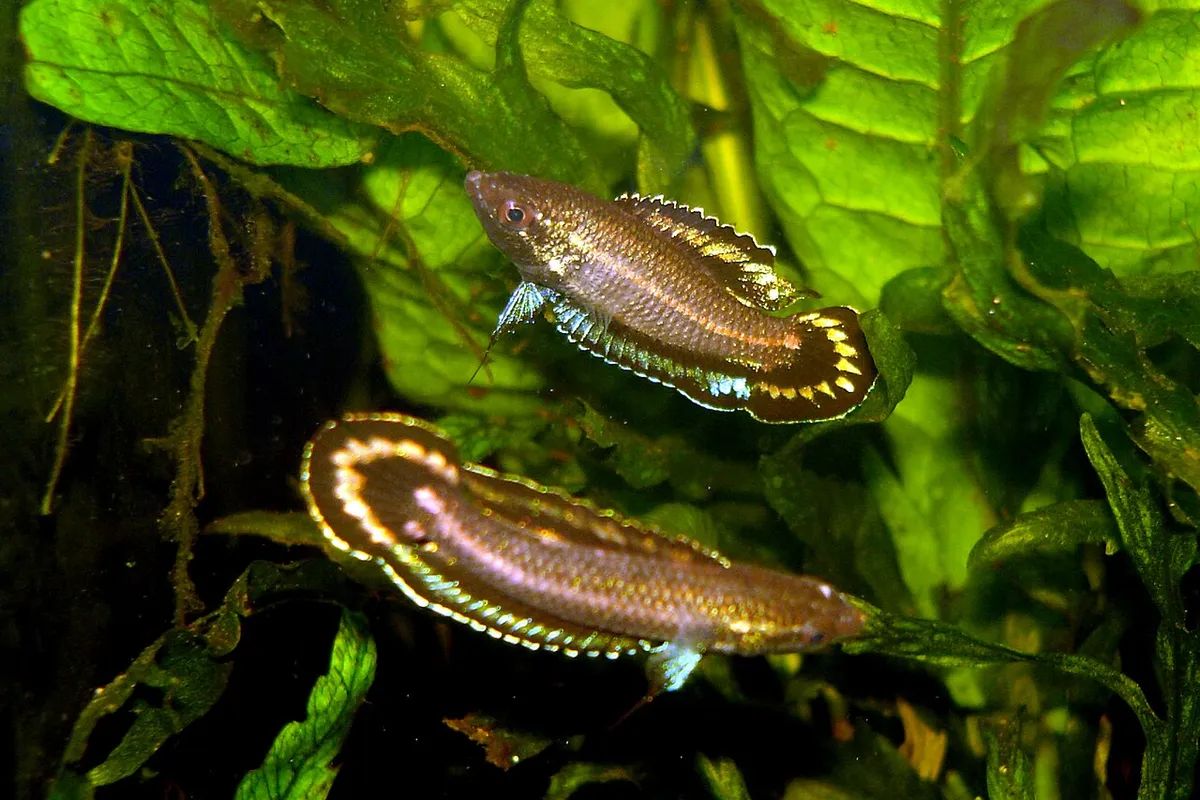
Licorice gouramis are some of the most beautiful nano fish you can keep, and some of the most demanding. Males display striped bodies and fins edged in red, blue or white, while females stay brown and striped. All 20-plus Parosphromenus species stay under 4 cm.
These are fish for a dedicated species tank, not a busy community. They need very soft, acidic water, dim light and live food, and most are now rare or endangered in the wild because their peat swamps are being cleared for plantations.
Where licorice gouramis come from
The genus lives in the peat swamp forests of Malaysia, Sumatra, Borneo and nearby islands. The water there is stained dark brown by tannins, with a pH that can fall below 4. Many species are known from only a few streams, so buy captive-bred fish where possible and keep each species, and each collection site, separate.
Appearance and behaviour
Most species share the dark lengthwise stripes that give the group its name. When a male displays, his fins spread and the coloured edges light up, often with a head-down posture near his chosen cave. Outside displays, the fish are shy and spend much of the day hidden.
They are peaceful but easily outcompeted. Keep one pair or a small group in a tank of their own.
Tank setup
A 20–40 litre tank is enough for a pair. Use a dark substrate, dense plants, leaf litter and several small caves, such as film canisters or tiny clay pots. Keep the light dim, filtration gentle and the lid tight. Our guide to blackwater aquascapes explains the look and how to build it.
Water parameters

- Temperature: 22–27°C
- pH: 4.0–6.0
- Hardness: 0–3 dGH
Use RO or rainwater and soften it further with peat, leaves and alder cones. Low pH also keeps many bacterial diseases in check. See soft water and blackwater chemistry and RO/DI water for the details.
Feeding
Most licorice gouramis refuse dry food. Feed live baby brine shrimp, microworms, grindal worms, daphnia and mosquito larvae. Small frozen foods are sometimes accepted. Feed small amounts daily and remove leftovers, since uneaten food fouls soft water quickly.
Tank mates
A species tank is best. If you want company, use only very small, calm fish that like the same water, such as tiny Boraras rasboras, in low numbers. Shrimp may eat eggs and fry.
Breeding
The male chooses a cave and builds a small bubble nest on its ceiling. After spawning upside down, he guards the eggs and fry, while the female is usually tolerated nearby. The fry are tiny and need infusoria or vinegar eels before moving on to baby brine shrimp.
Common problems and lifespan
Most problems come from water that is too hard, starvation on dry food, and bacterial infections in a tank with a pH above 6.5. With good care they live three to five years.
Explore other topics
Dive into more aquarium guides across the site.