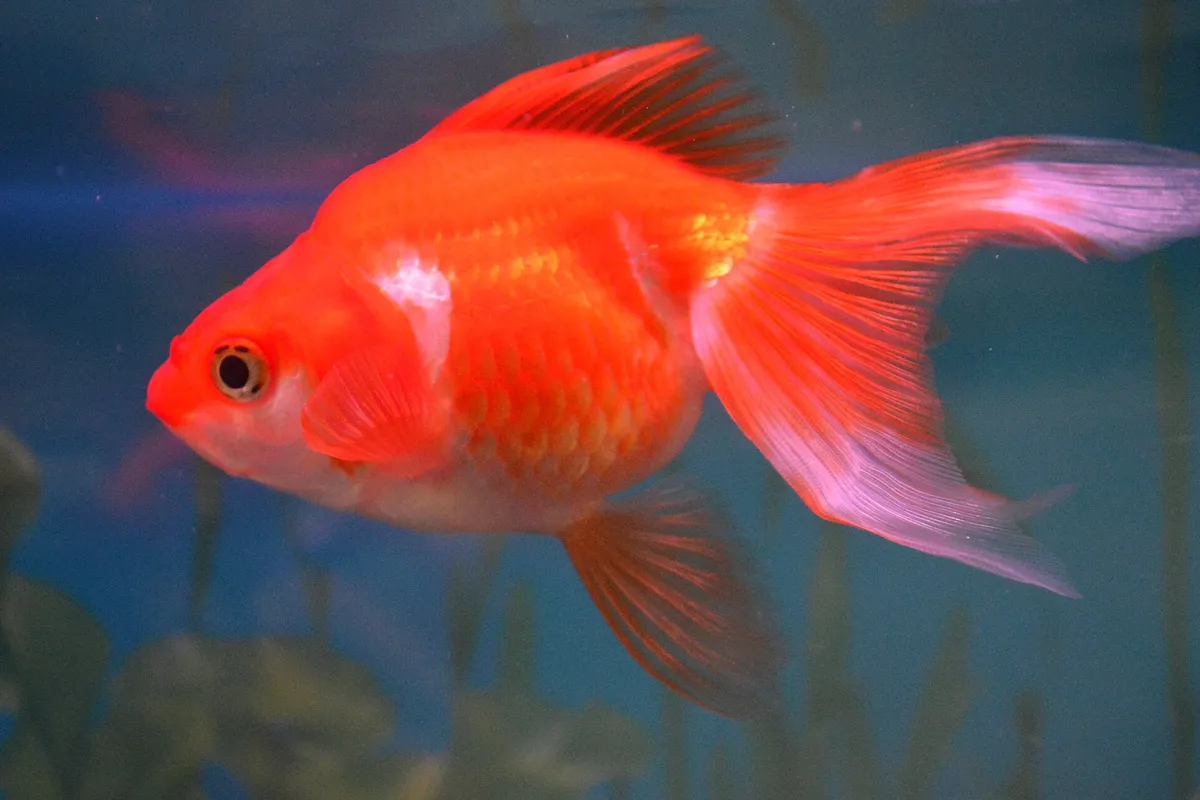
The ryukin is the fancy goldfish with a hunchback, and that is meant as a compliment. A tall hump rising behind the head, a deep, rounded body and a long, flowing double tail make it one of the most striking goldfish varieties. It is also one of the hardiest fancies, more robust than many round-bodied types and every bit as friendly.
Like every goldfish, it grows bigger and lives longer than people expect. A healthy ryukin reaches 15–20 cm including the tail and can live 10 to 15 years. Plan the tank around that fish, not the 4 cm one in the shop.
A Japanese fancy goldfish
All goldfish are domesticated forms of Carassius auratus, first bred in China over a thousand years ago. The ryukin is named after the Ryukyu Islands, through which the variety reached Japan, where breeders refined its deep body and pronounced hump. It is a fancy, twin-tailed goldfish in the same broad group as the oranda and fantail.
The ryukin shape
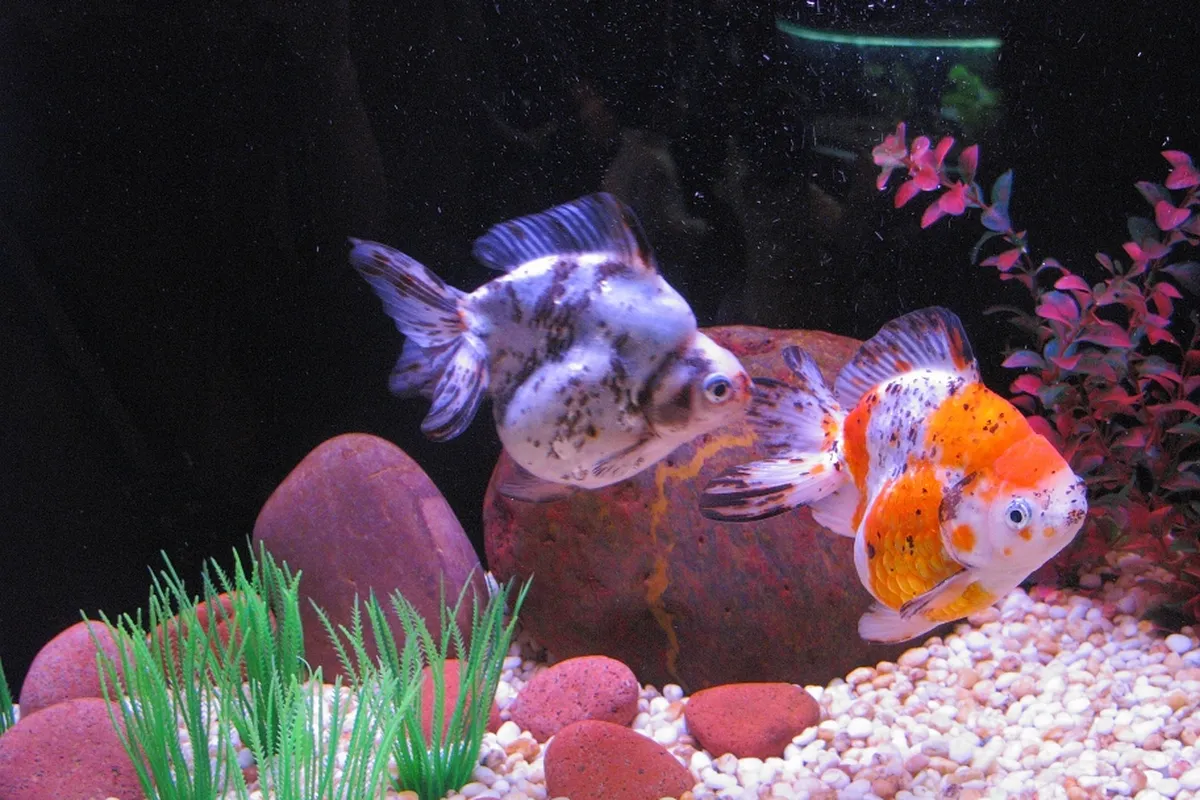
Look for a short, very deep body with a sharp rise behind the head, a pointed face, and a split double tail that can be short or very long. Colours include red, red and white, calico, chocolate and white. A fantail looks similar but has a rounder, less humped back and a less pointed head.
The same body shape that makes ryukins attractive also squeezes their internal organs, which is why they are prone to swim bladder problems. Good feeding habits make a big difference.
Tank size and filtration
Give a single ryukin at least 75 litres and add around 40 litres for every additional fancy goldfish. A pair is happiest in 110–150 litres. Goldfish produce a lot of waste, so filtration matters more than with most tropical fish: aim for a filter rated for at least twice the tank volume, with gentle outflow, because long-tailed ryukins are not strong swimmers.
Change 30–50% of the water every week. Keep décor smooth, use sand or large, smooth pebbles that cannot be swallowed, and leave plenty of open swimming space. Hardy plants like Anubias and Java fern survive goldfish grazing; most soft plants get eaten.
Water parameters

Ryukins are coldwater fish. They do best at 18–24°C, and most homes do not need a heater. pH 7.0–8.0 with moderate hardness is ideal. Keep ammonia and nitrite at zero and nitrates low; goldfish tanks build up nitrates quickly, which is one reason big, regular water changes matter. See our guide to controlling nitrates long term.
Never keep a ryukin in a bowl or a small unfiltered tank. Poor water is the single biggest cause of sick goldfish.
Feeding and swim bladder prevention
Ryukins are greedy omnivores. Feed a good sinking goldfish pellet or gel food as the staple, plus blanched peas, courgette and leafy greens, and occasional bloodworms, daphnia or brine shrimp. Feed small amounts once or twice a day, only what they finish in a minute or two.
Sinking foods are better than floating flakes, because gulping food at the surface means swallowing air, which can lead to buoyancy problems. Soak dry foods briefly before feeding and include plenty of fibre. If a ryukin floats, sinks or tilts, read our guide to swim bladder disorders and our full guide to what goldfish eat.
Tank mates
The best tank mates for a ryukin are other fancy goldfish of similar size and speed: orandas, fantails, black moors and other ryukins. Avoid single-tailed goldfish such as comets and shubunkins, which are much faster and will outcompete fancies for food.
Do not mix goldfish with tropical fish. They want different temperatures, and many tropical fish either nip long goldfish tails or are small enough to be eaten. Hardy snails are usually fine.
Breeding
Ryukins breed readily in spring, often triggered by a slight rise in temperature after a cooler period. Males develop small white breeding stars on the gill covers and chase females hard. Eggs scatter over plants or spawning mops and are eaten quickly, so move the eggs to a separate tank. Fry are raised on infusoria, then baby brine shrimp, and most will not have show-quality shape, which is normal.
Common problems
Swim bladder issues: diet, overfeeding and floating foods; switch to sinking, fibre-rich foods. Torn or rotting fins: poor water or sharp décor. Gasping at the surface: low oxygen or high ammonia; test the water and add aeration. Kept cool, clean and well fed in a properly sized tank, a ryukin will stay with you for well over a decade.
Explore other topics
Dive into more aquarium guides across the site.