

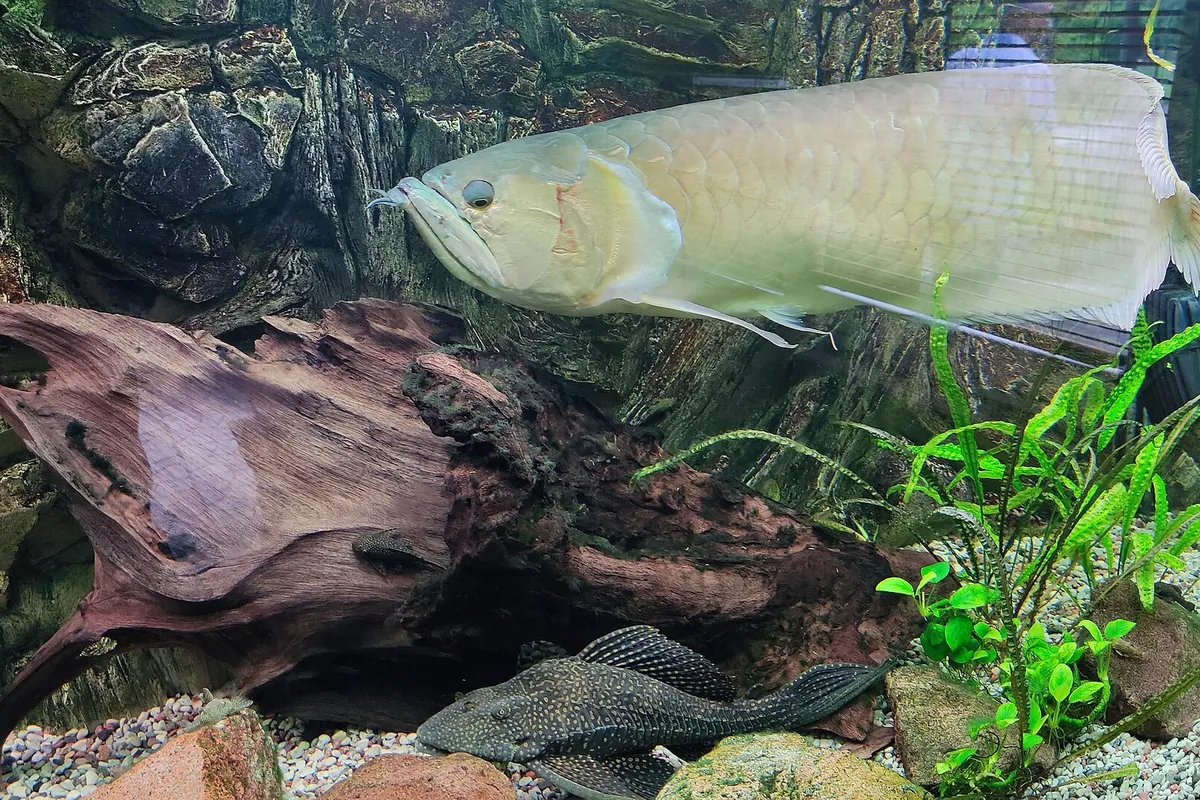
The silver arowana is a living fossil with the manners of a hawk. Osteoglossum bicirrhosum belongs to the bonytongues, an ancient family of fish, and it hunts by patrolling just below the surface, scanning upwards for insects, spiders and small animals, then exploding out of the water to grab them. In the Amazon it is nicknamed the water monkey.
It is also one of the most outgrown fish in the hobby. Juveniles of 10 cm are sold cheaply, then reach 60 cm within a couple of years and can exceed 90 cm. Before buying one, be honest about whether you can provide an adult-sized tank for the next 10 to 15 years.
Flooded forests of the Amazon
Silver arowanas live in the Amazon basin and nearby river systems in South America, especially in flooded forests and slow, plant-fringed backwaters. During the rainy season they move into flooded woodland and hunt among the branches, which is where their jumping skills earn their keep. The water is warm and usually soft and slightly acidic.
They are a different animal from the Asian arowana (Scleropages formosus), which is protected under international trade rules. The silver arowana is widely farmed and legal in most places, but always check local rules for large predatory fish.
A blade of silver
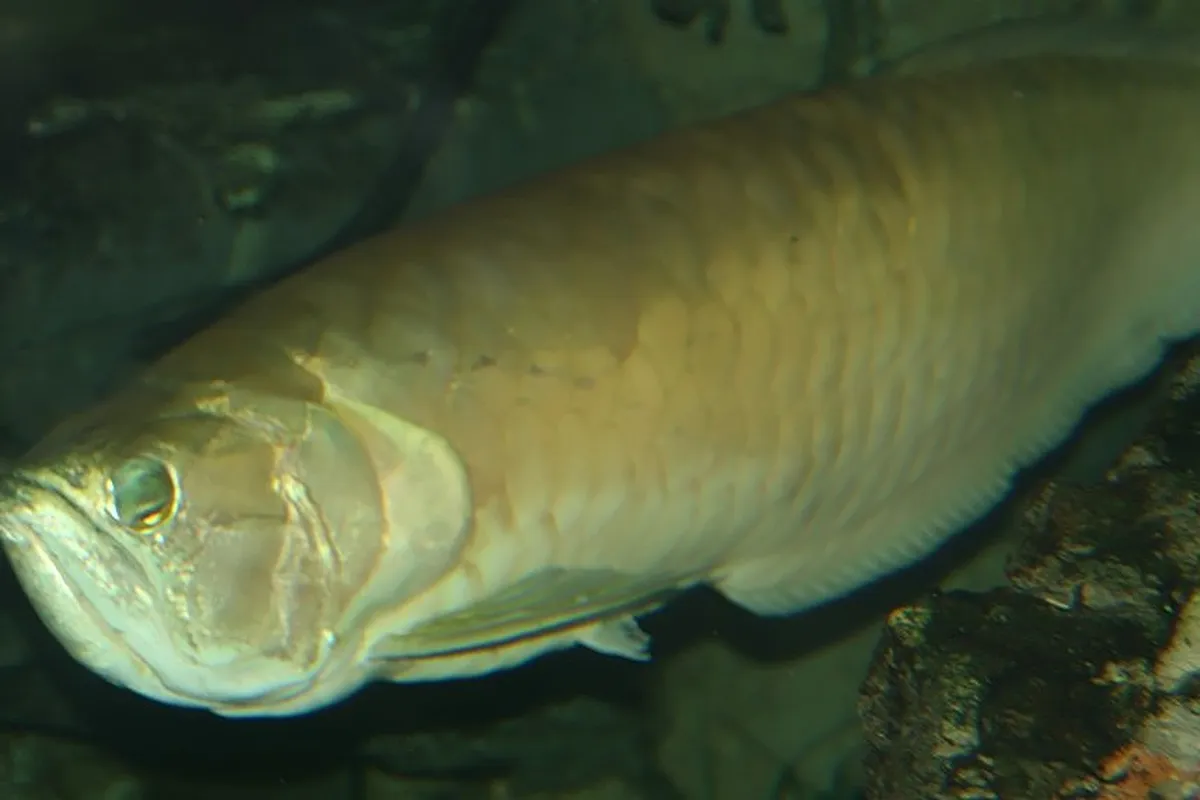
The body is long, flattened and covered in large, shining scales that can catch pink, blue or green light. The mouth is huge and points upwards, and two short barbels stick forward from the tip of the lower jaw. The dorsal and anal fins run far back along the body and almost meet the tail, giving the fish the look of a knife.
Males are slimmer, with a longer anal fin. In the wild, the male carries the eggs and young fish in his mouth, which is why arowanas are called mouthbrooders.
Tank size: the deal-breaker
A juvenile can live for a while in a 300–400 litre tank, but an adult needs a very large aquarium: realistically 1,000 litres or more, at least 240 cm long and 90 cm wide, so the fish can turn without bending its body. Width matters as much as length. Many keepers end up rehoming arowanas because the planned upgrade never happens.
Keep the layout open, with plenty of clear swimming room near the surface. Floating plants at the edges help the fish feel secure. Use heavy, smooth décor and avoid anything sharp the fish could hit when startled.

A heavy lid and clean, warm water
Arowanas jump, often and hard. A heavy, fully sealed lid is essential, and many keepers add a dark background and dim the room lights before switching tank lights on, so sudden changes do not trigger a leap. Most arowana injuries come from collisions with lids, glass or décor.
Keep the water at 24–30°C, pH 6.0–7.5 and soft to moderately hard. A big predator produces a lot of waste, so use oversized filtration, such as a sump or several large canisters, and change a good share of the water every week. Our guide on aquarium filter flow helps size the system.
Feeding a surface predator
In the wild, arowanas eat insects, crustaceans, small fish and the occasional small animal that falls into the water. In the aquarium, feed a varied diet of good floating carnivore pellets or arowana sticks, prawns, crickets and other feeder insects, and pieces of fish fillet. Juveniles eat daily; adults every one or two days.
Avoid feeder goldfish and other live feeder fish, which spread disease and are nutritionally poor. Our guide to feeding carnivorous fish covers healthier options.
Tank mates
Anything that fits in an arowana's mouth will be eaten, and that mouth is very large. Suitable companions are big, robust fish that stay in the lower and middle parts of the tank: large plecos, big peaceful catfish, larger cichlids such as oscars in a big enough tank, and large, sturdy bottom-dwellers. Avoid fin-nippers and other surface-dwelling predators.
Silver arowanas are usually kept singly. Two arowanas in one tank often fight unless the aquarium is huge.
Common problems
Drop eye: the eyes turn downwards over time, often linked to fish looking down at food or at a bright, reflective floor. Feeding at the surface and keeping a darker substrate may help. Gill curl: usually poor water quality or a cramped tank. Jump injuries: a lid that is too light or has gaps. A silver arowana is a superb fish for keepers with the space and budget, and a heartbreaking one for anyone without.
Explore other topics
Dive into more aquarium guides across the site.