

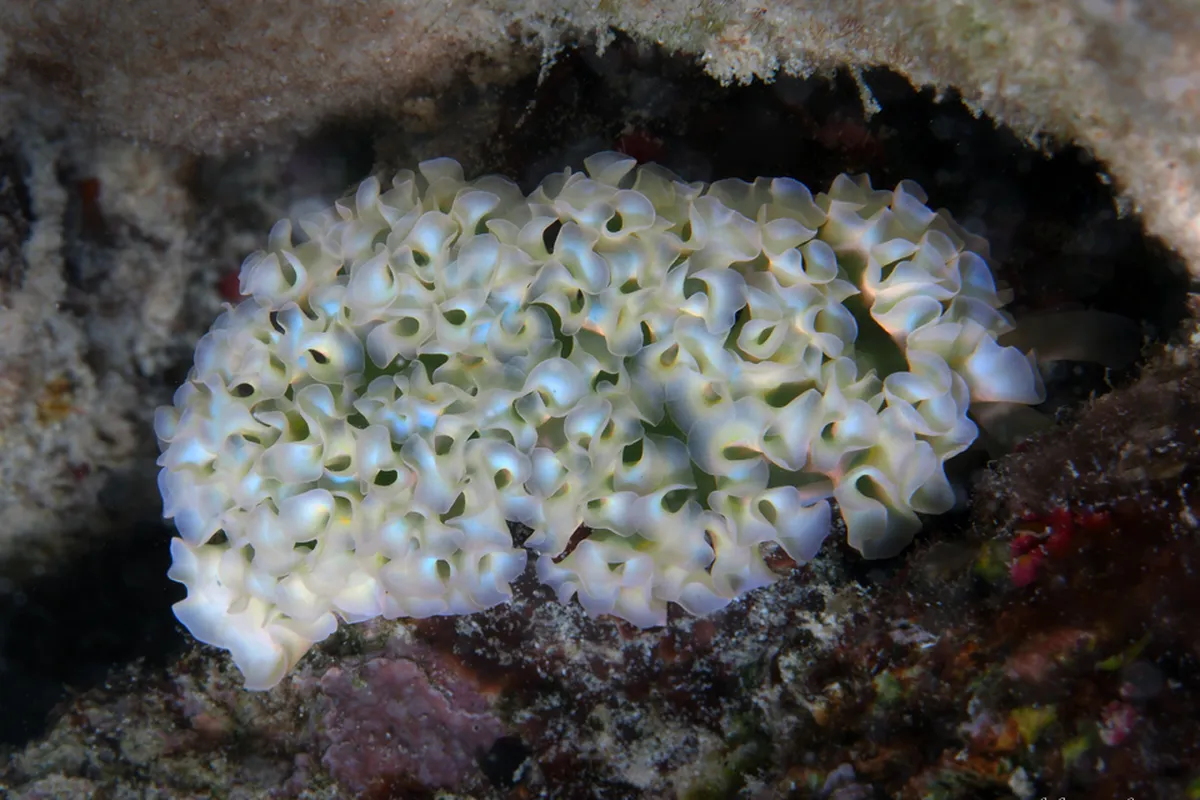
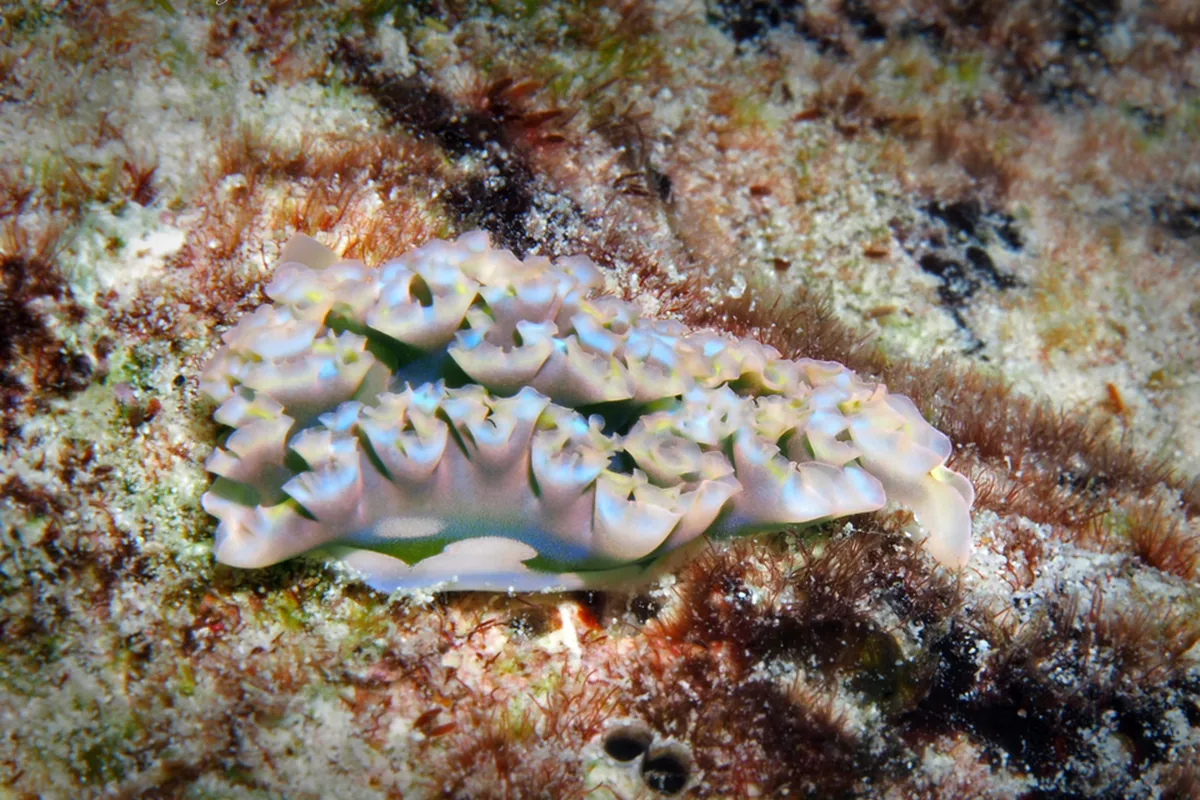
The lettuce sea slug looks like a head of frilly lettuce crawling over the rocks. Its ruffled side flaps, called parapodia, come in green, blue, white and purple, often edged in other colours. It reaches about 5 cm.
Elysia crispata eats algae and keeps the chloroplasts from its food alive in its own tissue, using them to make energy from light for weeks. Reefkeepers buy it to control Bryopsis and other green hair algae.
Where lettuce sea slugs come from
The species lives in the Caribbean and tropical western Atlantic, in shallow, brightly lit areas with plenty of algae.
Appearance and behaviour
Lettuce slugs move slowly over rocks and glass, feeding as they go. They are completely peaceful.
Tank setup
Any stable reef of 75 litres or more with a supply of the right algae works. Cover pump and overflow intakes with sponges or guards: sea slugs are often sucked in and killed.
Water parameters

- Temperature: 24–27°C
- pH: 8.1–8.4
- Specific gravity: 1.023–1.026
Sea slugs are very sensitive to copper and other medications.
Feeding
Lettuce slugs eat green algae such as Bryopsis and other filamentous species. They do not eat prepared foods. Once the algae are gone, they slowly starve. Plan to move them to another tank or a refugium with algae, or return them to the store.
Tank mates
Avoid wrasses, puffers, triggerfish and angelfish that may eat sea slugs. Corals are safe.
Breeding
They lay ribbons of eggs on rocks, but the young are rarely raised in home tanks.
Common problems and lifespan
Starvation and pump intakes cause most losses. For long-term algae control, see natural ways to control algae. Lettuce slugs usually live less than a year in aquariums.
Explore other topics
Dive into more aquarium guides across the site.