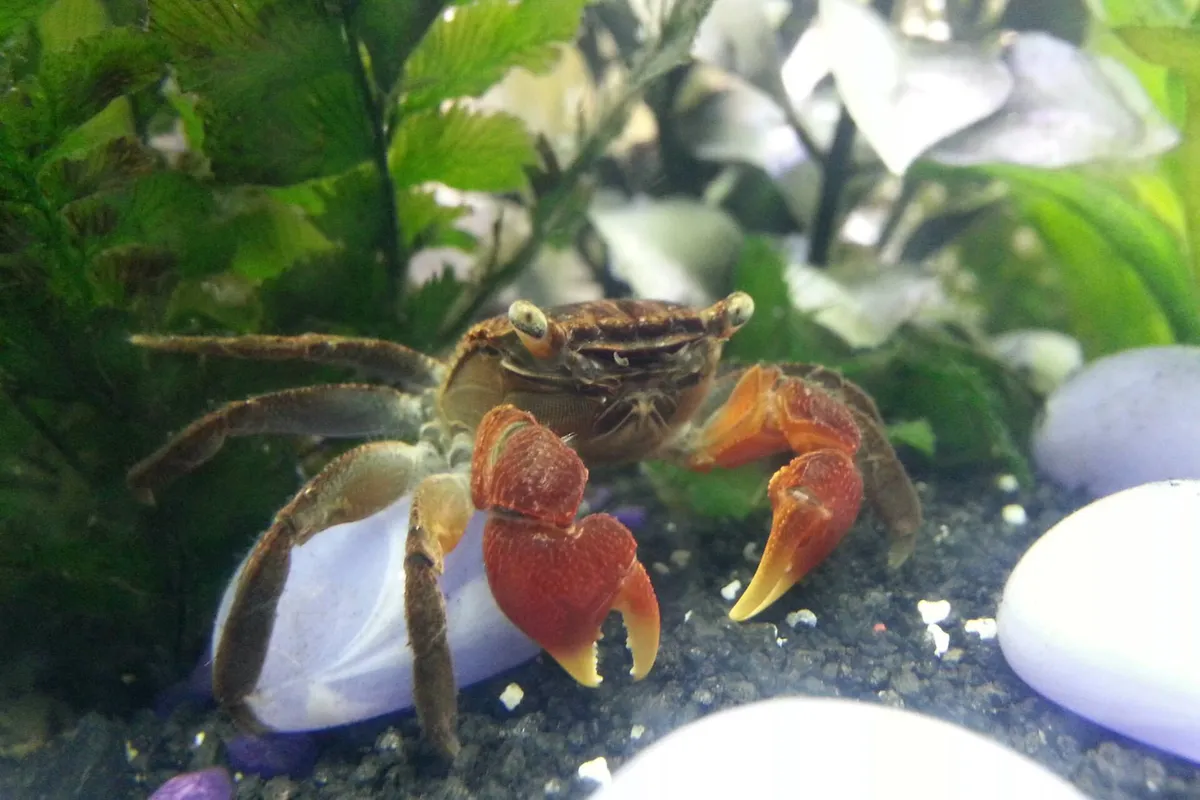
The red claw crab is one of the most mis-sold animals in the aquarium trade. It sits in freshwater tanks in almost every pet shop, priced like an impulse buy, and most die within weeks. Parasesarma bidens is not a fully aquatic, freshwater crab. It is a mangrove crab that breathes air for much of the day, needs dry land to climb onto, and does best in brackish water.
Give it what it actually needs and it becomes a bold, entertaining animal: waving bright red claws, defending a burrow and scuttling between land and water. The key is to plan a paludarium, not an aquarium.
Mangrove crabs
Wild red claw crabs live in mangrove swamps and estuaries across East and Southeast Asia, from southern China and Taiwan to Indonesia. They spend much of their time out of the water on muddy banks and roots, retreating into burrows or the water when threatened. The water around them rises and falls with the tides and is usually brackish. You may also see them sold as Perisesarma bidens or Sesarma bidens, older names for the same crab.
Appearance and sexing
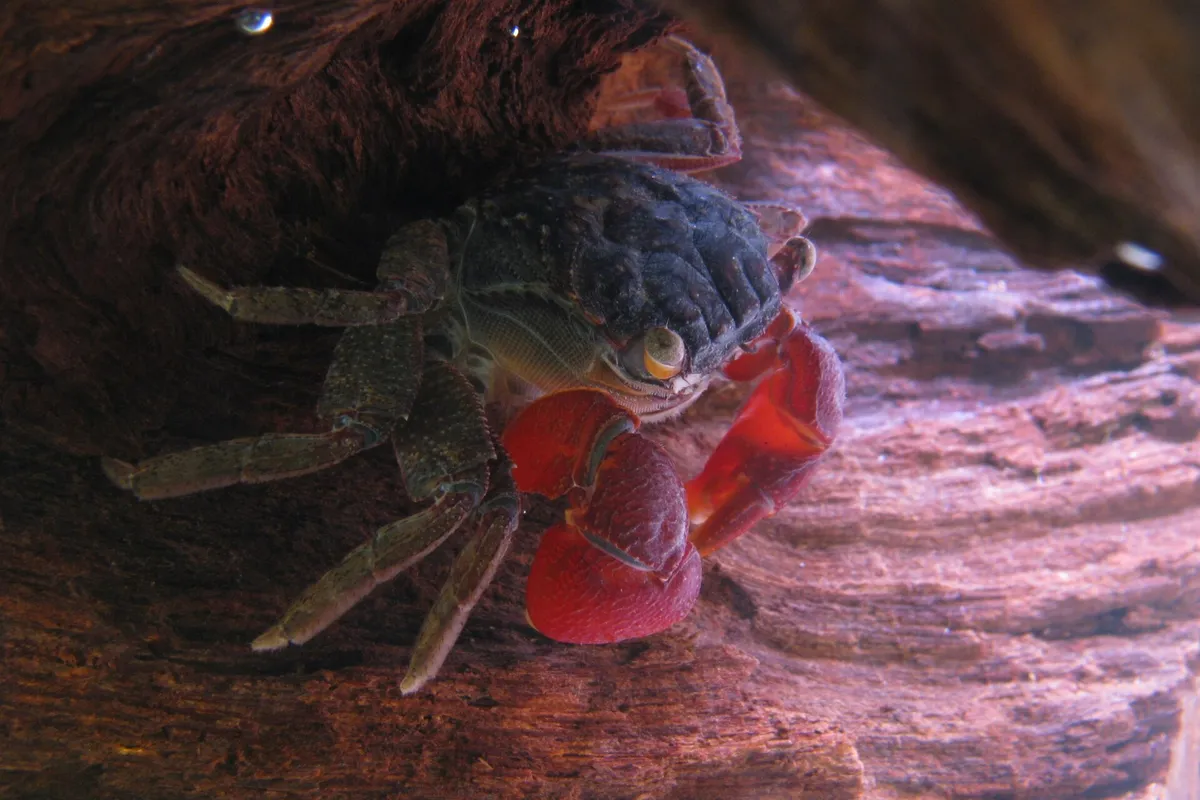
The carapace is about 4 cm across, olive-brown to purple-grey, with a leg span of up to around 10 cm. The claws are the attraction: bright red, sometimes with yellow or white tips. Males have noticeably larger, brighter claws and a narrow, triangular flap under the body. Females have smaller claws and a wide, rounded abdominal flap for carrying eggs.
Paludarium setup: land is not optional
One crab, or one male with two females, needs at least 40 litres of floor space, laid out so that roughly a third to half of the area is dry land. Build land with a sloped sand bank, a pile of flat rocks, cork bark or floating platforms, and make sure the crab can easily climb out at several points. Without land, red claw crabs can drown or become badly stressed.
Keep the water fairly shallow, 10–15 cm is plenty, and provide caves, roots and pipes in both the water and land areas. A tight-fitting lid is essential. These crabs climb silicone seams, cables and airline tubing and will be found behind the sofa if given the chance.
Brackish water and parameters
Red claw crabs survive for a while in hard fresh water, but they do far better long term in low-end brackish water. Aim for a specific gravity of about 1.005–1.010, made with marine salt and checked with a hydrometer or refractometer. Keep the temperature at 22–28°C and pH at 7.5–8.5, with hard water.

Keep the land area humid by covering most of the lid and keeping the water warm. Replace evaporated water with fresh, dechlorinated water, not salt water, or the salinity will creep up. Change water with pre-mixed brackish water at the same level.
Feeding
Red claw crabs are opportunistic omnivores. Feed sinking pellets or crab food, blanched vegetables, algae wafers, and meaty foods such as bloodworms, brine shrimp and small pieces of fish or prawn. Offer food both in the water and on the land so the crab can eat wherever it feels safe. Feed small amounts once a day and remove leftovers, which foul shallow water quickly.
Calcium supports healthy moults. Cuttlebone, crushed eggshell or a mineral supplement for invertebrates helps. Our guide to feeding omnivores covers balancing plant and meaty foods.
Tank mates
Red claw crabs are best kept alone or in small groups of their own kind. They are territorial with each other, especially males, so keep only one male unless the paludarium is large and well broken up.
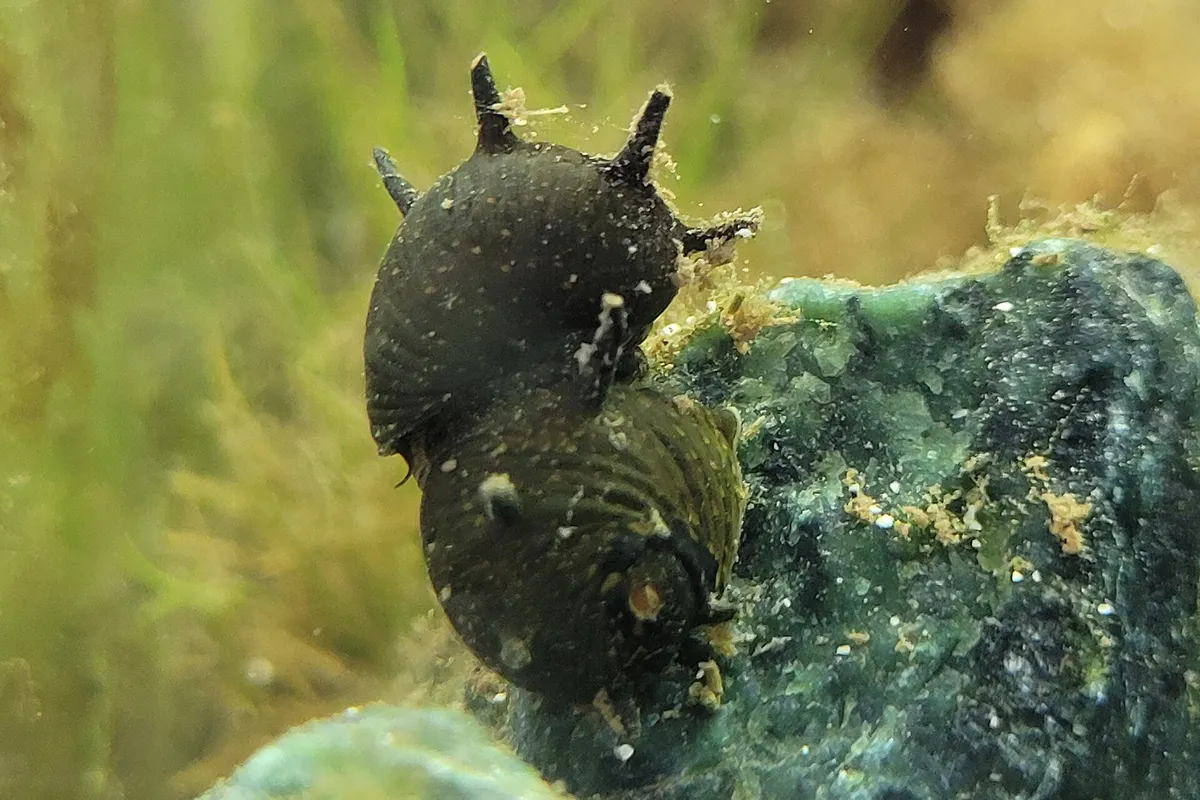
Fish are a poor fit. Bottom-dwelling or sleeping fish get grabbed, and fish that like brackish water often need deeper water than a crab setup offers. If you want company, a few nerite snails can work. Avoid shrimp, small fish and other crabs.
Moulting and breeding
Like all crabs, red claws grow by moulting. A crab about to moult often hides and stops eating; afterwards it stays hidden for several days while the new shell hardens. Leave the old shell in place so the crab can eat it, and make sure there are enough hiding spots that a soft crab is never cornered by another.
Females do carry eggs, but the larvae need full marine water and plankton to develop, so red claw crabs are not bred in home tanks. Almost all are wild-caught.
Common problems
Death within weeks: no land, soft fresh water or a missing lid. Crab always out of the water: normal behaviour, but also check the water quality. Missing legs or claws: fighting or a difficult moult; limbs regrow over the next few moults. In a proper brackish paludarium with land, humidity and a varied diet, red claw crabs can live two to four years.
Explore other topics
Dive into more aquarium guides across the site.