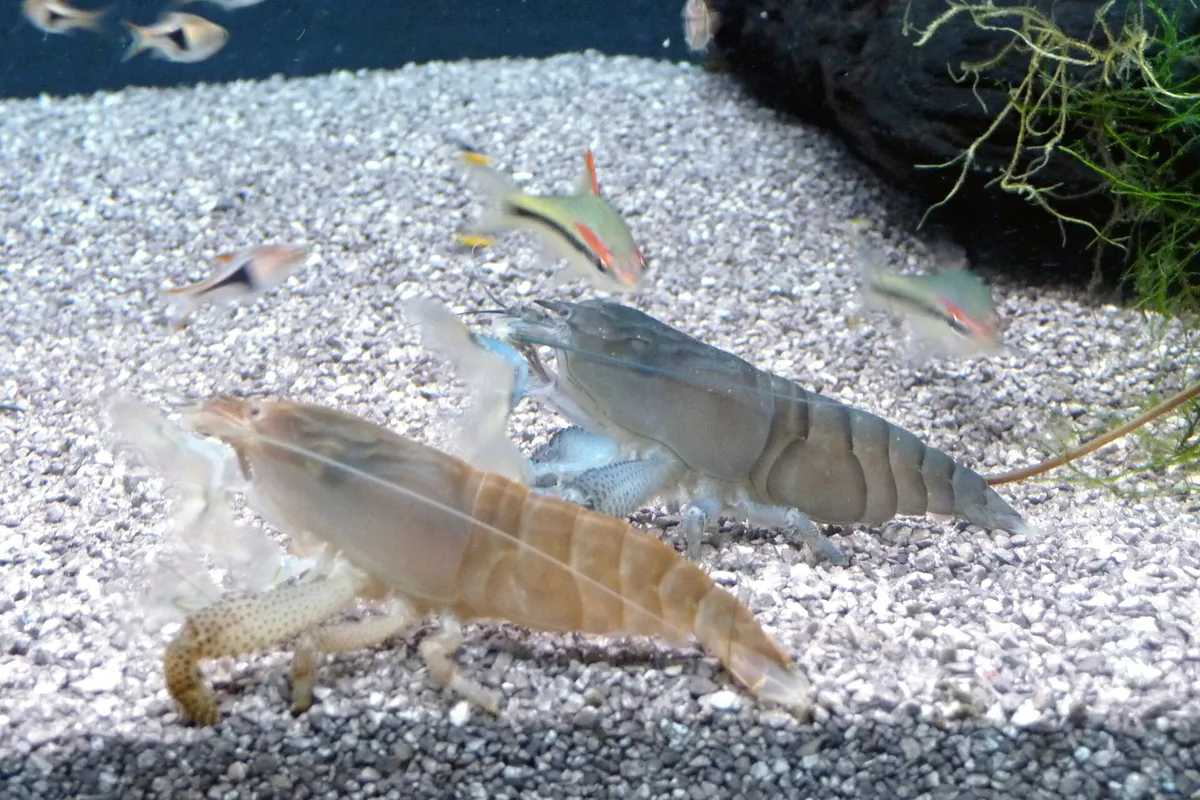
The vampire shrimp has the worst common name in the hobby. Atya gabonensis does not bite, does not suck anything, and does not hunt. It is a big, slow, armoured filter feeder that spends its life standing in current with its hands open, catching whatever drifts past. Also sold as the African fan shrimp, Gabon shrimp or blue rhino shrimp, it reaches 10–15 cm and is one of the largest freshwater shrimp you can keep in a community tank.
It is also one of the easiest to starve. A vampire shrimp in a still, spotless, newly set-up tank is a vampire shrimp on a countdown. Get the flow and the fine food right and it will live for years and become the strangest, calmest animal in the room.
Rivers on two continents
Wild vampire shrimp come from flowing rivers and streams in West and Central Africa, from Senegal down to the Congo basin, and from parts of northern South America. They live among rocks, roots and leaf litter where the current carries a steady drizzle of algae, detritus and microorganisms. Like bamboo shrimp, they are amphidromous: adults live in fresh water, but the larvae drift down to brackish estuaries to develop. That one fact explains why almost every vampire shrimp in a shop was caught in the wild, and why breeding them at home is close to impossible.
Fans, not fangs
The front two pairs of legs end in dense fans of bristles instead of pincers. In current, the shrimp spreads those fans like little umbrellas, lets the water push food into them, then folds them and wipes them across the mouth. It is one of the best things to watch in any aquarium.
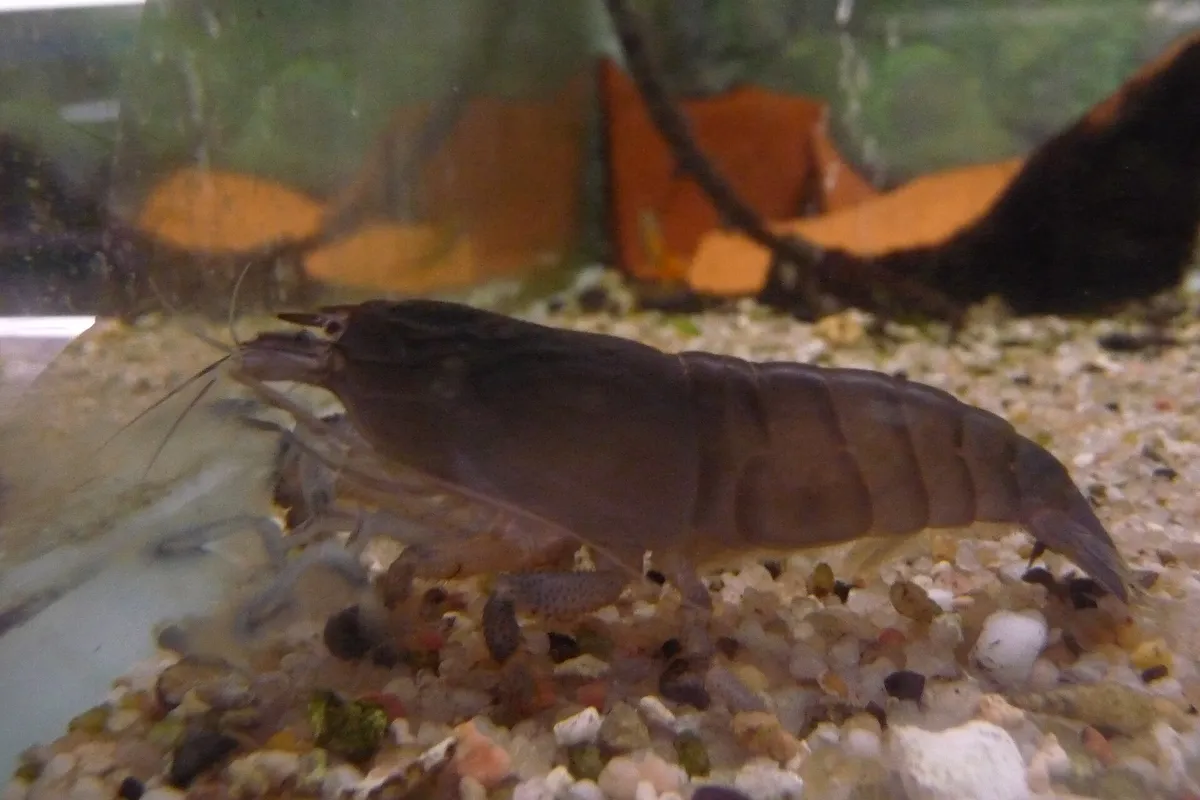
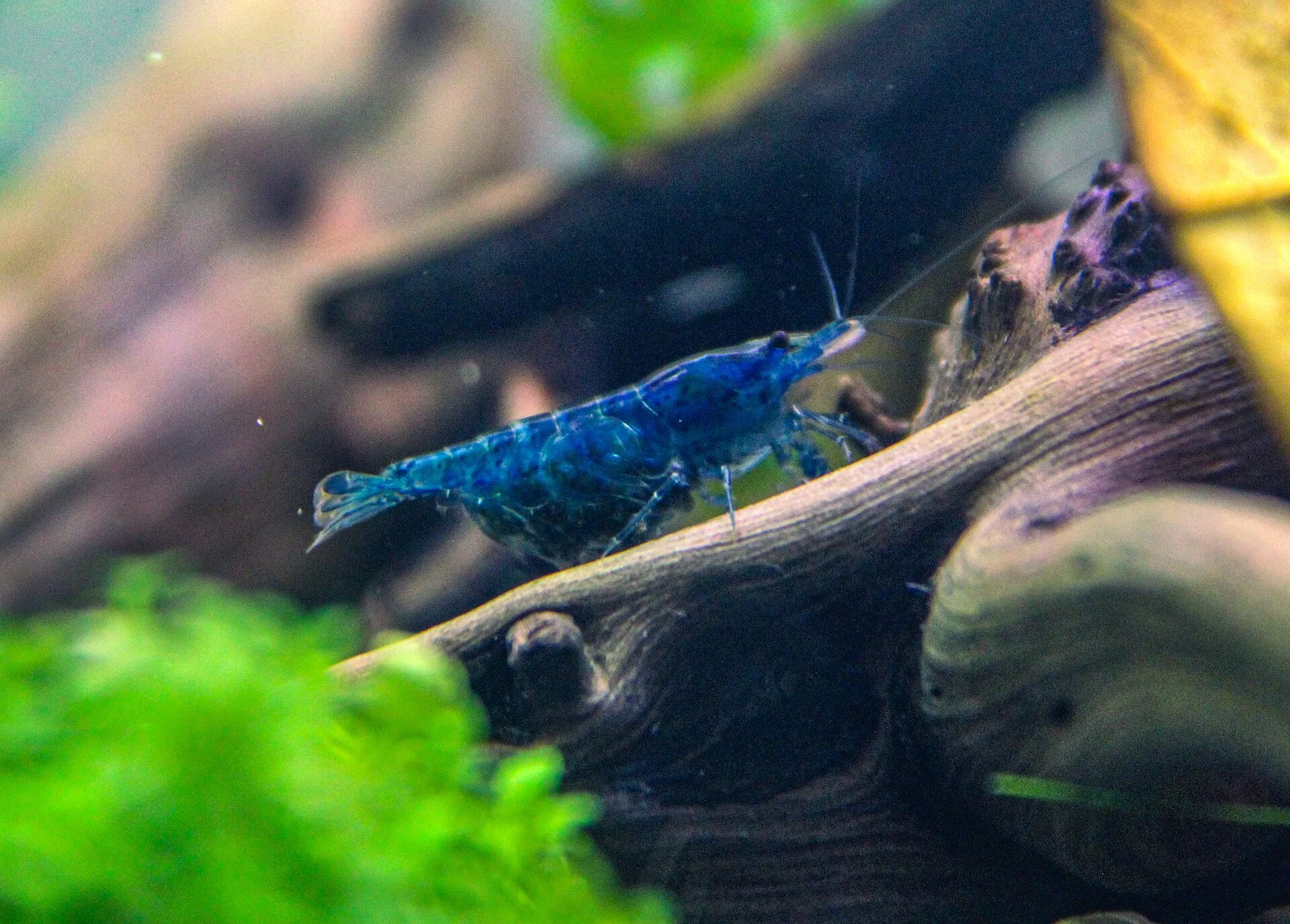
Colour is a mood ring. Most animals are cream, tan, grey or brown, and some turn a striking powder blue, often after a moult or once they are settled and well fed. The thick front legs and heavy, armoured body look intimidating, but the animal is completely harmless to fish, shrimp and snails. Females are generally smaller with a broader tail section; males develop noticeably thicker third legs.
Tank size and the current they need
Give a single vampire shrimp at least 75 litres, and more if you can. Size matters less than flow and maturity. The tank should be established for several months, with plenty of biofilm and fine particles already in circulation.
Flow is not optional. Place the shrimp's favourite perch, a branch of driftwood or a stack of smooth rocks, in the path of a filter outlet or a gentle powerhead so it can stand in the stream. Many keepers put a branch right under the outlet and find the shrimp parked there within a day. Our powerheads and wavemakers guide covers how to add current without blasting the rest of the tank.
Provide caves and overhangs for hiding, especially during moults, and use a smooth or fine substrate. A lid helps: big shrimp rarely jump, but they will climb out along cables and tubing.
Water parameters

Temperature 23–29°C. pH 6.5–7.8. Moderate hardness suits them best, roughly GH 6–15, with enough minerals for a healthy moult. Very soft, acidic blackwater is a poor choice, and so is anything unstable. Ammonia and nitrite must read zero, so cycle the tank properly long before the shrimp arrives.
Like every invertebrate, vampire shrimp are highly sensitive to copper. Check fish medications and plant fertilisers before you dose anything. Acclimate slowly, ideally by drip over an hour or more. Our guide to acclimating shrimp to a new aquarium walks through it step by step.
Feeding a filter feeder
This is where most vampire shrimp fail. In a clean, lightly stocked tank there is simply not enough suspended food. Plan to feed the water, not the shrimp: two or three times a week, turn the filter outlet toward the shrimp and add a pinch of very fine food upstream of it. Powdered fry food, spirulina powder, crushed high-quality flake, baby brine shrimp and commercial filter-feeder powders all work.
Watch the hands. A shrimp holding its fans open in the current is feeding. A shrimp sweeping its fans over the substrate is scavenging, and that usually means the water column is not carrying enough food. Increase the fine feeds rather than dropping in sinking pellets it cannot easily eat. For more on how biofilm and prepared foods fit together, see shrimp feeding: biofilm vs pellets.
Peaceful tank mates only
Despite its size, the vampire shrimp is a pacifist with no real defence except hiding. Good tank mates are calm community fish that will not pick at legs or fans: rasboras, smaller tetras, peaceful gouramis, otocinclus, corydoras and other shrimp such as Amano shrimp. Bamboo shrimp make an excellent pairing, since both like the same flow and food.
Avoid cichlids, puffers, large loaches, crayfish and anything big enough to see a moulting shrimp as dinner. Several vampire shrimp can share a tank if each has its own feeding perch and cave.
Moulting and breeding
Every few weeks the shrimp sheds its whole exoskeleton and hides for a day or two while the new shell hardens. Leave the old shell in the tank; it is not a dead shrimp, and the animal may eat some of it to reclaim minerals. Failed or stuck moults usually point to unstable water or too few minerals.
Females do carry eggs in aquariums, but the larvae need brackish and then fresh water at precise stages, and there is no reliable home breeding method. Treat a vampire shrimp as a long-lived single animal rather than a colony project.
Common problems and what they mean
Always hiding: normal for the first weeks, during moults and in bright light. Persistent hiding with no fanning can mean hunger or harassment. Sweeping the bottom constantly: not enough suspended food, so feed fine powders into the current. Sudden deaths: almost always copper, a parameter swing, or a crash in an immature tank. With stable water and steady fine feeding, vampire shrimp commonly live five years or more.
Explore other topics
Dive into more aquarium guides across the site.