

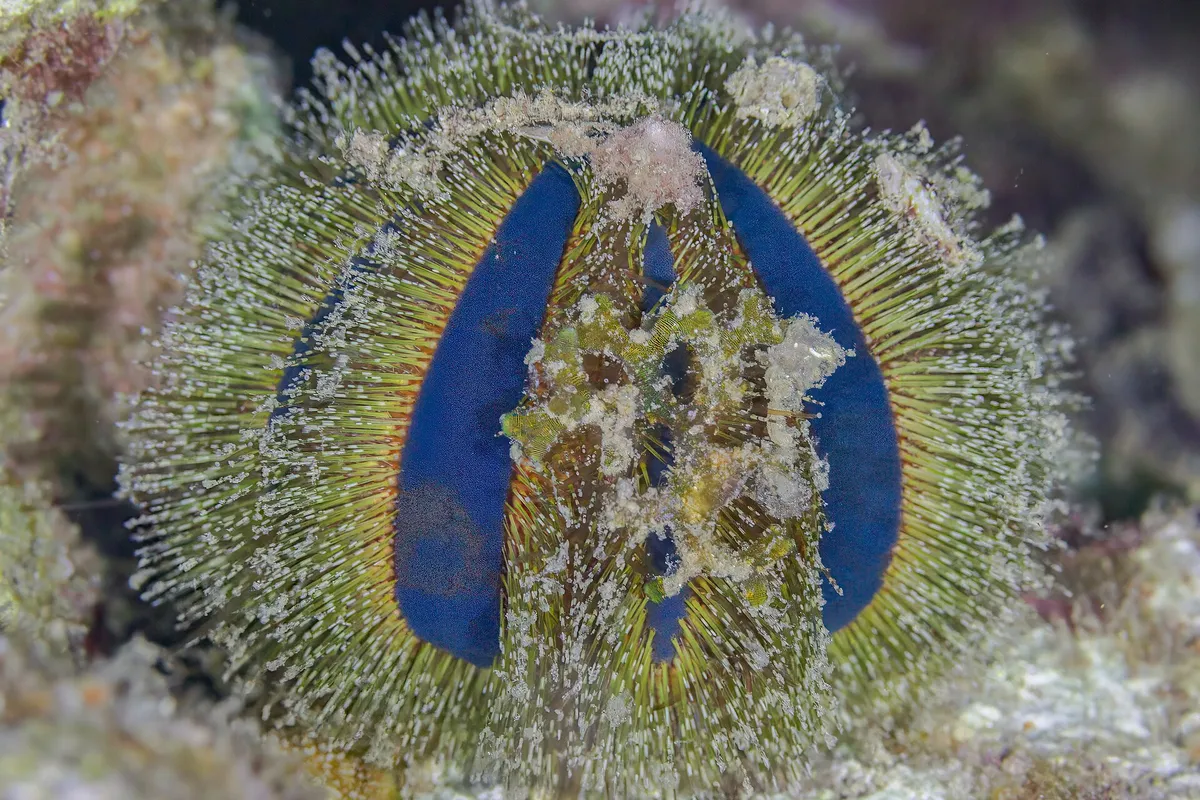
The tuxedo urchin is the urchin most reef keepers start with. Mespilia globulus is small, slow and covered in short spines arranged in rows, with bare blue or purple bands between them that give it a smart, tuxedo look. It grazes algae all day and often wears shells, bits of rubble or algae on its back like a hat.
It is one of the most reef-safe urchins, though like any grazer it can knock over loose frags. Keep the tank mature and stable and it will quietly do its job for years.
Where tuxedo urchins come from
Tuxedo urchins live in the Indo-West Pacific, from Indonesia and the Philippines to northern Australia and Japan. They graze on algae-covered rocks and rubble in shallow lagoons and reefs, usually down to about 20 m.
Appearance and behaviour
Adults usually reach 5–7 cm across, sometimes a little more. The body is round, with ten rows of short reddish-brown to green spines and bare bands of blue, purple or teal between them. Some aquarium strains have orange or red bands.
The urchin moves on hundreds of tiny tube feet and picks up shells, pebbles and pieces of algae to cover itself, probably for shade and camouflage. It is peaceful and slow.
Tank setup
One tuxedo urchin can live in a tank of 75 litres or more, as long as the rock has plenty of algae to graze. Add it only to a mature tank, at least a few months old. Glue frags firmly in place, because urchins can bulldoze loose items. Acclimate very slowly with drip acclimation: urchins are very sensitive to salinity changes.

Water parameters
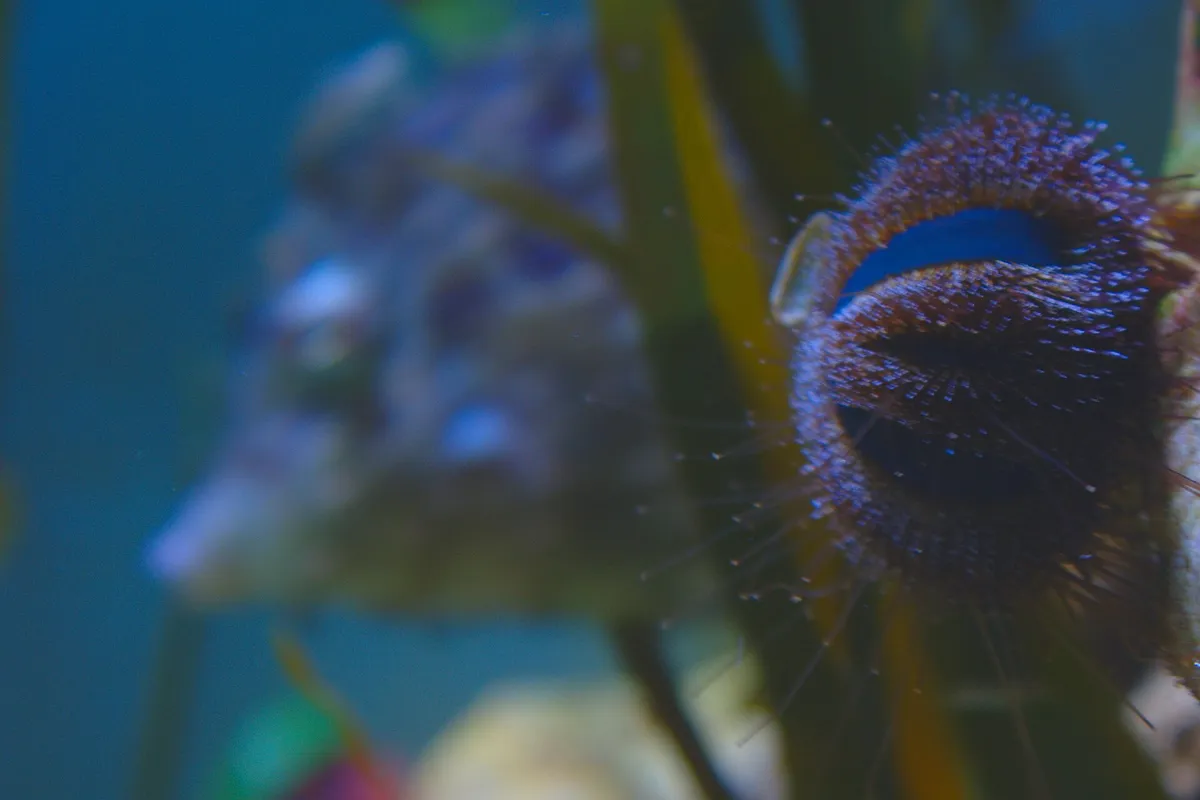
Keep the temperature at 24–27°C, salinity at 1.024–1.026, pH 8.1–8.4, and stable calcium, alkalinity and magnesium. Echinoderms cannot tolerate copper, low salinity or sudden changes.
Feeding
Tuxedo urchins graze film algae, diatoms and some hair algae, and they also eat coralline algae, which some keepers dislike. If algae runs low, feed them nori on a clip near the rocks, or algae wafers. An urchin that starts dropping spines may be underfed.
Tank mates
Tuxedo urchins get on with almost all reef fish and invertebrates. Avoid triggers, large puffers and some larger wrasses that eat urchins. Their spines are short and not dangerous to people, but handle them gently.
Breeding
Tuxedo urchins spawn in aquariums and have been bred commercially. Eggs and sperm are released into the water, and the larvae need tiny algae foods for weeks. Captive-bred urchins are widely available.
Common problems and lifespan
Spine loss, usually from starvation, poor acclimation or unstable water, is the main warning sign. An urchin that stops moving or loses many spines needs urgent attention. With good care tuxedo urchins live 3–5 years or more.
Explore other topics
Dive into more aquarium guides across the site.