

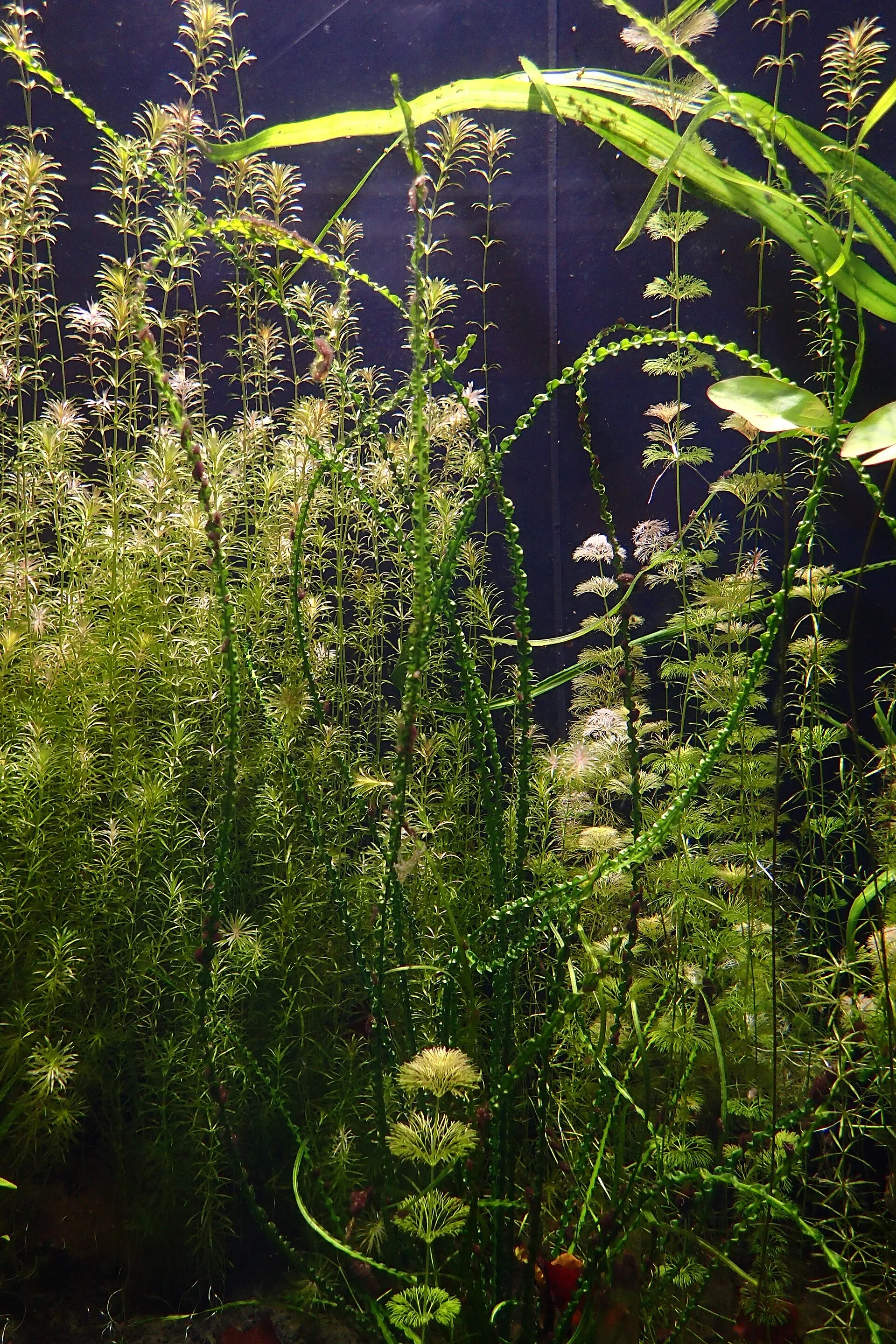
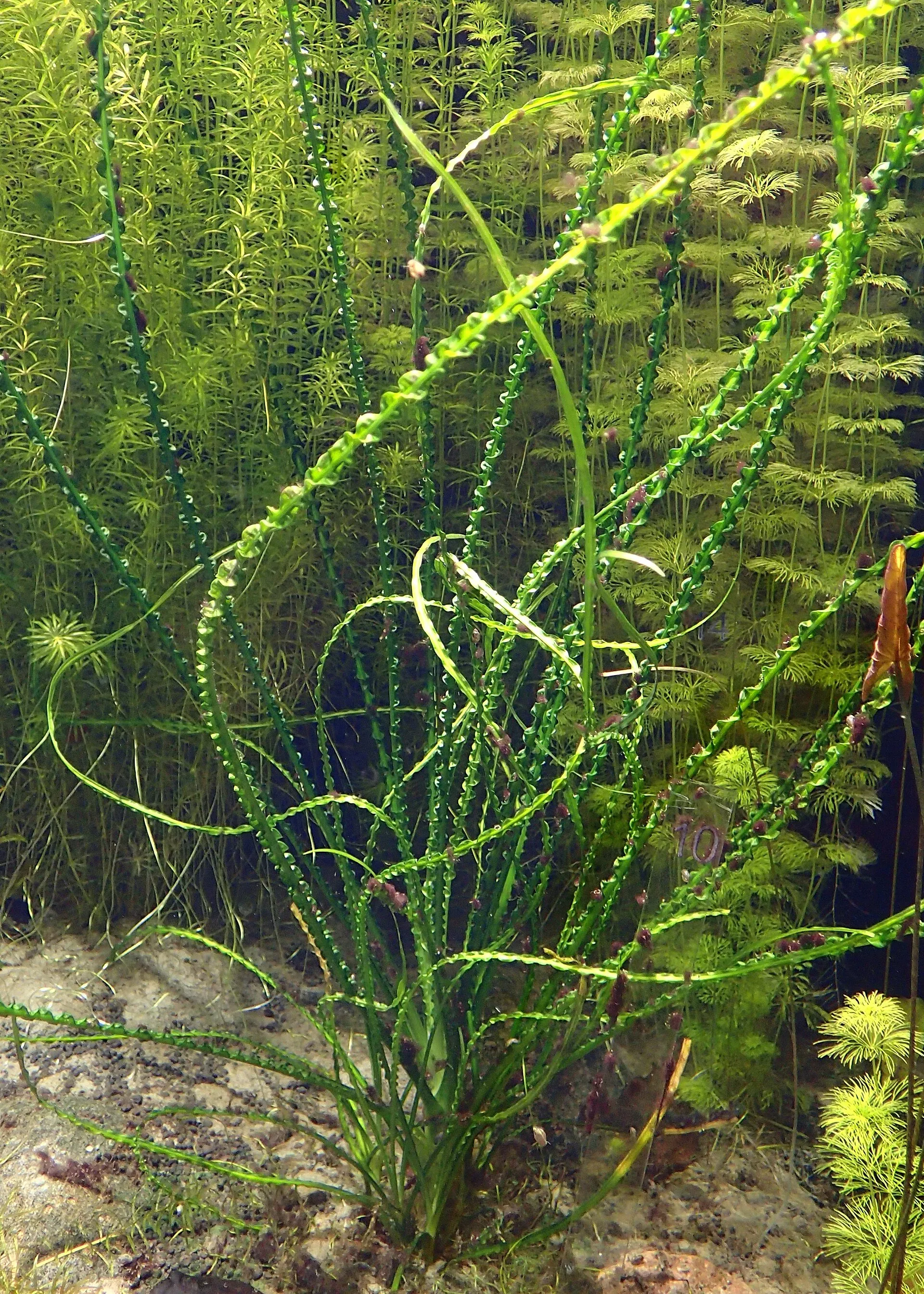
Crinum calamistratum is one of the most distinctive freshwater aquarium plants available. Native to West Africa, it grows from a bulb and develops exceptionally long, narrow, dark-green leaves with a strongly curled or crinkled appearance. Mature plants create a dramatic fountain-like shape that works particularly well as a background specimen or focal plant.
Natural Origin and Appearance
This Crinum species originates from West Africa. Its leaves are much narrower than those of many common bulb plants and can eventually reach impressive lengths. Because the leaves twist and wave through the water, the plant adds movement without needing dense bushy growth.
Where to Plant Crinum calamistratum
Choose a permanent position before planting because established Crinum plants do not appreciate frequent disturbance. The background or rear corner of a medium to large aquarium is usually ideal. A mature specimen can also work as a centrepiece if the surrounding aquascape is kept relatively open.
Plant the roots in the substrate but leave the upper part of the bulb above the surface. Completely burying the bulb can encourage rot. Our aquarium substrate guide can help you choose a suitable planting base.
Lighting Requirements
Moderate lighting is generally adequate. The plant is not usually considered especially demanding in terms of light, although a sensible planted-tank photoperiod supports steady growth. Excessive lighting without balanced nutrients may simply encourage algae on the long leaves.
Water Conditions
Crinum calamistratum grows well in warm freshwater, with temperatures around 22–28°C being suitable for typical aquarium care. Slightly acidic to moderately alkaline water can work as long as conditions remain stable. It can tolerate a range of hardness levels and has even been used in lightly brackish conditions, although freshwater planted tanks are the normal choice.
CO2 and Fertilization
Added CO2 can improve growth but is not essential in every aquarium. This plant is relatively slow-growing, so patience is important after planting. Root tabs placed near the bulb can be helpful in inert substrates, while a complete liquid fertilizer supplies trace nutrients through the water column.
For a broader explanation of plant nutrition, see our guide to iron and potassium in planted aquariums.

Pruning and Maintenance
Maintenance is straightforward because Crinum does not require frequent trimming. Remove old or damaged leaves close to the bulb rather than cutting healthy leaves into shorter sections. Since growth is slow, avoid removing too many leaves at one time.
Algae can sometimes settle on older leaves. Good water circulation, balanced lighting and regular maintenance usually prevent this from becoming serious. Gentle cleaning is preferable to repeatedly cutting otherwise healthy foliage.
Propagation
Established plants can produce small daughter bulbs. Once these have developed sufficient roots and leaves, they may be carefully separated and replanted. Propagation is slower than with fast-growing stem plants, so this is not a species for rapidly filling an aquarium.
Fish Compatibility
The tough, narrow leaves are generally ignored by many community fish and the plant is less tempting to some herbivorous species than soft-leaved alternatives. Peaceful tetras, rainbowfish, gouramis, Corydoras and many other community fish can be kept around it when their water requirements match.
Ease of Care
Crinum calamistratum is an easy-to-moderate plant. It does not demand intense lighting or constant pruning, but it grows slowly and benefits from a stable aquarium. The bulb must be planted correctly, and the plant should be given time to establish before being moved.
Species Variations
Other Crinum species are occasionally sold for aquariums, including broader-leaved forms. Crinum calamistratum stands out because of its exceptionally narrow, highly curled leaves. There is no commonly cultivated albino version; plant colour differences are mainly related to species, growth conditions and health.
Final Thoughts
For aquarists who want something very different from typical stem plants, Crinum calamistratum is an excellent long-term choice. Its unusual leaf shape, low pruning needs and impressive mature size make it especially effective in natural and lightly planted layouts.

Explore other topics
Dive into more aquarium guides across the site.