

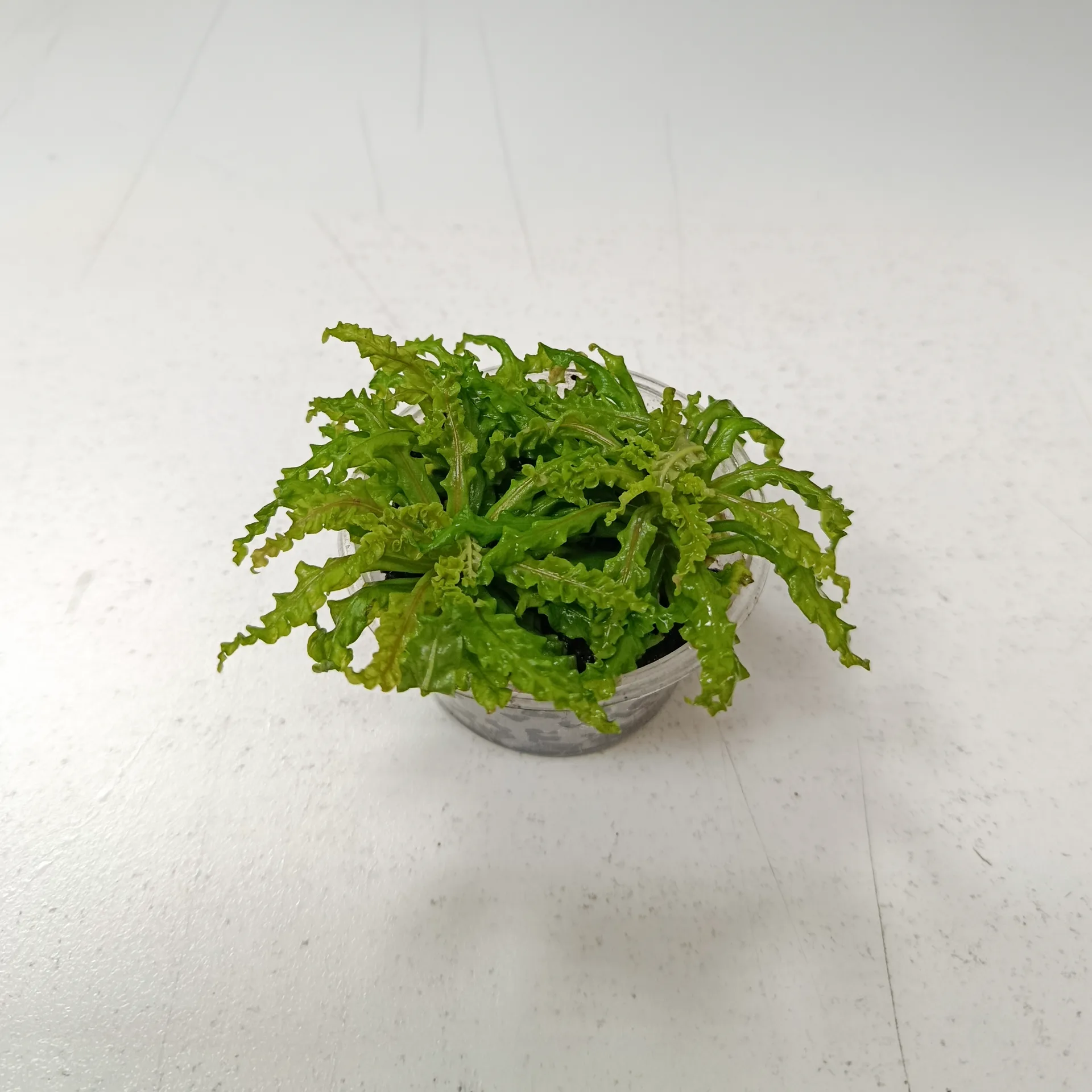
Pogostemon helferi is a distinctive freshwater aquarium plant with bright green, deeply curled leaves that form compact star-like rosettes. In Thailand it is commonly associated with the name Downoi, meaning little star. Its unusual texture makes it a strong foreground or low-midground feature in planted aquariums.
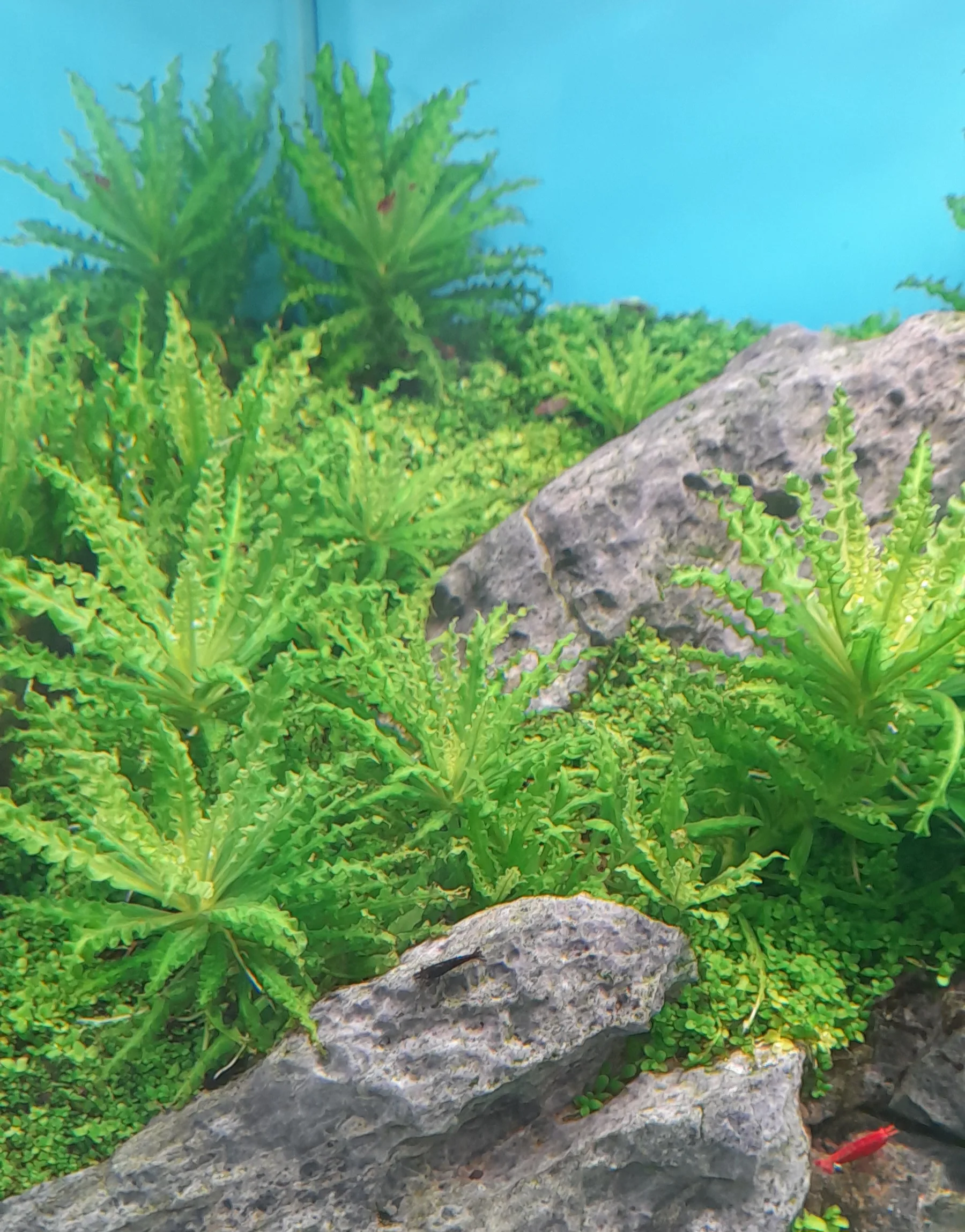
Origin and Growth Habit
Pogostemon helferi comes from Southeast Asia and became popular with aquarists because of its compact growth and unusual leaf shape. Tropica lists a typical height and width of around 5–10 cm under suitable conditions. Rather than growing as a tall stem plant, it develops a low, bushy form that can eventually create a dense patch.
Where to Place Pogostemon helferi
Use this plant in the foreground of larger aquariums or as a midground accent in nano tanks. Its textured leaves contrast well with fine carpeting plants and broad-leaved species. Leave a little space between young plants so light and water can reach each crown while they establish.
If you are designing a planted layout, our guide to selecting aquarium substrate explains how substrate choice affects rooted plants.
Lighting Requirements
Moderate to strong aquarium lighting usually produces the most compact growth. In weak light, the plant may become less dense or fail to retain the low form aquarists expect. Increase lighting cautiously because stronger light also increases the demand for carbon dioxide, nutrients and consistent maintenance.
Does Pogostemon helferi Need CO2?
It can survive in some aquariums without injected CO2, but supplemental carbon dioxide makes success much easier, especially under brighter lighting. CO2 encourages stronger growth, helps the plant stay compact and supports recovery after transplanting.
If you are considering injection, read our guide to CO2 in planted aquariums before increasing light and carbon together.
Substrate and Nutrients
Plant Pogostemon helferi into a nutrient-supportive substrate or provide root nutrition when using inert gravel or sand. Complete water-column fertilization is also useful because aquarium plants obtain nutrients through both roots and leaves. Consistency is more important than repeatedly changing fertilizer brands or dosing large amounts at once.
Water Conditions
This species suits normal tropical planted aquarium temperatures and does best in stable, clean water. Avoid extreme fluctuations in temperature, pH and hardness. Good circulation should distribute nutrients and CO2 through the foreground without blasting newly planted crowns out of the substrate.
Planting Pogostemon helferi

Separate a purchased clump carefully into smaller portions. Remove damaged leaves and insert the roots into the substrate while keeping the central growing point above the surface. Planting the crown too deeply can lead to poor growth or rot. Tweezers make it easier to place small sections precisely.
Propagation and Trimming
Healthy plants produce side shoots that can be separated and replanted. Once a group has filled its allotted space, thin crowded sections rather than allowing older leaves to become shaded underneath. Replant strong young shoots to expand the patch or replace declining sections.
Common Problems
Melting after purchase can happen when plants adapt from nursery conditions to submerged aquarium growth. Remove decaying material, maintain stable water and allow healthy new growth time to develop. Pale leaves can indicate insufficient nutrients, while stretched or loose growth can point to inadequate light or carbon availability.
Fish and Shrimp Compatibility
Pogostemon helferi is safe with normal peaceful aquarium fish and shrimp. Avoid fish that constantly dig in the substrate, because newly planted crowns are easily uprooted before their roots become established. Shrimp can be useful because they graze small particles and algae from the textured leaves.
Ease of Care
This is best considered an intermediate aquarium plant. It is not impossibly demanding, but it performs much better when light, nutrients and carbon dioxide are balanced. Aquarists with a stable planted tank can use it to add a very different texture to the foreground.
Frequently Asked Questions
How tall does Pogostemon helferi grow?
Under good conditions it commonly remains around 5–10 cm tall, making it suitable for foreground and low-midground planting.
Can Pogostemon helferi grow without CO2?
It may grow without injected CO2 in a carefully balanced aquarium, but supplemental CO2 usually gives denser, more reliable growth.
Why is my Pogostemon helferi melting?
Recent transplanting, changing from emersed to submerged growth, buried crowns or unstable conditions can all contribute. Remove decaying leaves and focus on stable light, nutrients and water quality.

Explore other topics
Dive into more aquarium guides across the site.